
Facing a denied property damage claim can leave Atlanta homeowners feeling frustrated and uncertain about what comes next. Confusion often arises over whether a denial signals a misstep in paperwork or a strict policy technicality. Understanding the real reasons behind claim denials and the structured processes insurers use to evaluate them gives you an advantage. With clear insight into the most common pitfalls and a focus on comprehensive documentation, you can take confident steps to challenge unfair decisions and work toward a better settlement.
Table of Contents
- Defining Insurance Claim Denials And Misconceptions
- Top Reasons Insurance Claims Are Denied
- Types Of Property Claims Most At Risk
- Your Rights And Responsibilities After A Denial
- Steps To Dispute And Overturn Claim Denials
Key Takeaways
| Point | Details |
|---|---|
| Understanding Denials | Homeowners need to recognize that claim denials arise from administrative processes, documentation errors, and policy exclusions rather than malicious intent. |
| Types of Denials | Familiarity with different denial types and their specific appeal strategies can enhance the chances of successful claim resolution. |
| Documentation is Key | Comprehensive documentation, including photographs and organized records, is essential to strengthen claims and appeal processes. |
| Know Your Rights | Homeowners have the right to formally appeal denials within specified timeframes, and should maintain accurate records throughout the process. |
Defining Insurance Claim Denials and Misconceptions
Homeowners often misunderstand insurance claim denials, viewing them as unfair obstacles rather than complex administrative processes. Insurance claim denials represent formal decisions by insurance providers to refuse payment for submitted property damage claims based on specific contractual parameters.
These denials can stem from various critical factors that Atlanta homeowners should understand:
- Documentation errors in claim submission
- Lack of comprehensive damage evidence
- Policy exclusions not initially recognized
- Disputes over damage cause or extent
- Technical interpretation of policy language
Contrary to common belief, not all claim denials represent malicious intent by insurance companies. Administrative mechanisms control claim processing through structured evaluation processes designed to manage financial risk and validate legitimate claims.
Insurance companies typically categorize claim denials into specific types, each requiring different strategic responses. Understanding these categories helps homeowners develop more effective appeal strategies and increases their chances of successful claim resolution.
Here’s a quick comparison of common denial types and their typical appeal strategies:
| Denial Type | Typical Reason | Best Appeal Approach |
|---|---|---|
| Administrative Denial | Documentation errors | Provide corrected records |
| Policy Exclusion Denial | Not covered by policy | Clarify policy terms |
| Technical Coding Denial | Claim form mistakes | Submit revised forms |
| Coverage Limitation Denial | Limits exceeded | Request policy review |
| Causation Dispute Denial | Disagreement on damage | Provide expert evidence |
Pro tip: Always document property damage comprehensively, photograph everything meticulously, and maintain organized records to strengthen potential claim appeals.
Top Reasons Insurance Claims Are Denied
Atlanta homeowners face numerous challenges when navigating property damage insurance claims, with denials often resulting from complex administrative and technical factors. Administrative errors significantly impact claim processing, creating substantial obstacles for property owners seeking compensation.
The most prevalent reasons for insurance claim denials include:
- Insufficient documentation of property damage
- Incomplete or inaccurate claim forms
- Missing required supporting evidence
- Policy coverage limitations
- Technical coding errors
- Missed filing deadlines
- Disputes over damage causation
Insurance providers meticulously evaluate claims using strict criteria, examining claims through multiple administrative mechanisms designed to validate legitimate property damage requests. These evaluation processes help insurers manage financial risk while ensuring appropriate compensation for verified claims.
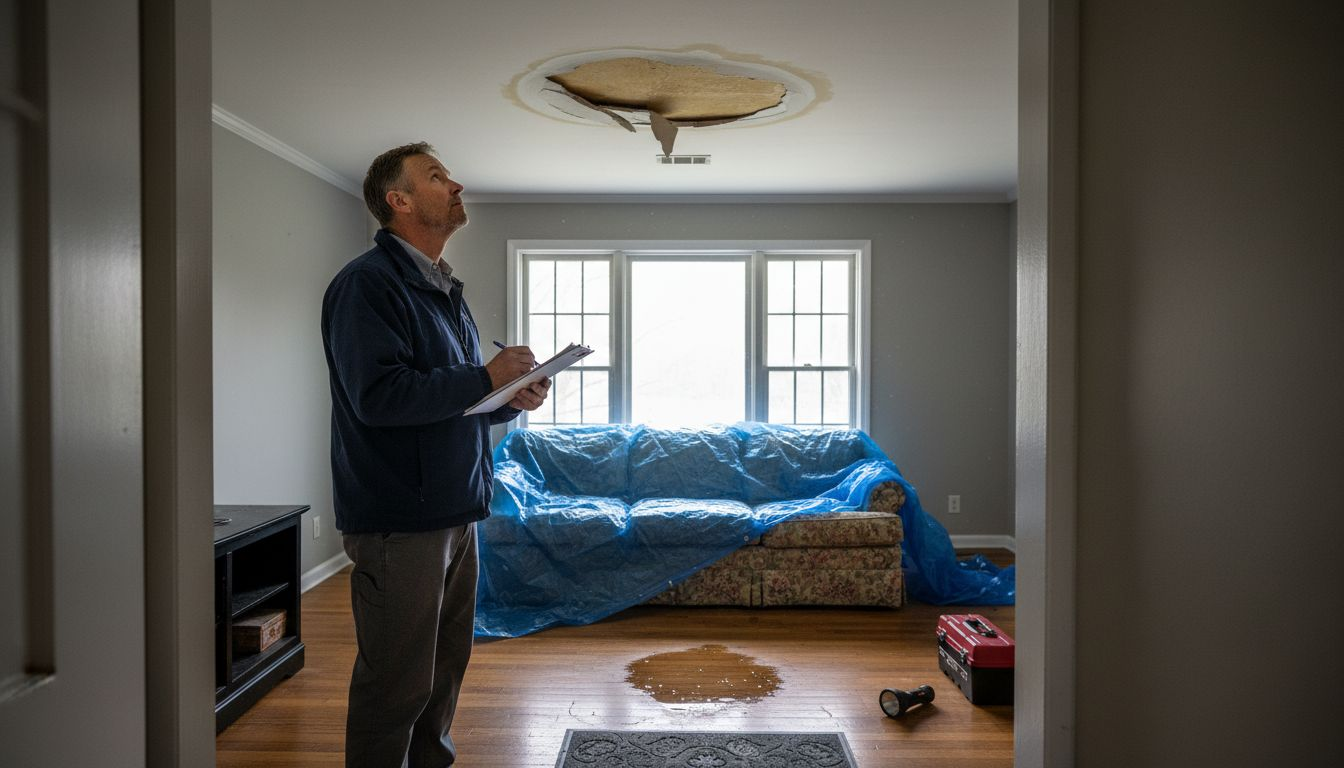
Understanding the nuanced reasons behind claim denials empowers Atlanta homeowners to proactively prepare more comprehensive and accurate submissions. By anticipating potential administrative hurdles, property owners can strategically document their claims, increasing the likelihood of successful resolution and fair compensation.
Pro tip: Create a dedicated claims folder with detailed photographic evidence, comprehensive damage documentation, and organized repair estimates to strengthen your insurance claim submission.
Types of Property Claims Most at Risk
Atlanta homeowners face significant challenges with insurance claims, particularly those involving complex property damage scenarios. Weather-related property damage claims represent the most vulnerable category of insurance submissions, with numerous potential pitfalls that can lead to claim denial.
The most high-risk property damage claim types include:
- Wind and hail damage to roofing and exterior structures
- Water damage from burst pipes or flooding
- Fire and smoke damage
- Theft and vandalism claims
- Damage from freezing conditions
- Electrical system failures
- Structural deterioration
Catastrophic events and severe weather patterns dramatically increase the complexity and risk of property damage claims in the Atlanta metropolitan area.
Catastrophe-related claims pose significant challenges for homeowners, with insurers increasingly scrutinizing submissions due to rising replacement costs and environmental risks. These heightened evaluation processes mean Atlanta property owners must prepare more comprehensive and meticulously documented claims to successfully navigate potential denials.
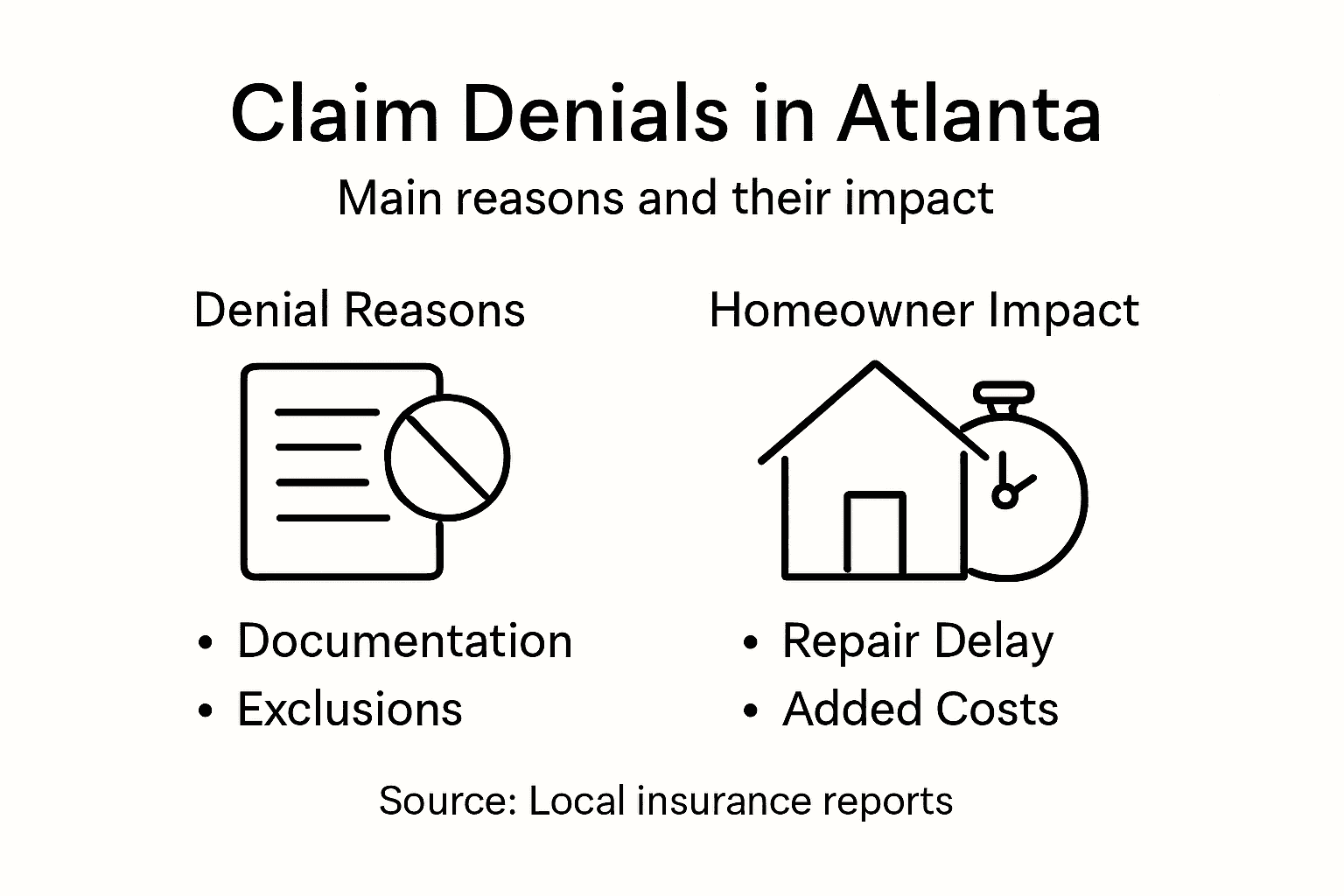
The table below highlights which property damage claim types face the greatest scrutiny from insurers and why:
| Claim Type | Scrutiny Level | Major Challenge |
|---|---|---|
| Wind/Hail Damage | Very High | Determining event cause |
| Water Damage | High | Proving eligible origin |
| Fire/Smoke Damage | Moderate | Establishing source |
| Theft/Vandalism | Moderate | Documenting losses |
| Freezing Damage | High | Linking to weather event |
| Electrical Failure | Low | Diagnostic uncertainty |
| Structural Issues | High | Proving age vs. event |
Pro tip: Photograph property damage immediately after occurrence, document all damages systematically, and maintain a chronological record of events to strengthen your insurance claim.
Your Rights and Responsibilities After a Denial
When an insurance claim is denied, Atlanta homeowners are not without recourse. Insurance claim appeal rights provide a structured pathway for challenging unfair or incorrect claim determinations, empowering property owners to seek fair compensation.
Your critical rights and responsibilities after a claim denial include:
- Formal appeal submission within specified timeframes
- Gathering comprehensive supporting documentation
- Understanding your specific insurance policy details
- Requesting a detailed explanation of the denial
- Maintaining precise records of all communications
- Consulting with professional claim advocates
- Pursuing internal and external review processes
Insurance claim denials are not the end of the process, but an opportunity to present additional evidence and challenge the initial decision.
Working closely with healthcare and insurance professionals becomes essential in effectively navigating the appeals process. Homeowners must approach claim denials strategically, preparing methodical and well-documented challenges that address the specific reasons for initial rejection.
Pro tip: Create a dedicated claims folder with copies of all original documentation, denial letters, and a chronological log of communications to strengthen your appeal strategy.
Steps to Dispute and Overturn Claim Denials
Navigating insurance claim denials requires a strategic and methodical approach. Insurance claim appeal processes provide homeowners with multiple opportunities to challenge and potentially overturn initial claim rejections.
Key steps to effectively dispute a claim denial include:
- Request a detailed denial explanation
- Gather comprehensive supporting documentation
- Review your insurance policy meticulously
- Compile evidence demonstrating claim validity
- Draft a clear, professional appeal letter
- Follow specific insurer appeal procedures
- Consider professional claim advocacy support
- Escalate through multiple appeal levels if necessary
Successful claim disputes require persistence, thorough documentation, and a strategic understanding of insurance appeal mechanisms.
Effective appeal strategies demand careful preparation and a systematic approach to challenging claim denials. Atlanta homeowners must be prepared to invest time and effort in presenting compelling evidence that addresses the specific reasons for their initial claim rejection.
Pro tip: Create a comprehensive claim dispute file with color-coded sections for original documentation, denial letters, evidence, and correspondence tracking to streamline your appeal process.
Get Expert Help Navigating Insurance Claim Denials in Atlanta
Dealing with insurance claim denials can be frustrating and overwhelming, especially when faced with complex reasons like documentation errors, policy exclusions, or disputes over damage causation. If you feel stuck or unsure how to effectively appeal a denial, professional public adjusting services can make all the difference. Understanding your rights and having an advocate skilled in claim review, policy evaluation, and settlement maximization helps protect your interests and ensures you receive the compensation you deserve.
Take control of your property damage claim today by partnering with licensed experts at Public Adjusters Atlanta. Our team understands the specific challenges faced by Atlanta homeowners following claim denials and offers personalized strategies to navigate appeals with confidence. Don’t let administrative hurdles prevent you from getting the coverage you need. Contact us now for a free damage evaluation and begin your journey toward a successful claim outcome.
Frequently Asked Questions
What are the most common reasons for insurance claim denials?
The most common reasons for insurance claim denials include insufficient documentation of property damage, incomplete or inaccurate claim forms, missing required supporting evidence, policy coverage limitations, technical coding errors, missed filing deadlines, and disputes over damage causation.
How can homeowners improve their chances of successful claim submissions?
Homeowners can improve their chances by documenting property damage comprehensively, photographing everything meticulously, maintaining organized records, and preparing detailed claims folders with evidence and repair estimates.
What should I do if my insurance claim has been denied?
If your claim is denied, you should request a detailed explanation of the denial, gather supporting documentation, review your policy, and submit a formal appeal within the specified timeframe.
What steps can I take to dispute a claim denial effectively?
To dispute a claim denial effectively, request a detailed denial explanation, gather comprehensive evidence, review your policy, draft a clear appeal letter, follow your insurer’s appeal procedures, and consider seeking professional claim advocacy support.