

Facing property damage in Atlanta can quickly turn stressful when navigating insurance claims. Understanding who fights for your financial interests makes all the difference. Public adjusters work exclusively for policyholders, negotiating claims and settlements to help secure fair compensation, while company adjusters protect the insurer’s bottom line. This article breaks down the roles, payment models, and distinctions so you can choose the right advocate for your property claim.
Table of Contents
- What Are Public and Company Adjusters?
- Types of Adjusters and Key Distinctions
- Roles and Responsibilities in Claims Process
- Payment Models and Legal Obligations
- Risks, Costs, and Common Mistakes
- Choosing the Right Adjuster for Your Claim
Key Takeaways
| Point | Details |
|---|---|
| Public Adjusters vs. Company Adjusters | Public adjusters represent policyholders, while company adjusters work for insurers, creating differing motivations in claims processing. |
| Understanding Payment Structures | Public adjusters usually charge a percentage of the settlement, which can align their interests with maximizing claims, unlike salaried company adjusters. |
| Choosing the Right Adjuster | Assess claim complexity and personal negotiation experience when selecting an adjuster to ensure optimal representation. |
| Be Cautious of Risks | Verify credentials and understand fee structures to avoid common pitfalls that could impact claim outcomes and financial interests. |
What Are Public and Company Adjusters?
Insurance claims can feel like navigating a complex maze, but understanding the key players makes the journey smoother. Public adjusters and company adjusters represent two distinct approaches to handling property damage insurance claims, each with unique roles and responsibilities.
Public adjusters are independent insurance professionals who work exclusively for policyholders. Independent insurance professionals negotiate claims on behalf of homeowners and business owners, charging a fee typically up to 15 percent of the final settlement. Their primary mission is to help clients maximize their insurance claim compensation.
By contrast, company adjusters (also called staff adjusters) are direct employees of insurance companies. Their responsibilities include:
- Investigating claims filed by the company’s policyholders
- Assessing property damage
- Determining claim validity
- Calculating appropriate settlement amounts
- Protecting the insurance company’s financial interests
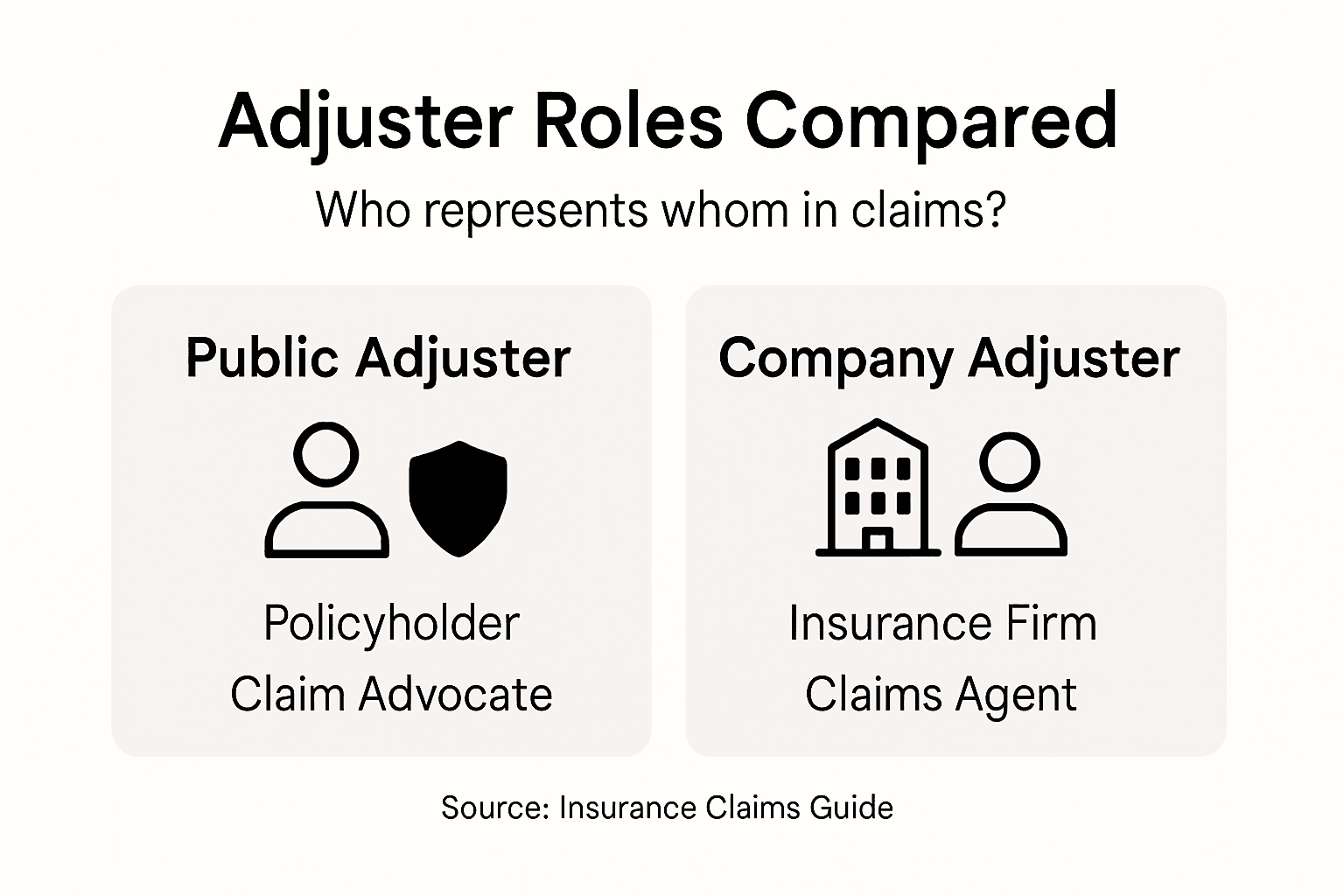
The key distinction lies in who they represent. Public adjusters advocate for the policyholder, while company adjusters work to protect the insurance company’s bottom line. This fundamental difference means their approaches and motivations can vary significantly during the claims process.
Public adjusters bring specialized expertise to help property owners navigate complex insurance negotiations. They understand policy language, documentation requirements, and damage assessment techniques that most individuals do not. By hiring a public adjuster, property owners gain a knowledgeable ally who can potentially increase their claim settlement.
Pro tip: Always verify a public adjuster’s licensing and professional credentials before engaging their services to ensure you’re working with a qualified professional.
Types of Adjusters and Key Distinctions
Insurance claims involve multiple types of adjusters, each playing a unique role in the complex world of property damage compensation. Understanding these different professionals helps policyholders navigate their insurance claims more effectively and make informed decisions.
Insurance adjusters are categorized into three primary types, each with distinct responsibilities and allegiances:
- Company Adjusters: Direct employees of insurance companies
- Independent Adjusters: Contracted professionals working for insurers
- Public Adjusters: Exclusively representing policyholders
Company adjusters, also known as staff adjusters, work directly for insurance providers. Their primary objective is protecting the insurance company’s financial interests during claim evaluations. They investigate claims, assess damages, and determine settlement amounts from the insurer’s perspective.

Independent adjusters operate similarly to company adjusters but are not direct employees. These professionals are hired as external contractors by insurance companies to investigate and process claims. While they work for insurers, they provide flexibility during high-volume claim periods or in specialized geographic regions.
Public adjusters stand apart as the sole advocates for policyholders. They bring specialized knowledge to help property owners maximize their insurance settlements. Unlike company or independent adjusters, public adjusters charge a fee based on the final claim settlement, typically a percentage of the total amount recovered.
Public adjusters must navigate complex regulatory landscapes, with licensing requirements varying significantly across different states.
The fundamental difference between these adjuster types lies in their core allegiance. Company and independent adjusters prioritize the insurance company’s interests, while public adjusters exclusively represent the policyholder’s financial well-being.
Here’s a concise comparison of adjuster types to support your claim decision:
| Adjuster Type | Representation Focus | Payment Structure | Typical Use Case |
|---|---|---|---|
| Public Adjuster | Policyholder’s best interest | Percentage of claim payout | Large, complex claims |
| Company Adjuster | Insurance company’s interest | Fixed salary by insurer | Routine, small claims |
| Independent Adjuster | Insurer (external contract) | Paid per assignment or salary | High-volume or specialized cases |
Pro tip: Always verify an adjuster’s professional credentials and understand their specific type before engaging their services to ensure alignment with your claim objectives.
Roles and Responsibilities in Claims Process
The insurance claims process involves intricate negotiations and detailed documentation, with adjusters playing a critical role in determining the outcome of property damage compensation. Understanding the specific responsibilities of different adjuster types helps policyholders navigate this complex landscape more effectively.
Public adjusters assist policyholders by investigating comprehensive claim details, focusing on the following key responsibilities:
- Thoroughly assessing property damages
- Interpreting complex policy language
- Compiling detailed evidence
- Submitting comprehensive claim documentation
- Negotiating maximum possible settlements
Company adjusters, in contrast, approach claims from the insurance provider’s perspective. Their primary responsibilities include investigating the validity of claims, evaluating damage extent, and determining appropriate settlement amounts that protect the insurance company’s financial interests.
The negotiation process represents a critical phase where these different adjuster types demonstrate their distinct approaches. Public adjusters advocate aggressively for the policyholder, seeking to maximize potential compensation, while company adjusters aim to process claims efficiently while minimizing the insurer’s financial exposure.
Successful claims management requires understanding each adjuster’s underlying motivations and professional constraints.
Documentation plays a crucial role in the claims process. Public adjusters meticulously gather and organize evidence, translating technical damage assessments into compelling documentation that supports the policyholder’s claim. Company adjusters, meanwhile, focus on verifying policy coverage and ensuring claims align with established guidelines.
Pro tip: Maintain organized, detailed records of all property damage and communication throughout the claims process to support your adjuster’s efforts and strengthen your potential settlement.
Payment Models and Legal Obligations
The financial dynamics and legal frameworks surrounding insurance adjusters vary significantly, creating a complex landscape of compensation and professional accountability. Understanding these nuanced payment structures helps policyholders make informed decisions about representation during insurance claims.
Public adjusters charge fees directly to policyholders, typically structured through the following compensation models:
- Percentage-based fee from final settlement
- Flat rate for specific claim services
- Hourly consultation rates
- Contingency-based payment arrangements
Company adjusters operate under a fundamentally different payment model. As salaried employees of insurance providers, they receive consistent compensation regardless of individual claim outcomes. This structure creates an inherent conflict of interest, as their primary motivation is maintaining the insurance company’s financial stability.
Legal obligations represent a critical aspect of an adjuster’s professional responsibilities. Public adjusters must maintain strict licensing requirements and adhere to fiduciary duties that legally mandate they act in their client’s best interests. These obligations include transparent communication, comprehensive documentation, and ethical claim representation.
Professional adjusters are bound by state-specific regulations that govern their conduct, licensing, and ethical standards.
The fee structures for public adjusters typically range between 10-20% of the total claim settlement, varying by state regulations and claim complexity. This percentage-based model incentivizes public adjusters to maximize potential compensation, aligning their interests more closely with the policyholder’s objectives.
Pro tip: Always request a detailed fee agreement from a public adjuster, ensuring you fully understand their compensation structure and potential out-of-pocket expenses before signing any contract.
Risks, Costs, and Common Mistakes
Navigating the complex world of insurance claims requires careful consideration of potential risks and pitfalls associated with hiring adjusters. Understanding these challenges helps policyholders make more informed decisions and protect their financial interests.
Policyholders frequently encounter significant risks when engaging with insurance claim professionals, including:
- Hiring unlicensed or unethical adjusters
- Misunderstanding fee structures
- Signing contracts without thorough review
- Overestimating potential claim recoveries
- Failing to verify professional credentials
The financial implications of hiring a public adjuster can be substantial. While these professionals can potentially increase claim settlements, their fees typically range from 10-20% of the total recovery. For smaller claims, these fees might outweigh the potential benefits, making it crucial to carefully evaluate the claim’s complexity and potential value.
Claims involving substantial property damage often benefit from professional public adjuster representation. However, policyholders must remain vigilant about potential red flags, such as adjusters who promise unrealistic outcomes or pressure quick contract signatures during emotionally challenging times.
Not all public adjusters are created equal – thorough vetting is essential to protect your financial interests.
Common mistakes can significantly impact claim outcomes. Policyholders often underestimate the importance of comprehensive documentation, fail to understand their policy’s nuanced details, or choose adjusters without proper background research. These errors can potentially reduce claim settlements or lead to unnecessary delays in the claims process.
Pro tip: Request and independently verify a public adjuster’s professional references, licensing credentials, and track record before signing any agreements.
Choosing the Right Adjuster for Your Claim
Selecting the appropriate adjuster can significantly impact the outcome of an insurance claim, making it crucial to understand the nuanced decision-making process. The right choice depends on multiple factors that go beyond simple cost considerations.
Policyholders should evaluate claim complexity carefully when determining which type of adjuster to engage. Key considerations include:
- Total potential claim value
- Complexity of property damage
- Personal experience with insurance negotiations
- Available time to manage the claims process
- Comfort level with technical policy language
Large or complicated claims typically benefit most from public adjuster representation. These professionals bring specialized expertise in navigating complex insurance policies, documenting damages comprehensively, and negotiating maximum settlements. For straightforward claims with minimal damage, a company adjuster might provide sufficient support.
Determining an adjuster’s credentials requires thorough due diligence. Potential questions to ask include their licensing status, years of experience, professional references, and specific expertise in your type of property damage. A reputable public adjuster will welcome transparent discussions about their qualifications and past claim successes.
Not all adjusters possess equal skills – careful selection can make a substantial difference in your claim’s outcome.
Financial considerations play a critical role in the decision. Public adjusters typically charge a percentage of the final settlement, which means their compensation is directly tied to maximizing your claim’s value. This incentive structure can be advantageous for complex claims but might not make economic sense for smaller property damage scenarios.
Consider these factors when choosing the right adjuster for your property claim:
| Decision Factor | Public Adjuster Advantage | Company Adjuster Advantage |
|---|---|---|
| Claim Complexity | Handles intricate details | Suits straightforward cases |
| Settlement Amount Focus | Maximizes payout potential | Follows insurer’s guidelines |
| Out-of-Pocket Cost | Higher due to fee percent | None, built into premium |
| Time Commitment | Reduces owner involvement | Owner manages most communication |
Pro tip: Request detailed references, verify professional licensing, and request a written fee agreement before committing to any adjuster’s services.
Maximize Your Claim with Expert Public Adjusters in Atlanta
Understanding the difference between public and company adjusters is crucial when facing property damage insurance claims. The article highlights the challenge many homeowners and business owners experience trying to navigate complex claim negotiations where company adjusters protect the insurer’s interests. If you feel overwhelmed by complicated policy language or uncertain about how to get the full compensation you deserve, partnering with a licensed public adjuster can make a decisive difference. Our experts specialize in claim review, damage assessment, and settlement maximization to ensure your needs come first.
Don’t leave your claim’s outcome to chance. Visit Public Adjusters Atlanta today to connect with experienced professionals who advocate solely for you. Learn how our personalized services and free damage evaluations can help you avoid common pitfalls and increase your settlement. Act now to protect your property investment and receive the compensation you are rightfully owed.
Frequently Asked Questions
What is the primary difference between a public adjuster and a company adjuster?
Public adjusters represent the policyholder’s interests, while company adjusters are employees of the insurance company, focused on protecting the company’s financial interests during claims evaluations.
When should I consider hiring a public adjuster?
It’s advisable to hire a public adjuster for large or complex claims, as they have specialized knowledge to help maximize settlement amounts that may not be fully realized through company adjusters.
How do the payment structures for public and company adjusters differ?
Public adjusters typically charge a fee based on a percentage of the claim settlement (generally 10-20%), while company adjusters are salaried employees of the insurance company and do not charge fees per claim.
What are the main roles of a public adjuster during the claims process?
Public adjusters assess property damage, interpret insurance policy language, compile evidence, submit comprehensive documentation, and negotiate settlements to secure the best possible compensation for the policyholders.