

Most American homeowners are shocked to learn that fire-related insurance disputes cost families billions across the United States each year. After a house fire in the Atlanta area, sorting through insurance paperwork can add stress to an already overwhelming situation. This guide breaks down what every American should know to make smarter choices, avoid costly mistakes, and pursue the settlement their property truly deserves.
Table of Contents
- Fire Damage Claim Explained For Homeowners
- Types Of Fire Losses And Insurance Coverage
- Steps To File A Fire Damage Claim
- Key Rights And Responsibilities In Claims
- Common Mistakes And Settlement Risks
Key Takeaways
| Point | Details |
|---|---|
| Prompt Action is Essential | Homeowners should contact their insurance provider immediately after a fire to begin the claims process. |
| Thorough Documentation Matters | Create a detailed inventory of damaged property and provide clear photographs to support your claim. |
| Understand Your Coverage | Familiarize yourself with your policy’s specifics, including replacement cost and actual cash value coverage. |
| Know Your Rights and Responsibilities | Homeowners have the right to fair compensation and are responsible for providing accurate documentation to avoid claim denials. |
Fire damage claim explained for homeowners
Navigating a fire damage insurance claim can feel overwhelming, but understanding the process helps homeowners recover financially and rebuild. When fire strikes, your first step involves contacting your insurance provider promptly to initiate the claims process. Insurance companies have specific protocols for documenting and assessing property damage, which requires careful attention to detail.
Documenting your losses becomes critical in fire damage claims. Homeowners should create a comprehensive inventory of damaged property, capturing detailed photographs and videos of all affected areas. This documentation serves as crucial evidence when negotiating your settlement. Professional adjusters recommend photographing damage from multiple angles, preserving items when possible, and maintaining a thorough record of destroyed personal property and structural damage.
Your insurance policy determines the compensation you’ll receive, with two primary coverage types impacting your settlement. Replacement cost coverage provides funds to replace damaged items at current market prices, while actual cash value coverage accounts for depreciation, potentially resulting in lower payouts. Understanding your specific policy’s terms can significantly influence your claim’s outcome. Carefully review your insurance documents or consult with a public adjuster to maximize your potential settlement.
Pro tip: Create a digital backup of your home inventory and insurance documents in a secure cloud storage service, ensuring you can access critical information even if physical records are destroyed.
Types of fire losses and insurance coverage
Understanding the complexities of fire damage requires a comprehensive look at fire classification and insurance coverage types. Different types of fires can cause varying levels of damage, impacting how insurance policies respond to property loss. Residential fires represent the majority of structure fires, with each incident presenting unique challenges for homeowners seeking compensation.
Fire losses are typically categorized into several key types that insurance policies address differently. Structural damage involves direct harm to the building itself, while personal property loss covers contents inside the home. Some policies also provide coverage for secondary damage like smoke and heat exposure, which can be equally devastating. Fire classifications range from Class A fires involving ordinary combustibles like wood and paper to Class C fires involving electrical equipment, each requiring specific assessment and documentation.
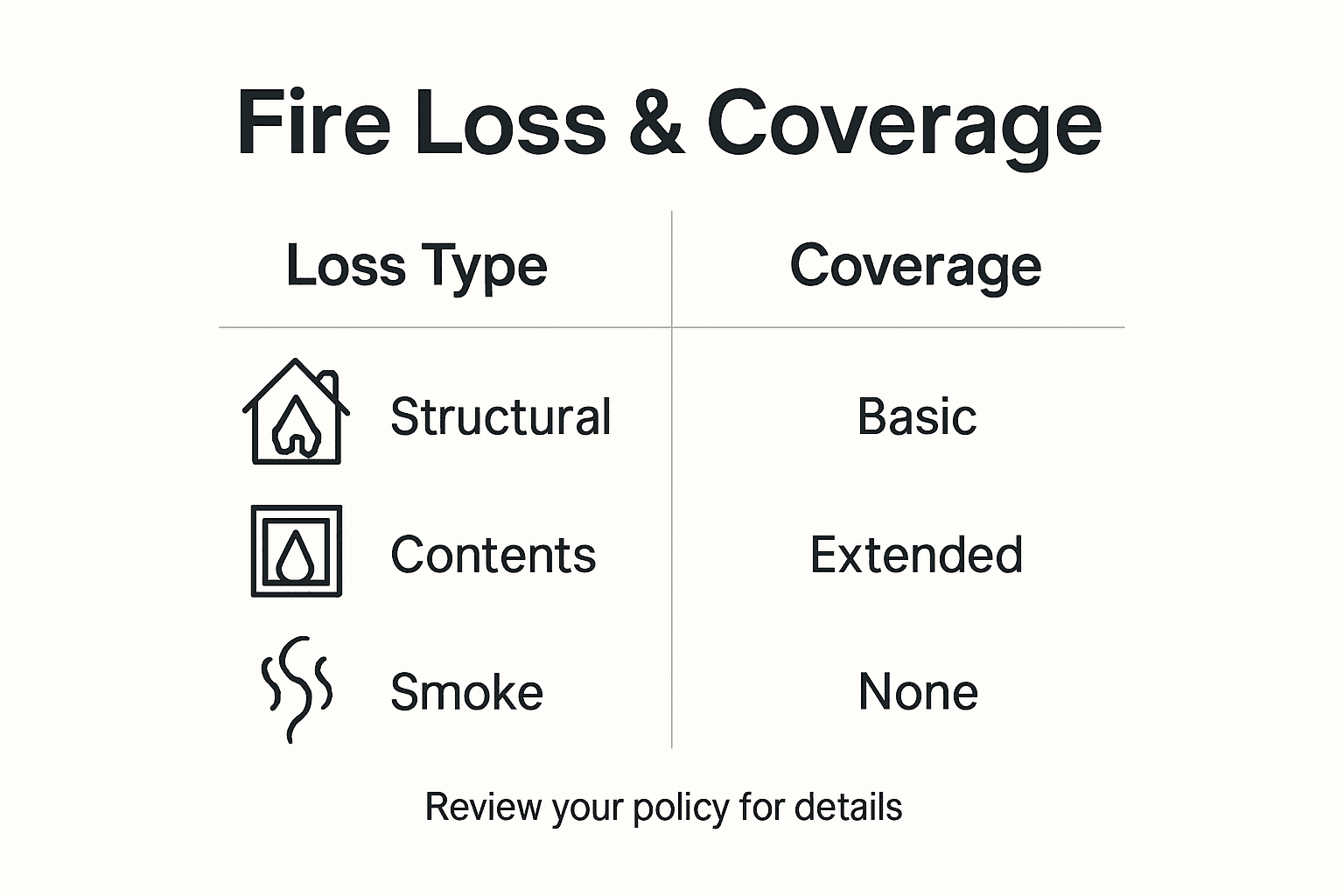
Here’s how common types of fire damage and coverage differ:
| Damage Type | Typical Coverage Provided | Documentation Needed |
|---|---|---|
| Structural damage | Full repair or rebuild funds | Detailed photos, repair bills |
| Personal property loss | Replacement or cash value | Inventory, receipts, photos |
| Smoke/heat exposure | Cleaning and restoration funds | Before/after photos |
| Water damage (firefighting) | Limited reimbursement | Reports, receipts, photos |
Homeowners should carefully review their insurance policy’s specific terms regarding fire damage coverage. Some policies offer replacement cost coverage, which provides funds to replace damaged items at current market prices, while others provide actual cash value coverage that accounts for depreciation. The difference can significantly impact your potential settlement. Understanding your policy’s nuanced details helps ensure you receive appropriate compensation for different types of fire-related losses.
Pro tip: Request a detailed written explanation of your fire damage coverage from your insurance provider, specifically asking about different fire classification types and how they impact your specific policy.
Steps to file a fire damage claim
Filing a fire damage claim requires a systematic approach to ensure you receive fair compensation. The initial steps begin immediately after ensuring your personal safety, with documenting damage and notifying your insurance provider being critical actions. First, contact your insurance company as soon as possible, providing detailed information about the extent of fire damage to your property. Be prepared to share your policy number and a comprehensive description of the losses you’ve experienced.
Documentation becomes your most powerful tool in the claims process. Create a detailed inventory of all damaged property, taking clear photographs and videos from multiple angles. Photographic evidence should capture structural damage, destroyed personal belongings, and any secondary damage from smoke or water used in firefighting. Preserve damaged items when possible, as these can serve as important proof during the insurance adjuster’s investigation. Keep receipts for any emergency repairs or temporary housing expenses, as these may be reimbursable under your policy.
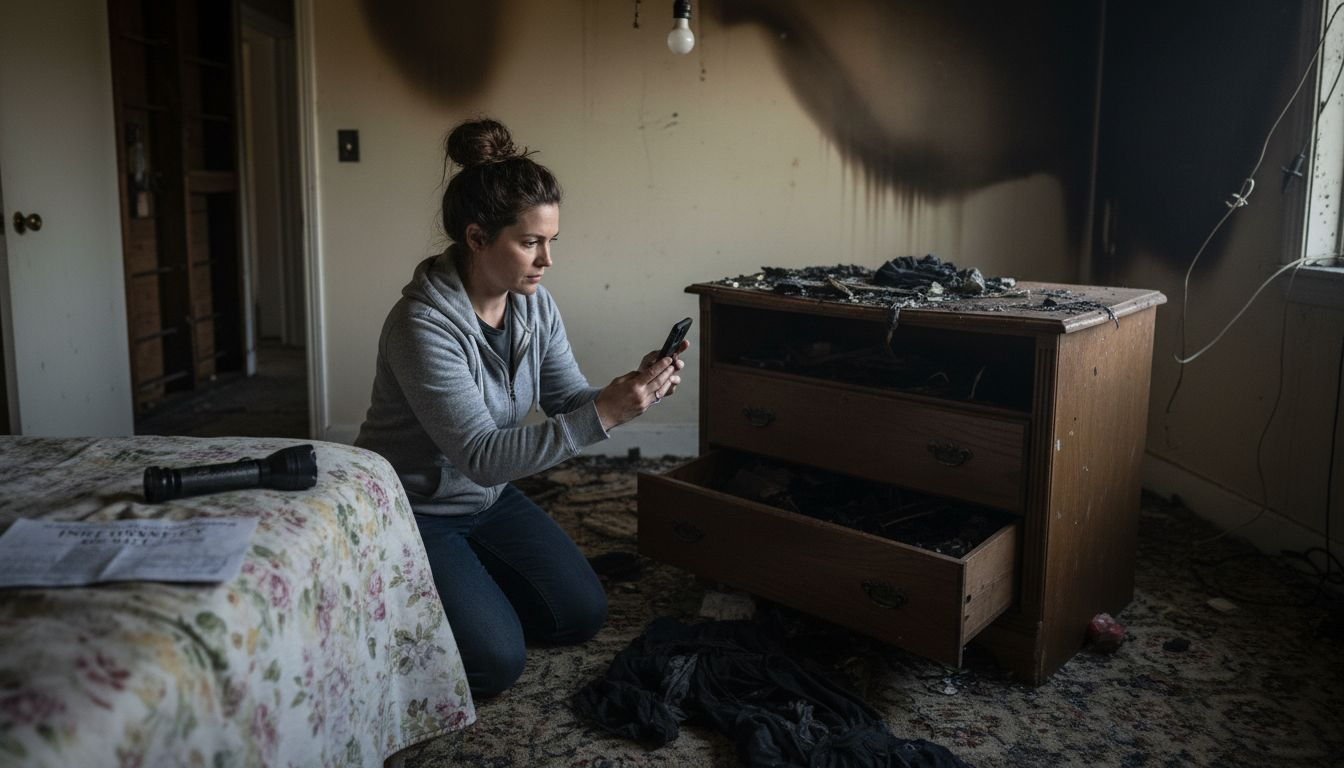
When the insurance adjuster arrives, be prepared and proactive. Accompany them during the property inspection to ensure a thorough assessment of all damages. Ask questions about your coverage and understand the difference between replacement cost and actual cash value settlements. Take detailed notes during the inspection and request a written copy of the adjuster’s initial assessment. Maintain organized records of all communications, including names, dates, and summaries of conversations with your insurance representative.
Pro tip: Create a dedicated digital folder with all fire damage claim documentation, including photos, communications, and receipts, to ensure you have a comprehensive and easily accessible record throughout the claims process.
Key rights and responsibilities in claims
Homeowners facing fire damage claims have specific legal protections and obligations that are crucial to understand. Navigating the complex landscape of insurance claim rights requires knowledge of both homeowner responsibilities and insurer requirements, ensuring a fair and transparent settlement process. The primary duty of a homeowner is to promptly notify their insurance provider about the fire damage, providing comprehensive and accurate documentation of losses.
Your legal rights in an insurance claim include receiving a timely and fair investigation of your damages. Insurance companies must process claims according to the specific terms outlined in your policy, which means evaluating the full extent of fire-related destruction. This includes not just visible structural damage, but also secondary impacts like smoke and heat exposure. Homeowners have the right to dispute settlement offers that do not adequately compensate for their losses, with multiple avenues available including negotiation, formal appraisal, filing a complaint with state regulators, and potentially pursuing legal action.
Equally important are the homeowner’s responsibilities in the claims process. These include mitigating further property damage by making emergency repairs, protecting the property from additional harm, and cooperating fully with insurance adjusters during inspections. You must provide accurate and detailed inventories of damaged property, including supporting documentation like photographs, receipts, and value estimates. In many cases, mortgage lenders will be co-payees on repair checks, adding an additional layer of oversight to ensure funds are used appropriately for property restoration.
Below is a summary of key homeowner rights and responsibilities during the fire damage claim process:
| Category | Examples | Impact on Claim Outcome |
|---|---|---|
| Homeowner rights | Timely investigation, dispute settlements | Ensures fair and complete compensation |
| Homeowner responsibilities | Mitigate further damage, provide full inventory | Prevents claim denials, maximizes payout |
| Insurer obligations | Fairly process claims, follow policy terms | Requires thorough damage evaluation |
Pro tip: Create a comprehensive claim file with digital and physical copies of all documentation, including communication logs, damage photographs, and receipts, to strengthen your negotiating position and protect your interests throughout the claims process.
Common mistakes and settlement risks
Homeowners often make critical errors that can significantly compromise their fire damage insurance claims, potentially reducing their potential settlement amounts. One of the most prevalent mistakes is inadequate documentation of property losses. Many individuals fail to comprehensively photograph and inventory damaged items, which weakens their negotiating position with insurance companies. Accepting the first settlement offer without thorough review or understanding the full extent of their policy coverage can result in substantial financial losses.
Settlement risks extend beyond documentation challenges. Verification challenges can create significant obstacles in the claims process. Some homeowners unknowingly allow unverified individuals claiming to be insurance adjusters onto their property, opening themselves to potential scams or misrepresentation. Additionally, failing to be present during official damage assessments can lead to critical oversights, where adjusters might underestimate the true extent of fire and secondary damage such as smoke and heat exposure. Understanding policy limits, deductibles, and the nuanced language of insurance contracts becomes paramount in protecting one’s financial interests.
Navigating insurance claims requires strategic communication and meticulous record-keeping. Homeowners must maintain detailed logs of all interactions with insurance representatives, carefully track repair estimates, and understand their rights in challenging settlement offers. Critical risks include missing filing deadlines, misinterpreting policy language, and not seeking professional guidance when confronted with complex claim scenarios. Mortgage lenders often play a significant role in payment distribution, adding another layer of complexity to the claims resolution process.
Pro tip: Consider consulting a licensed public adjuster before accepting any initial settlement offer, as they can provide an independent assessment of your property damage and help you understand the true value of your claim.
Maximize Your Fire Damage Claim with Expert Help in Atlanta
Dealing with the aftermath of a fire can be devastating. The challenges of accurately documenting losses, understanding replacement cost versus actual cash value coverage, and negotiating with insurance companies often leave homeowners feeling overwhelmed and uncertain. When every detail matters from thorough inventories to timely communication with adjusters, you deserve a trusted advocate by your side to ensure you receive the full settlement you are entitled to.
Don’t let common claim mistakes or unclear policy terms reduce your payout. At Public Adjusters Atlanta, the licensed public adjusters we work with specialize in fire damage claims and understand the complexities of Atlanta’s insurance landscape. We provide personalized guidance through every step, from detailed damage assessment to maximizing your final settlement. Start with a free claim review or policy evaluation today to protect your home and financial future. Act now—visit Public Adjusters Atlanta and take control of your fire damage claim before critical deadlines pass.
Frequently Asked Questions
What are the first steps to take after a fire incident?
Contact your insurance provider immediately to start the claims process. Document the damage thoroughly by taking photos and creating an inventory of lost items.
How should I document my losses for a fire damage claim?
Create a comprehensive inventory of damaged property, including detailed photographs and videos from multiple angles. Preserve items when possible to serve as evidence.
What types of coverage can affect my fire damage settlement?
The two primary types of coverage are replacement cost coverage, which covers current market prices for damaged items, and actual cash value coverage, which accounts for depreciation and may result in lower payouts.
What common mistakes should I avoid when filing a fire damage claim?
Avoid inadequate documentation of losses, accepting the first settlement offer without thorough review, and failing to be present during adjuster inspections, as these can all jeopardize your potential settlement.