
The chaos after an unexpected fire leaves Atlanta property owners facing complicated insurance paperwork and tough financial decisions. Knowing exactly what to expect from your coverage matters more than ever, because standard homeowners and commercial fire insurance policies protect against financial loss but the fine print often determines how much you really receive. This guide breaks down fire damage insurance basics, key coverage details, and practical steps to help you get the settlement you deserve.
Table of Contents
- Fire Damage Insurance Explained Clearly
- Different Policy Types and Covered Losses
- Filing a Successful Fire Damage Claim
- Common Missteps When Seeking Compensation
- Role of Public Adjusters in Maximizing Payouts
Key Takeaways
| Point | Details |
|---|---|
| Understanding Coverage Variability | Fire insurance policies vary significantly in coverage, including exclusions and deductibles, requiring careful review. |
| Documenting Claims is Crucial | Promptly documenting damage with comprehensive photos and inventories strengthens your claim. |
| Engage a Public Adjuster | Consider hiring a public adjuster to negotiate with insurers, especially if initial settlement offers seem low. |
| Review Policies Annually | Regularly review your insurance policy to ensure adequate coverage and to address any changes in property value. |
Fire Damage Insurance Explained Clearly
When a fire destroys your Atlanta home or business, understanding what your insurance actually covers is the difference between recovering fully and struggling with gaps in your protection. Standard homeowners and commercial fire insurance policies protect against financial loss caused by fire damage to your building’s structure, personal belongings inside, and sometimes additional living expenses if you need temporary housing while repairs happen. But here’s what catches most people off guard: coverage details vary significantly by policy type and insurer, and many policies contain specific exclusions or limitations that can reduce what you receive.
Most standard homeowners insurance policies generally cover damage caused by wildfires, including damage to your home’s physical structure and personal belongings. However, the amount you actually receive depends on three critical factors. First comes your dwelling coverage, which protects the physical structure itself like walls, roof, and built-in systems. Second is personal property coverage, which reimburses you for destroyed furniture, electronics, clothing, and other belongings. Third is additional living expenses coverage, which covers hotel stays, meals, and other costs if you’re temporarily displaced. Many Atlanta homeowners don’t realize their policies may have separate deductibles for each coverage type, and some insurers impose percentage-based deductibles for fire damage that can be substantially higher than standard deductibles. For example, a policy with a 1% fire deductible on a $400,000 home means you’re responsible for $4,000 before coverage kicks in.
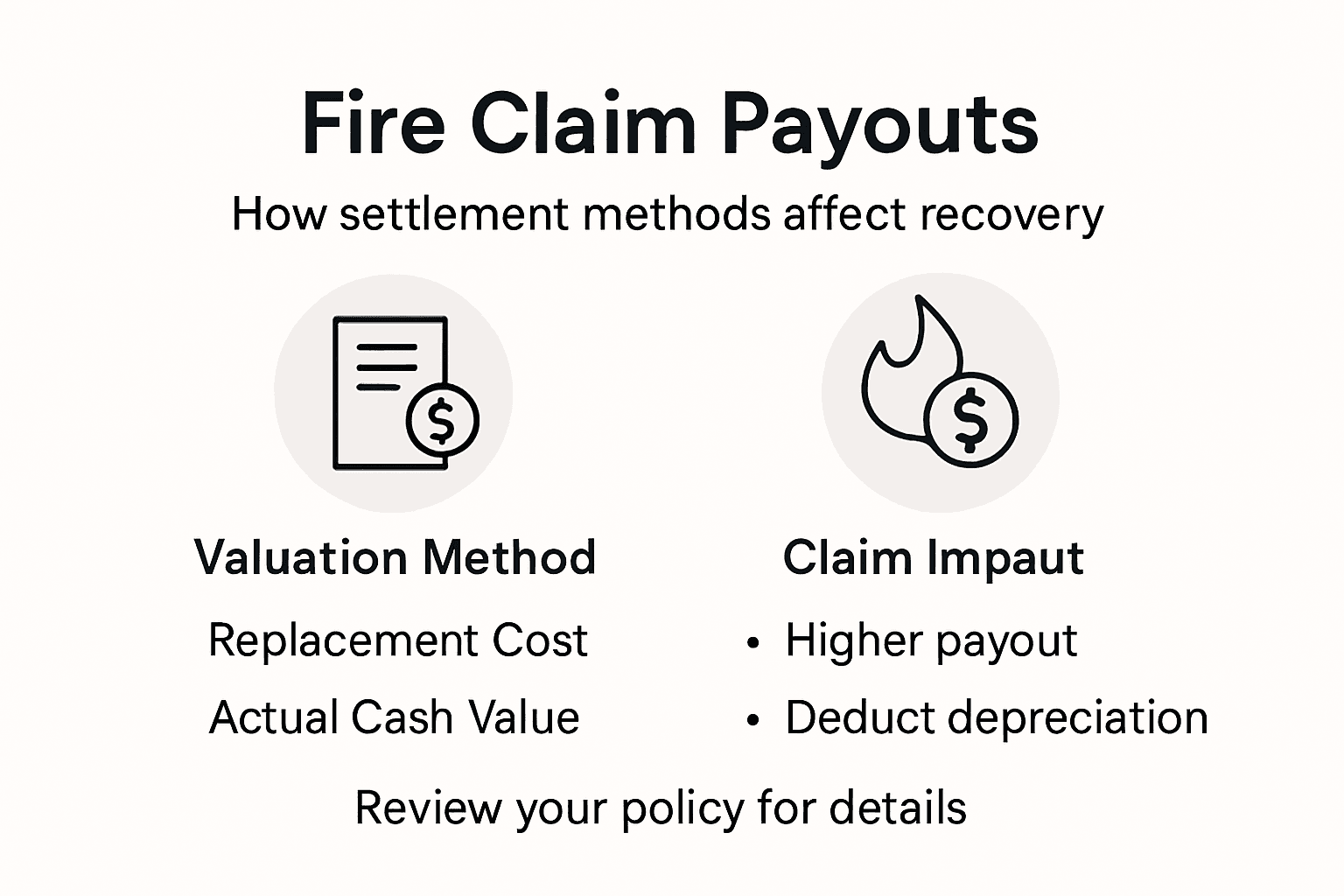
The real complexity emerges when examining policy exclusions and limitations. Some insurers exclude coverage for fires caused by specific circumstances, or cap how much they’ll pay for certain items like jewelry, electronics, or business equipment. Replacement cost policies reimburse you for replacing items at current market prices, while actual cash value policies subtract depreciation from what you receive. This distinction matters enormously. A five year old refrigerator might be worth $200 in actual cash value but cost $1,500 to replace with new equipment. Understanding whether your policy covers replacement cost or actual cash value can mean tens of thousands of dollars in difference on your final settlement.
For clarity, here are key differences between Replacement Cost and Actual Cash Value methods for fire insurance claims:
| Valuation Method | Settlement Calculation | Typical Impact on Payout | Best Used For |
|---|---|---|---|
| Replacement Cost | Pays for new item at current price | Larger payout, covers full replacement | Major home rebuilds |
| Actual Cash Value | New item price minus depreciation | Lower payout, accounts for age | Older possessions |
Pro tip: Pull out your actual insurance policy document and read the fire coverage sections carefully, noting your deductible amounts, coverage limits for dwelling and personal property, and any listed exclusions, then contact your insurer to clarify any ambiguous language before you need to file a claim.
Different Policy Types and Covered Losses
Not all fire insurance policies are created equal, and the type you own directly determines what losses you can recover. Fire losses in the United States are covered under various insurance lines, with homeowners insurance being the largest share, but commercial properties, farmland, and specialized equipment also have dedicated coverage options. For Atlanta homeowners, the most common policy is the HO3 homeowners policy, which covers fire and smoke damage to your structure, personal belongings, and additional living expenses if your home becomes uninhabitable. Business owners typically carry commercial multiple peril policies that bundle fire coverage with liability and other protections, while property managers might need farmowners policies or specialized boiler and machinery coverage for unique risks. The key difference between these policies isn’t just what they cover, but how much they’ll pay and under what conditions.
Understanding what each policy actually covers prevents painful surprises when you file a claim. A basic HO3 homeowners policy usually covers fire and smoke damage, including damage from wildfires that spread to your property. This coverage includes the building structure itself, the contents inside, loss of use expenses, and sometimes debris removal costs. However, many policies exclude certain losses or require additional endorsements to activate coverage. For example, some insurers won’t cover fire damage caused by arson or intentional acts without a rider. Business policies vary even more widely. A restaurant’s commercial policy might cover fire damage to the building and kitchen equipment but exclude coverage for inventory or loss of business income unless those endorsements were specifically added. That’s why reading the actual policy document matters more than relying on what an agent told you during the sales call.
The coverage limits and deductibles vary dramatically by policy type. Homeowners policies typically use replacement cost or actual cash value as their valuation method, while commercial policies might use agreed value or stated value. A $300,000 dwelling coverage limit sounds substantial until your home requires $500,000 in fire repairs, leaving you responsible for the $200,000 gap. Business interruption coverage, which reimburses you for lost revenue while your business is closed due to fire damage, isn’t automatically included in most commercial policies. You have to specifically request it. The same applies to coverage for business personal property, which protects your inventory, equipment, and furnishings. Without this endorsement, your commercial policy might only cover the building structure itself.
Think about your specific situation. Do you own your home outright or have a mortgage? Mortgage lenders require homeowners insurance with dwelling coverage at least equal to the loan amount. Do you rent commercial space? Your landlord’s insurance won’t cover your business equipment or inventory. Are you running a home-based business? Your homeowners policy typically excludes business losses unless you add a home-based business endorsement. The Atlanta market has seen significant fire losses in recent years, and coverage gaps have left many property owners devastated. Reviewing your policy annually ensures you maintain adequate limits as property values increase.
Pro tip: Schedule a detailed policy review with your insurance agent to confirm your dwelling limit, personal property limit, deductible, and any endorsements for business property or specialty items, then request a formal confirmation letter documenting your coverage levels.
Here’s a structured comparison of common fire insurance policy types and what each typically covers:
| Policy Type | Main Coverage Areas | Common Limitations | Best For |
|---|---|---|---|
| HO3 Homeowners | Structure, belongings, loss of use | Item caps, exclusions by cause | Single-family homeowners |
| Commercial Multiple Peril | Building, equipment, liability | Requires endorsement for inventory, business interruption | Business property owners |
| Farmowners | Structure, farmland, machinery | May exclude specialty equipment | Rural property, farms |
| Boiler & Machinery | Equipment breakdown, fire impact | Only machinery, not general property | Owners of specialized equipment |
Filing a Successful Fire Damage Claim
The moments after a fire are chaotic, but what you do in those first 48 hours directly impacts whether you receive full compensation or face months of disputes with your insurer. Your initial priority is safety and stabilization, not insurance paperwork. Once you’ve evacuated safely and emergency responders have cleared the scene, contact your insurance agent or claims department immediately. Most policies require notification within a specific timeframe, often 30 to 60 days, though prompt reporting protects you legally and shows good faith. Tell them the date and time of the fire, what caused it if known, whether anyone was injured, and whether police or fire departments are investigating. Get a claim number and the name of your assigned adjuster. Write this information down because you’ll reference it constantly throughout the claims process.
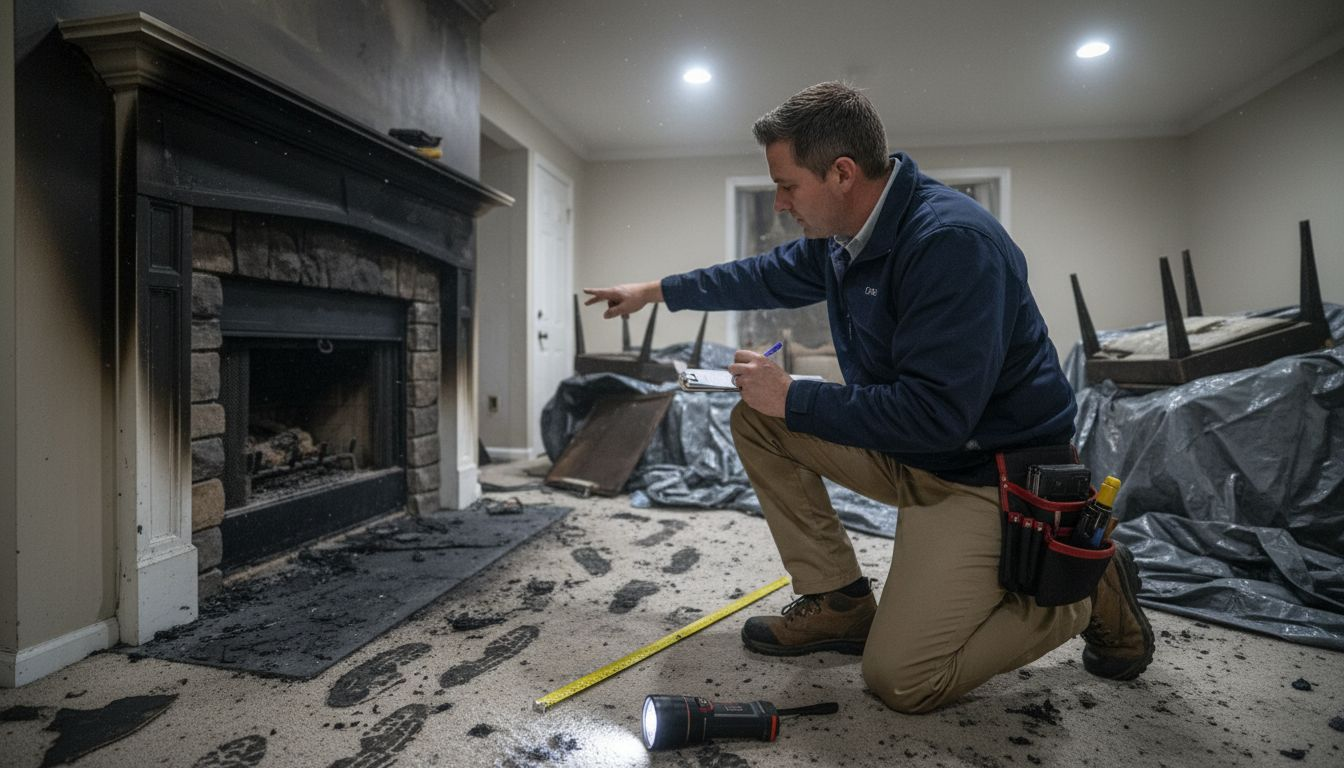
Documentation is everything in fire claims. Filing an insurance claim after fire damage involves immediately documenting all damage carefully with photographs and detailed lists, and protecting your property from further damage. Before the adjusters arrive, take wide angle photos and videos showing the overall scene from multiple angles, then zoom in on specific damaged items. Photograph serial numbers, brand names, and model information on appliances and equipment. Create a detailed inventory listing each damaged item, its original cost, age, and condition before the fire. If you have receipts, warranties, or purchase records, gather them immediately. Don’t throw away damaged items until your adjuster approves, and avoid making repairs without documented estimates first. Many Atlanta homeowners make the mistake of starting cleanup immediately, which destroys evidence that could support a larger claim.
Your relationship with the insurance adjuster makes or breaks your settlement. To file a successful claim, gather all relevant information about the fire incident and resulting damages, complete the necessary claim forms accurately, and submit them promptly, then respond promptly to any requests or adjuster visits. Be cooperative but professional. The adjuster works for the insurance company, not for you, so don’t assume they’re your advocate. If the adjuster’s estimate seems significantly lower than repair estimates from local contractors, that’s a red flag. Request a detailed breakdown of their calculations and don’t accept their first offer if it’s obviously insufficient. Keep copies of everything, including emails, photos, receipts, repair estimates, and documentation of living expenses if you’re displaced. If you disagree with the claim determination, you have the right to dispute it through your state’s insurance commissioner or by hiring a public adjuster who represents your interests.
Many Atlanta property owners underestimate the complexity of fire claims. Smoke damage travels through walls and HVAC systems, affecting areas that weren’t visibly touched by flames. Soot ruins items through oxidation and acid damage long after the fire is extinguished. Some insurers drastically underestimate these indirect losses. Additionally, if the fire destroyed your home’s roof, windows, or exterior, subsequent water damage from rain isn’t automatically covered unless you can prove the water entered through fire damage rather than normal weather exposure. Business owners face even more complications with business interruption claims, inventory replacement, and equipment valuation disputes. This complexity is precisely why many Atlanta homeowners and business owners hire public adjusters to handle the claim process on their behalf.
Pro tip: Start your documentation immediately by photographing everything before cleanup begins, create a detailed written inventory with original costs and purchase dates, and keep all receipts in a dedicated folder, then compare the insurance adjuster’s initial estimate against independent contractor estimates before accepting any settlement offer.
Common Missteps When Seeking Compensation
Fire damage claims fail not because homeowners lack valid losses, but because they make predictable errors that undermine their settlements. The first major misstep is delaying your claim notification. Your policy likely requires reporting within 30 to 60 days, and waiting longer gives insurers grounds to deny your claim outright. Some Atlanta homeowners delay because they’re overwhelmed, hoping to “get their act together” first. That strategy backfires. The insurance company needs to begin their investigation while evidence is fresh and memories are accurate. Delayed reporting also raises red flags about whether losses are legitimate. Even if your policy doesn’t have strict deadlines, prompt notification demonstrates good faith and shows you take your claim seriously. Another critical error is failing to document losses correctly. Many people take a few hasty photos on their phone, which lack detail and context. Professional adjusters need wide angle shots showing the overall damage pattern, close ups of specific items, serial numbers, and clear evidence of how items were destroyed.
The second category of mistakes involves incomplete understanding of what your policy actually covers. Policyholders sometimes assume all fire damage is automatically covered without reviewing exclusions or policy limitations. Business owners are particularly vulnerable here. You might assume your commercial policy covers business interruption losses, only to discover later that you needed a specific endorsement you never purchased. Indirect damages like additional living expenses, hotel costs, meal allowances, and temporary relocation expenses get overlooked constantly. These expenses add up quickly. If you’re displaced for three months while your home is rebuilt, your additional living expenses could easily exceed $15,000. Yet many people don’t even mention these costs to their adjuster because they don’t realize they’re covered. Common missteps when seeking compensation include not understanding the types of damages available, failing to document losses correctly, and missing deadlines for filing claims. Atlanta business owners also overlook business personal property coverage gaps, inventory replacement costs, and lost revenue during closure periods.
The third error involves failing to mitigate further damage. After a fire, your responsibility is to prevent additional losses. If your roof was damaged and rain is in the forecast, you need to secure it immediately. If items are exposed to the elements, cover them. If your building is unsecured, hire someone to board it up. Failure to take these protective steps can result in claim denials or reduced payments. Insurance companies view negligence about preventing additional damage as evidence of bad faith. Similarly, policyholders sometimes delay claim reporting, provide inadequate documentation of losses, and don’t secure damaged property quickly, which can affect claim approval or settlement amounts. Many Atlanta homeowners also make the mistake of accepting the first settlement offer without comparing it to independent repair estimates. Insurance adjusters work for the insurance company, not for you. Their incentive is to minimize payouts. If the adjuster’s estimate for roof repairs is $25,000 but local roofing contractors provide estimates of $35,000 to $40,000, that gap represents a significant shortfall in your settlement.
Another costly mistake is failing to keep detailed expense records. If you’re displaced and staying in hotels, eating meals out, and using laundry services, document every single expense with receipts. Keep receipts for temporary repairs, emergency supplies, and any professional services you hire. Your insurer won’t reimburse expenses you can’t prove. Finally, many people don’t hire professional help when they should. Fire claims are genuinely complex. Smoke damage extends far beyond visible fire damage. Soot causes oxidation damage that isn’t apparent immediately. Water damage from firefighting efforts gets confused with coverage exclusions. Business interruption calculations require detailed financial records. If your initial settlement seems low or you’re uncertain whether you’ve captured all damages, hiring a public adjuster shifts the burden to a professional who represents your interests rather than the insurance company’s interests.
Pro tip: Report your fire damage claim within two weeks of the incident, submit organized documentation including wide angle and close up photos with clear timestamps, and obtain at least two independent contractor estimates before accepting any settlement offer from your insurance adjuster.
Role of Public Adjusters in Maximizing Payouts
When an insurance company’s initial settlement offer falls short of your actual losses, you have options beyond accepting their number and moving forward. Public adjusters are licensed professionals who represent you during the insurance claim process, negotiating directly with insurance companies to secure higher settlements. Unlike the insurance company’s adjuster who works to minimize payouts, a public adjuster works exclusively for you. Think of it as having an expert advocate in your corner who understands every tactic insurers use to reduce claim amounts. This distinction matters enormously. Insurance companies employ adjusters trained to identify coverage gaps, question the necessity of repairs, and depreciate items aggressively. A public adjuster counters these strategies by thoroughly documenting every damage element, obtaining independent repair estimates, and challenging low valuations with market research and contractor expertise.
Public adjusters are licensed professionals who represent policyholders during the insurance claim process and negotiate with insurance companies to seek higher claim settlements by thoroughly documenting damage and advocating for the policyholder’s rights. They charge fees based on a percentage of the claim settlement, typically between 5 and 15 percent, which means they only profit when you receive more money. This alignment of interests is critical. Unlike hourly consultants who bill regardless of outcomes, public adjusters have direct financial incentive to maximize your settlement. Many Atlanta homeowners initially worry about the fee percentage, but the math works out favorably. If an insurance company offers $80,000 and a public adjuster negotiates the settlement up to $125,000, you gain $45,000 after paying the adjuster’s 10 percent fee. You’re still ahead by $40,500 compared to accepting the initial offer. This is particularly true for large commercial claims, where public adjusters frequently increase settlements by 25 to 50 percent.
Public adjusters prove invaluable in specific situations. If your claim was denied outright, a public adjuster investigates whether the denial was justified or if the insurance company overreached. If you experienced significant losses but the insurer’s estimate seems suspiciously low, a public adjuster provides independent verification. If your claim involves complex issues like business interruption, loss of rents, or specialty equipment valuation, their expertise becomes essential. Insurance adjusters work on behalf of the policyholder to help maximize claim recoveries and negotiate settlements, often leading to higher payouts than the initial offer from insurance companies. They’re particularly effective when dealing with disputes over whether specific damages resulted from the covered fire or from subsequent events like water damage or mold growth. These causation disputes are common in Atlanta’s humid climate, where water intrusion and secondary damage complicate fire claims significantly.
The hiring process is straightforward. Contact a licensed public adjuster in Georgia and describe your situation. Most offer free initial consultations and damage assessments. They’ll review your insurance policy, examine the insurance company’s estimate, inspect the damage themselves, and provide a preliminary analysis of whether they believe they can increase your settlement. If you proceed, they handle communication with the insurance company, submit detailed documentation, conduct negotiations, and advocate during disputes. You remain in control of all final decisions, but you’re working with someone who understands claim valuation, depreciation tactics, and settlement negotiation strategies that most homeowners and small business owners lack. This expertise translates directly to higher recoveries.
Pro tip: Request a free damage evaluation from a public adjuster if your insurance settlement offer seems lower than your actual repair costs or if the insurer denied coverage for specific damages you believe should be covered.
Maximize Your Fire Damage Claim with Expert Support
Recovering fully from fire damage requires more than just understanding your insurance policy. Many homeowners and business owners in Atlanta face challenges such as unclear coverage terms, high deductibles, and undervalued settlements. If you are feeling overwhelmed by the complexities of your fire insurance claim or worried about hidden exclusions and limited reimbursements, professional guidance is crucial. Don’t leave your financial recovery to chance when every detail in your policy matters.
Take control of your claim with experienced public adjusters who advocate for you at every step. At Public Adjusters Atlanta, we specialize in comprehensive claim review, policy evaluation, and damage assessment to ensure you receive the full compensation you deserve. Whether you are dealing with disputed fire losses, business interruption coverage, or complicated valuation methods like replacement cost versus actual cash value, our licensed professionals know how to maximize your settlement. Visit our site to learn how we can help you navigate this stressful process and secure your rightful claim recovery today.
Frequently Asked Questions
What does fire damage insurance typically cover?
Fire damage insurance usually covers the physical structure of your home or business, personal belongings, and additional living expenses if you need temporary housing during repairs. Coverage details vary by policy, so it’s essential to review your specific policy for limitations and exclusions.
How do I file a fire damage insurance claim successfully?
To file a successful claim, you should document all damage with photographs, create a detailed inventory of lost items, and notify your insurer promptly—usually within 30 to 60 days of the incident. It’s important to communicate with your insurance adjuster and provide necessary documentation to support your claim.
What is the difference between replacement cost and actual cash value in fire insurance?
Replacement cost covers the full cost of replacing damaged items at current prices, while actual cash value subtracts depreciation from the replacement cost, leading to a lower payout. Understanding your policy’s valuation method can significantly impact your final settlement.
Should I hire a public adjuster for my fire damage claim?
Hiring a public adjuster can be beneficial if your claim is denied, the settlement offer seems low, or if you’re dealing with complex issues. Public adjusters work for you, handling negotiations and maximizing your settlement based on thorough documentation and their expertise.