
Every year, thousands of American homeowners in the Atlanta area face the stressful aftermath of powerful hailstorms. The reality is that hailstorms cause billions in property damage across the United States annually, making insurance claims both essential and often complicated. When policy language gets confusing and insurers challenge claims, understanding your rights and exploring expert help from a public adjuster becomes crucial for securing every dollar you are owed.
Table of Contents
- What Is Hail Damage Insurance Coverage?
- Types of Hail Damage and Insurance Claims
- How Hail Damage Claims Are Evaluated
- Role of Public Adjusters in Claim Negotiation
- Common Claim Challenges and Mistakes to Avoid
- Maximizing Your Hail Damage Settlement
Key Takeaways
| Point | Details |
|---|---|
| Understanding Hail Damage Coverage | Homeowners should review their policies to understand the extent of coverage for hail damage, as not all damage may be included. |
| Documentation is Key | Photograph and document all hail damage immediately after a storm to support your insurance claim effectively. |
| Difference Between Damage Types | Claims are more likely to be approved for functional damage that impacts a property’s performance rather than cosmetic damage that does not affect structural integrity. |
| Engage Experts for Claims | Consider hiring a public adjuster for expert guidance and negotiation support, maximizing your potential settlement for hail damage. |
What Is Hail Damage Insurance Coverage?
Hail damage insurance coverage protects homeowners from financial losses caused by hailstorms. This specialized protection within standard homeowner policies helps repair or replace structures damaged by hailstone impacts. Comprehensive insurance research indicates that coverage typically extends to roofs, siding, windows, and other structural components of residential properties.
Under most standard homeowner policies based on the Insurance Services Office (ISO) HO-3 form, hail damage falls under dwelling protection. This means insurers will cover repairs or replacements subject to specific policy terms and conditions. However, not all damage qualifies – cosmetic harm that does not compromise structural integrity might be excluded. Homeowners should carefully review their policy details to understand the extent of their protection.
The specifics of hail damage coverage can vary significantly depending on regional risk factors, property location, and individual policy provisions. Some insurance providers in hail-prone regions might implement percentage-based deductibles or impose stricter limitations. Policy documentation research emphasizes the critical importance of proper documentation and timely claims filing to ensure successful insurance compensation.
Pro tip: Photograph and document any hail damage immediately after a storm to provide clear evidence for your insurance claim and improve your chances of comprehensive coverage.
Types of Hail Damage and Insurance Claims
Hail damage encompasses various forms of property damage that can significantly impact homeowners’ insurance claims. Comprehensive research on hail damage identifies two primary categories: functional damage and cosmetic damage. Functional damage directly affects a structure’s performance and protective capabilities, while cosmetic damage primarily impacts visual appearance without compromising structural integrity.
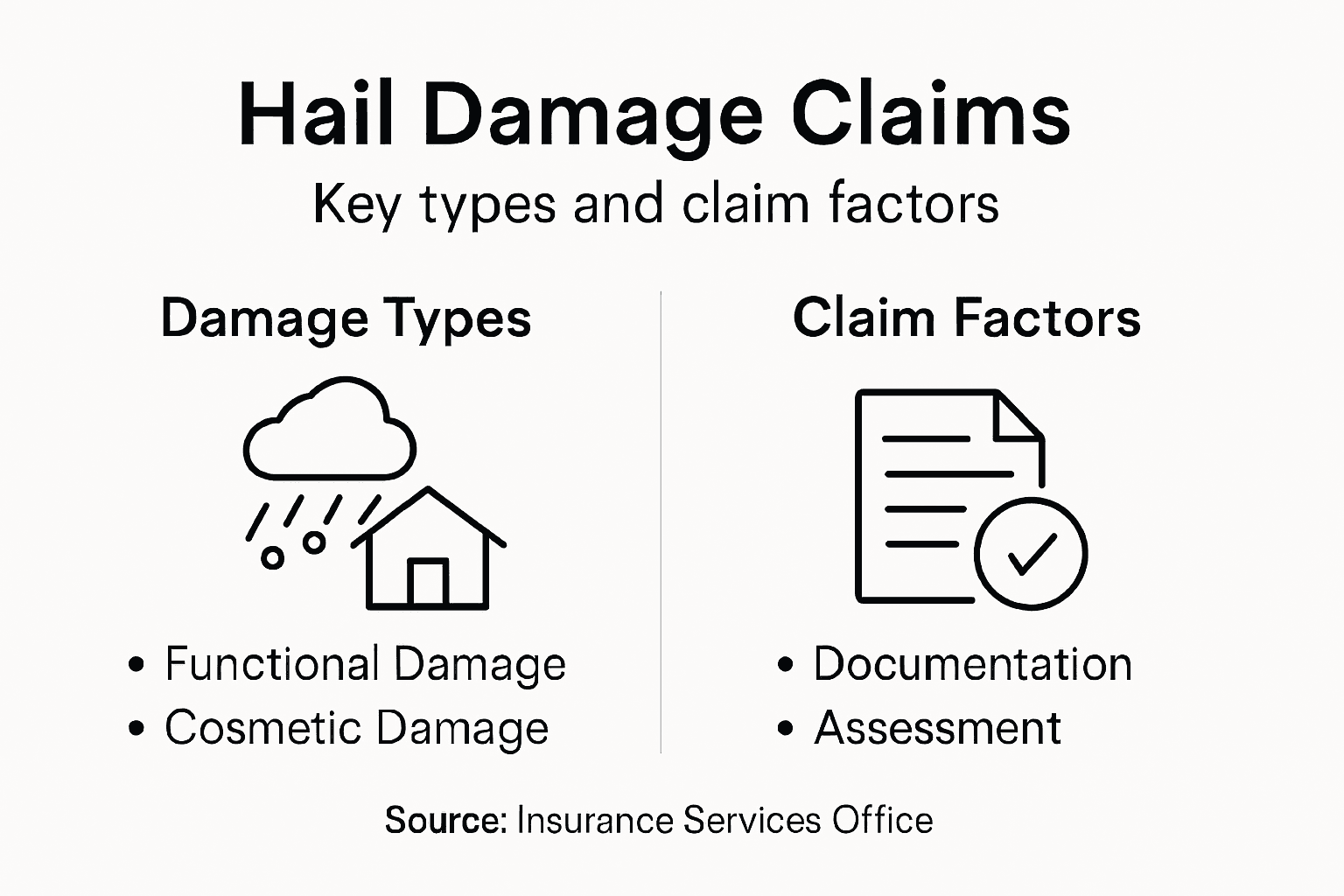
Insurance claims typically prioritize functional damage, which includes harm that reduces a roof’s ability to protect against water intrusion. Insurance research highlights that damage can occur to multiple property elements including roofs, siding, windows, fences, and personal property. The severity of damage depends on factors like hailstone size, concentration, and impact velocity. Notably, even small hailstones in high concentrations can cause cumulative damage that may not be immediately apparent.
Homeowners should understand that insurance providers evaluate claims based on specific damage criteria. Structural damage that threatens the property’s protective function is more likely to be approved compared to purely aesthetic damage. Documentation becomes crucial in this process, with insurers requiring detailed evidence of the hail’s impact, including photographs, measurements of hailstone size, and professional damage assessments.
Here is a summary of key differences between functional and cosmetic hail damage:
| Damage Type | Impact on Home Structure | Typical Insurance Coverage | Claim Approval Likelihood |
|---|---|---|---|
| Functional Damage | Reduces protective function | Often fully or partially covered | High, if well documented |
| Cosmetic Damage | No impact on performance | Frequently excluded or limited | Low, unless misclassified |
Pro tip: Keep a comprehensive photographic record of hail damage immediately after a storm, including close-up and wide-angle shots that demonstrate the extent and severity of the damage to support your insurance claim.
How Hail Damage Claims Are Evaluated
Insurance claim evaluation for hail damage is a complex process that requires meticulous assessment of multiple factors. Detailed research on claims processing reveals that adjusters use sophisticated techniques including radar-based hail size estimates and comprehensive damage analysis to determine the legitimacy and extent of property harm.
Insurance professionals conduct thorough on-site inspections to identify functional damage that impacts a property’s structural integrity and performance. Insurance research highlights that adjusters focus on specific criteria such as hailstone size, impact density, and material resilience. They carefully examine roofing systems, siding, windows, and other vulnerable areas, distinguishing between superficial cosmetic damage and substantive structural impairment that warrants compensation.
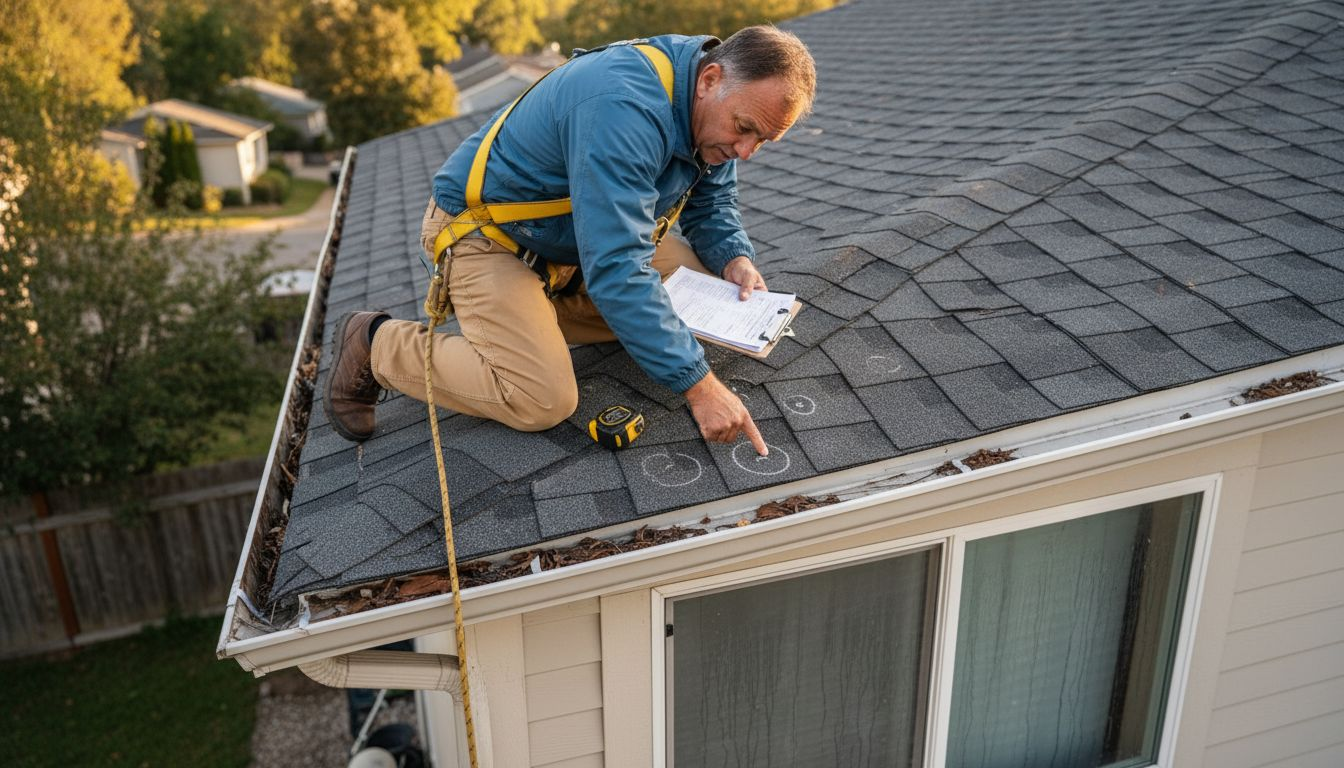
The evaluation process involves several critical steps, including documenting precise damage characteristics, measuring hail impact points, and assessing the potential long-term consequences of storm damage. Adjusters typically look for specific indicators such as granule loss on roofing materials, dents in metal surfaces, cracked or bruised shingles, and compromised protective layers. Advanced technological tools and professional expertise help insurers differentiate between minor surface damage and significant structural vulnerabilities that could compromise a property’s overall protection.
Pro tip: Request a professional damage assessment immediately after a hailstorm, ensuring you have detailed photographic evidence and expert documentation to support your insurance claim.
Role of Public Adjusters in Claim Negotiation
Public adjusters serve as critical advocates for homeowners navigating complex hail damage insurance claims. Comprehensive legal research reveals these licensed professionals work exclusively for policyholders, providing expert guidance through the intricate claims process. Unlike insurance company adjusters, public adjusters focus solely on maximizing the policyholder’s compensation and protecting their financial interests.
The negotiation process involves multiple sophisticated strategies. Public adjusters meticulously document property damage, compile detailed claim packages, and leverage their deep understanding of insurance policy language to challenge initial settlement offers. They conduct thorough damage assessments, utilize professional measurement techniques, and present comprehensive evidence that demonstrates the full extent of hail-related property harm. Professional insurance insights indicate that these experts typically charge a percentage of the final settlement, which inherently motivates them to secure the most substantial compensation possible.
Homeowners benefit from public adjusters’ specialized knowledge in interpreting complex policy provisions, identifying hidden damages, and negotiating with insurance companies. These professionals understand the nuanced language of insurance contracts and can effectively argue for coverage of damages that might otherwise be overlooked. Their expertise becomes particularly valuable in cases involving extensive or technically complex hail damage, where technical assessment and strategic negotiation can significantly impact the final settlement.
Pro tip: Interview multiple public adjusters, verify their specific experience with hail damage claims, and request references from previous clients to ensure you select the most qualified professional for your specific situation.
Common Claim Challenges and Mistakes to Avoid
Hail damage insurance claims are fraught with potential pitfalls that can significantly impact a homeowner’s compensation. Legal research highlights critical challenges such as distinguishing between cosmetic and functional damage, which often becomes a contentious point during claim negotiations. Policyholders frequently struggle with understanding the nuanced differences between surface-level harm and structural impairment that truly warrants comprehensive insurance coverage.
Timely and thorough documentation emerges as a crucial factor in successful claim processing. Homeowners commonly make mistakes like delaying damage reporting, failing to capture comprehensive photographic evidence, or neglecting to maintain detailed repair records. Insurance claim guidance emphasizes the importance of being present during insurance adjuster inspections and proactively presenting all relevant damage documentation. Miscommunication and lack of familiarity with policy specifics can lead to reduced settlements or outright claim denials.
Understanding policy exclusions and deductibles represents another significant challenge for many homeowners. Some insurance policies impose specific limitations on hail damage claims, particularly in regions prone to severe storms. Policyholders must carefully review their coverage terms, comprehend the difference between percentage-based and fixed deductibles, and recognize potential scenarios that might limit their compensation. Expert guidance can help navigate these complex policy intricacies and prevent unexpected financial setbacks.
This table highlights common mistakes in hail damage claims and how to avoid them:
| Common Mistake | Potential Consequence | Best Practice to Mitigate |
|---|---|---|
| Delayed reporting | Claim denial or reduction | Report damage immediately |
| Incomplete documentation | Insufficient settlement | Capture detailed photos, records |
| Ignoring policy details | Missed coverage benefits | Review policy thoroughly |
| Not attending inspection | Missed evidence presentation | Be present with all documentation |
Pro tip: Create a dedicated digital folder with timestamped photographs, repair estimates, and communication records immediately after discovering hail damage to build a comprehensive and compelling insurance claim documentation package.
Maximizing Your Hail Damage Settlement
Strategic preparation is crucial when seeking maximum compensation for hail damage. Comprehensive claim strategies recommend thoroughly documenting all damages before the insurance adjuster’s arrival, ensuring no detail goes unnoticed. This involves creating a comprehensive photographic and video record that captures the full extent of hail-related property damage, including close-up shots of specific impact areas and wider contextual views.
Navigating the claims process requires a proactive and informed approach. Homeowners should be present during insurance inspections, actively participate in damage assessments, and maintain meticulous records of all communications and repair estimates. Insurance industry guidance emphasizes the importance of obtaining multiple repair estimates and understanding the intricate details of your insurance policy. This includes comprehending coverage limits, deductibles, and potential exclusions that might impact your settlement.
Professional expertise can significantly enhance settlement outcomes. Consider engaging a public adjuster who specializes in hail damage claims and can provide expert negotiation support. These professionals understand the nuanced language of insurance policies and can effectively advocate for comprehensive compensation. They help identify hidden damages, challenge initial settlement offers, and ensure that all legitimate repair and replacement costs are fully accounted for in the final settlement.
Pro tip: Create a detailed digital claims folder with timestamped photographs, repair estimates, contractor assessments, and insurance correspondence to build an irrefutable documentation package that strengthens your negotiation position.
Get the Full Compensation You Deserve for Hail Damage
Hail damage claims can be confusing and frustrating. The article explains how challenges like distinguishing functional versus cosmetic damage, properly documenting losses, and navigating complex insurance policies can stand between you and a fair settlement. If you are facing these problems, the pain points are clear: ensuring accurate damage assessment, overcoming insurer denials, and maximizing your payout.
You do not have to face this process alone. Our licensed public adjusters at Public Adjusters Atlanta specialize in hail damage insurance claims. They act as your advocate to carefully review your policy, conduct thorough damage assessments, and skillfully negotiate with insurers for the compensation you deserve. Learn more about how our expert claim negotiation services can protect your financial interests.
Don’t leave your settlement to chance. Take control now by contacting Public Adjusters Atlanta for a free, no-obligation damage evaluation. Maximize your hail damage claim with personalized support from professionals who understand the unique complexities of your insurance policy and local storm risks. Start your path to fair compensation today.
Frequently Asked Questions
What is hail damage insurance coverage?
Hail damage insurance coverage protects homeowners from financial losses caused by hailstorms. It usually covers repairs or replacements for damaged roofs, siding, windows, and other structural components of a home.
How is hail damage evaluated by insurance companies?
Insurance companies evaluate hail damage by conducting thorough on-site inspections, focusing on factors like hailstone size, impact density, and the extent of structural impairment. Adjusters look for functional damage that affects the property’s protective capabilities.
What types of hail damage are covered by insurance?
Typically, hail damage is classified into two categories: functional damage, which affects a structure’s performance, and cosmetic damage, which primarily impacts appearance. Insurance claims usually prioritize functional damage, while cosmetic damage may be excluded or limited in coverage.
How can homeowners maximize their hail damage insurance settlement?
To maximize their settlement, homeowners should document all damage meticulously before the adjuster’s visit, be present during inspections, and consider hiring a public adjuster. Keeping a detailed record of communications and repair estimates is also essential.