

Most American homeowners are surprised to learn that nearly 30 percent of property damage insurance claims are initially denied, leaving families in Atlanta scrambling for fair compensation when disaster strikes. This reality matters because navigating complex insurance policies without expert help often results in missed payouts and unexpected financial stress. If your recent claim was denied or underpaid, understanding your options with a skilled public adjuster could make all the difference in securing the settlement you deserve.
Table of Contents
- What Is An Insurance Claim For Property Damage?
- Types Of Property Insurance Claims Explained
- Step-By-Step Insurance Claim Process
- Legal Rights And Policyholder Responsibilities
- Mistakes That Lower Your Insurance Settlement
Key Takeaways
| Point | Details |
|---|---|
| Understanding Insurance Claims | An insurance claim for property damage is a formal request for compensation after unexpected damage to real or personal property. Prompt reporting and meticulous documentation are crucial for a successful claim. |
| Types of Policies | Property insurance claims are categorized into named perils and open perils, each offering different coverage levels. Understanding your policy type is essential for ensuring adequate protection and compensation. |
| Claims Process Steps | The insurance claim process involves documenting damage, communicating with your insurer, and providing necessary evidence. Maintaining thorough records and proactive follow-ups is vital for following your claim through to a satisfactory resolution. |
| Avoiding Common Mistakes | Homeowners often reduce potential settlements by making mistakes like delaying claims or underinsuring property. Awareness of documentation requirements and avoiding premature acceptance of offers can significantly enhance settlement outcomes. |
What Is an Insurance Claim for Property Damage?
An insurance claim for property damage is a formal legal request made by a property owner to their insurance company seeking financial compensation for losses sustained to real or personal property. When unexpected events like storms, fires, or accidents damage your home or belongings, an insurance claim represents your pathway to recovery.
Property damage claims can encompass various scenarios, including structural damage to homes, destruction of personal possessions, or losses from natural disasters. Homeowners typically file claims under their property insurance policy to receive funds that help repair or replace damaged assets. The process involves documenting the extent of damage, providing evidence of the loss, and working with insurance adjusters to determine appropriate compensation.
The claims process requires careful documentation and prompt reporting. Policyholders must notify their insurer quickly after discovering damage and prepare a comprehensive inventory of affected items. This typically includes photographs, repair estimates, and detailed descriptions of damaged property. Insurance companies will then send an adjuster to assess the claim, evaluate the damage, and determine the appropriate settlement amount based on the policy’s coverage terms.
Pro tip: Keep a detailed digital and physical backup of all home inventory, receipts, and valuable item documentation before any potential damage occurs to streamline your future insurance claim process.
Types of Property Insurance Claims Explained
Property insurance claims vary widely, covering different types of damage and potential risks to residential and commercial properties. These claims typically fall into two primary categories: named perils and open perils policies, each providing distinct levels of protection for property owners. Named perils policies specifically list covered events such as fire, lightning, explosion, and theft, while open perils policies offer broader protection by covering all potential losses except those explicitly excluded.
Here’s a comparison of named perils vs. open perils insurance policies:
| Policy Type | Coverage Scope | Common Examples | Exclusions Approach |
|---|---|---|---|
| Named Perils | Only listed risks are covered | Fire, theft, explosion | Anything not specifically listed |
| Open Perils | Covers all except exclusions | Most natural disasters | Only specific exclusions listed |
Homeowners and property owners can file claims for various types of damage, including natural disasters, structural damages, and personal property losses. After significant events like tornadoes, hurricanes, wildfires, or floods, insurance claims can cover multiple aspects of property damage. These claims often include repair or replacement of physical structures, compensation for damaged personal belongings, and additional living expenses if the property becomes temporarily uninhabitable during repairs.

Common types of property insurance claims include fire damage, water damage, wind and storm damage, theft, vandalism, and natural disaster-related losses. Each claim type requires specific documentation and follows a unique assessment process. Insurance companies typically send professional adjusters to evaluate the extent of damage, verify the claim’s validity, and determine appropriate compensation based on the policy’s specific terms and coverage limits.
Pro tip: Photograph and document your property’s condition before potential damage occurs, storing digital copies in multiple secure locations to ensure smooth claims processing in emergency situations.
Step-By-Step Insurance Claim Process
Filing an insurance claim requires a systematic approach that demands attention to detail and prompt action. The process begins immediately after discovering property damage, with the critical first step of documenting the incident thoroughly. This involves taking comprehensive photographs of the damage, collecting all relevant evidence, and preparing a detailed inventory of affected items.
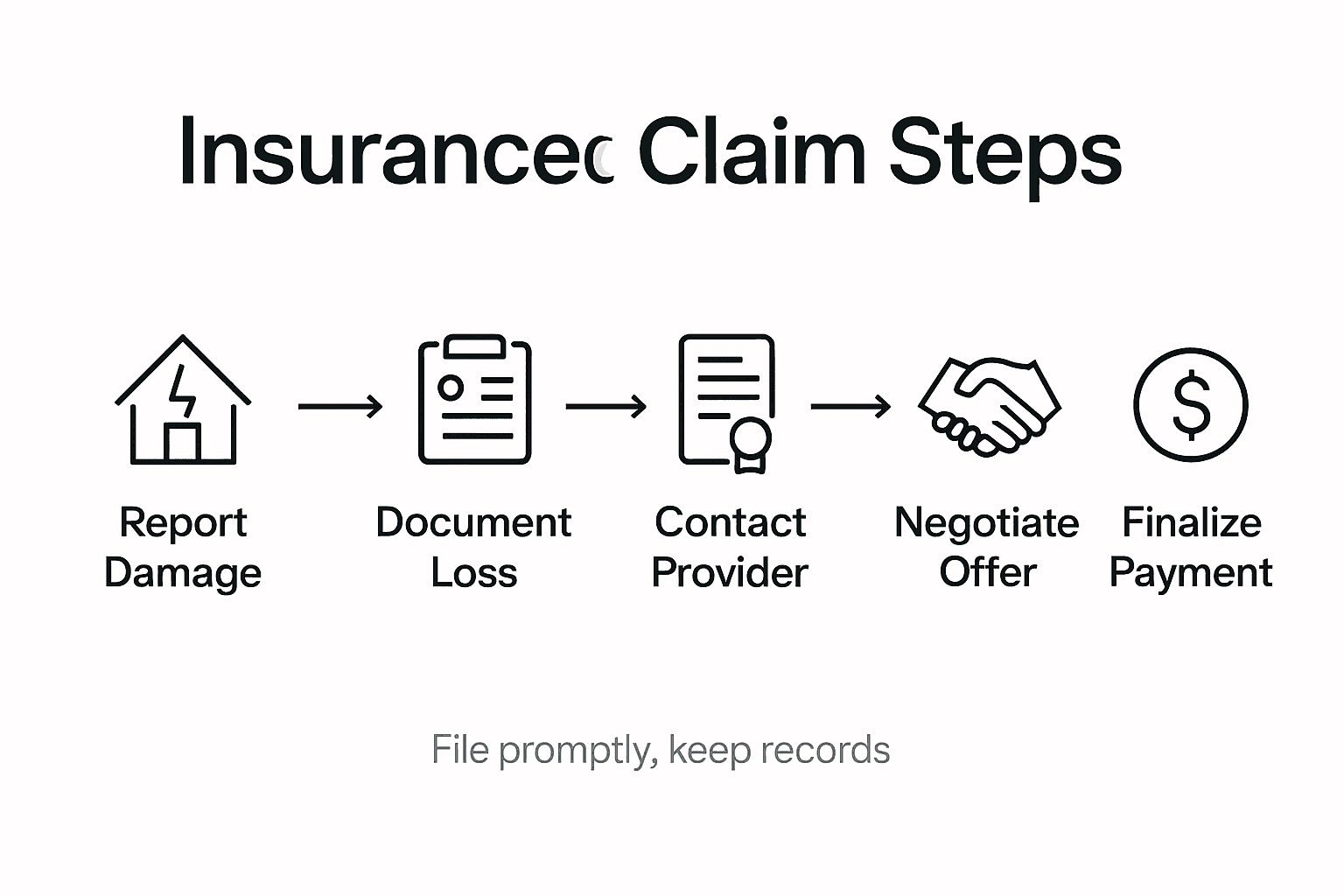
The next phase involves direct communication with your insurance provider. Initiating the claim typically requires contacting your insurer to arrange an official inspection by a professional claims adjuster. During this inspection, the adjuster will evaluate the extent of the damage, estimate repair costs, and develop an initial settlement proposal. Homeowners should be prepared to provide additional documentation, including repair estimates from licensed contractors, receipts for damaged items, and any police or incident reports related to the damage.
After the initial assessment, the insurance company will review the claim and determine the appropriate compensation. This process may involve multiple stages, with initial payments potentially serving as advances against the final settlement. Policyholders should maintain meticulous records of all communications, keep copies of submitted documents, and stay proactive in following up on the claim’s progress. If the initial settlement offer seems insufficient, you have the right to negotiate or seek additional evaluation from independent experts.
Pro tip: Create a dedicated digital folder with all claim-related documents, including photos, estimates, and correspondence, to ensure you have a comprehensive and organized record throughout the claims process.
Legal Rights and Policyholder Responsibilities
The insurance claims process involves a delicate balance of legal rights and responsibilities that both policyholders and insurance companies must navigate carefully. At its core, the relationship is governed by a fundamental principle of good faith and fair dealing. Policyholders have specific legal entitlements, including the right to receive fair, prompt, and equitable treatment when filing a claim. This means insurance companies are obligated to process claims thoroughly and transparently, providing reasonable compensation for covered damages.
Policyholders bear significant responsibilities in the claims process that directly impact their ability to receive compensation. These responsibilities include maintaining accurate documentation, filing claims in a timely manner, providing truthful and comprehensive information about the incident, and cooperating fully with the insurance company’s investigation. Failing to meet these obligations can result in claim denial or reduced settlement amounts. The burden of proof typically falls on the policyholder to demonstrate that the damage falls within the policy’s coverage and to provide substantive evidence supporting their claim.
Legal protections exist to prevent insurance companies from engaging in bad faith practices. These protections ensure that insurers cannot unreasonably delay, deny, or underpay legitimate claims. Policyholders have the right to challenge claim decisions, request detailed explanations for denials, and seek independent assessment of their damage. In cases where an insurance company fails to act in good faith, policyholders may have legal recourse through formal complaints, mediation, or potentially pursuing litigation to enforce their policy rights.
Pro tip: Maintain a comprehensive, chronological file of all claim-related communications, including dates, names of representatives spoken to, and summaries of conversations to protect your legal interests.
Mistakes That Lower Your Insurance Settlement
Many homeowners unintentionally reduce their potential insurance settlements through common mistakes that can significantly impact their financial recovery after property damage. These errors often stem from a lack of understanding about insurance policies, documentation requirements, and claim processes. One of the most critical mistakes is underinsuring property or failing to maintain accurate and up-to-date coverage that reflects the true replacement cost of your assets.
Documentation and timing play crucial roles in maximizing settlement potential. Delaying claim filing, neglecting to thoroughly document damages, or providing incomplete information can drastically reduce your potential compensation. Policyholders must understand how depreciation, deductibles, and policy limits directly affect their settlement amounts. For instance, choosing a high deductible might lower your premium but can significantly reduce your out-of-pocket recovery in the event of a claim. Additionally, not maintaining a comprehensive home inventory or failing to update your policy as your property’s value changes can leave you substantially undercompensated.
Some less obvious mistakes can also compromise your insurance claim. These include admitting fault prematurely, accepting the first settlement offer without negotiation, or failing to understand the specific terms of your policy. Many homeowners unknowingly provide statements that can be used to minimize their claim, or they accept settlements without fully assessing the total extent of their damages. Insurance companies are businesses focused on minimizing their financial exposure, which means policyholders must be proactive, detailed, and strategic in pursuing their rightful compensation.
Below is a summary of common mistakes that can reduce your insurance settlement:
| Mistake | Impact on Settlement | How to Avoid |
|---|---|---|
| Filing claim late | Loss of eligibility or delays | Report damage immediately |
| Inadequate documentation | Reduced payout | Keep detailed records |
| Underinsuring property | Insufficient compensation | Review coverage annually |
| Accepting first offer too quickly | Missed higher settlement potential | Negotiate and assess thoroughly |
Pro tip: Create a digital and physical backup of a comprehensive home inventory, including photographs, serial numbers, and purchase receipts, stored in multiple secure locations to protect your claim documentation.
Get the Full Settlement You Deserve With Expert Help
Navigating the complex process of insurance claims for property damage can feel overwhelming and stressful. From understanding your policy’s nuances to gathering thorough documentation and negotiating with insurance adjusters, many homeowners and business owners face challenges that delay or reduce their settlements. Maximizing your claim requires expertise in damage assessment, claim review, and steadfast advocacy to protect your rights and ensure fair compensation.
Do not let common pitfalls like underinsuring, late filings, or insufficient documentation hold you back. At Public Adjusters Atlanta, the licensed public adjusters we work with specialize in representing clients across Georgia to recover the maximum settlement they are entitled to after fire, water, storm, hail, mold, vandalism, and other property damages. Take control of your claim today by contacting us for a free damage evaluation. Visit our site now to learn how our tailored public adjusting services can guide you every step of the way and secure the full compensation that your property loss demands. Explore more about our services at Public Adjusters Atlanta and start your claim journey with confident support.
Frequently Asked Questions
What is the process for filing an insurance claim for property damage?
Filing an insurance claim involves documenting the damage, contacting your insurance provider to report the incident, and having a professional claims adjuster evaluate the damage. You’ll need to provide evidence and inventory of affected items to support your claim.
How can I maximize my insurance settlement after property damage?
To maximize your settlement, promptly document all damage, maintain a detailed inventory of affected items, and communicate thoroughly with your insurance company. Negotiate any initial settlement offers if they seem insufficient, and consider getting independent assessments of your damage if necessary.
What common mistakes should I avoid when filing an insurance claim?
Avoid filing your claim late, providing inadequate documentation, and accepting the first settlement offer without negotiation. It’s also essential not to admit fault prematurely or forget to update your policy as your property’s value changes.
What rights do policyholders have during the claims process?
Policyholders have the right to fair and prompt treatment when filing a claim. This includes the right to challenge claim decisions and receive detailed explanations for any claims that are denied or underpaid. Transparency from the insurance company is a key aspect of this relationship.
Recommended
- Insurance Claim Help – The Licensed Public Adjusters Atlanta GA
- Let Professionals Help You File Your Insurance Claims
- Insurance Claim Atlanta GA – Expert Insurance Claim Adjusters In USA
- Filing A Claim With Someone Else’s Property Insurance Aka Third Party Insurance. – Public Adjusters Atlanta GA | Public Adjusters Georgia