

Receiving a claim denial after your Atlanta home suffers damage can leave you frustrated and unsure where to turn next. The appeals process feels overwhelming for many Georgia homeowners, but a strong response starts with one step: gathering essential claim denial documents. Knowing which paperwork to collect and how to organize it gives your appeal the foundation it needs, setting you up to challenge the insurer’s decision with confidence and accuracy.
Table of Contents
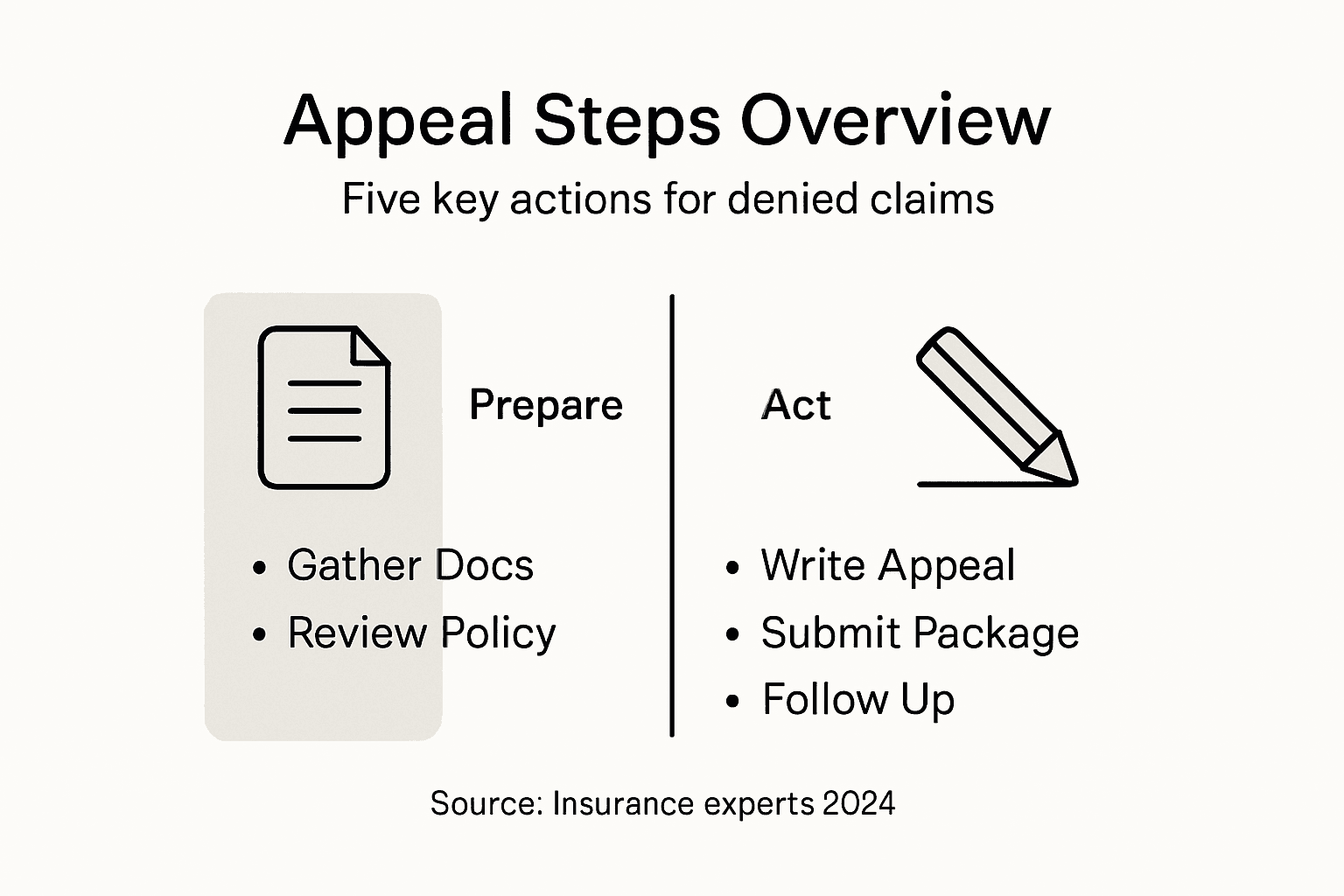
- Step 1: Gather Essential Claim Denial Documents
- Step 2: Analyze Your Insurance Policy Details
- Step 3: Prepare A Compelling Appeal Letter
- Step 4: Submit Your Appeal With Supporting Evidence
- Step 5: Follow Up And Verify Appeal Resolution
Quick Summary
| Key Point | Explanation |
|---|---|
| 1. Collect All Essential Documents | Gather the denial letter, EOB statements, and supporting records to build your appeal effectively. |
| 2. Analyze Your Insurance Policy | Understand the terms, coverage, and exclusions in your policy to counter the insurer’s reasons effectively. |
| 3. Prepare a Professional Appeal Letter | Clearly state your case, reference supporting evidence, and maintain a respectful tone throughout. |
| 4. Submit Appeal Properly and Timely | Ensure all documents are complete, labeled, and sent via a reliable method within the deadline. |
| 5. Follow Up on Appeal Status | Verify receipt of your appeal, track its progress, and respond promptly to any requests from the insurer. |
Step 1: Gather essential claim denial documents
You’re about to build your appeal case, and that starts with collecting every document related to your denied claim. Think of this as assembling the evidence that will support your argument to the insurance company. Without these documents, your appeal will lack the foundation it needs to succeed.
Start by locating your denial letter. This is the most critical document you have. The letter explains why your claim was denied and typically includes your policy number, claim number, and the specific reasons for the denial. Keep this somewhere safe and easily accessible. You’ll reference it constantly as you build your appeal.
Next, gather your explanation of benefits (EOB) statements or any claim-related correspondence from your insurer. These documents show what was submitted, what was paid, and what was denied. According to guidelines from the National Association of Insurance Commissioners, you’ll also need to collect all relevant documentation such as medical records, provider statements, and any other evidence supporting your claim. If your damage claim involves property damage from a storm, fire, or other covered event, gather photographs, repair estimates, invoices, and receipts.
Make a checklist as you collect documents. Include your unique member ID, all case numbers associated with your claim, dates of service or loss, approval dates, and denial dates. Organize everything chronologically so you can easily track the timeline of events. Missing even one document can weaken your appeal.
Don’t forget to request any additional records directly from your insurance company if you don’t have copies. You have the right to access your complete claim file. Ask for written confirmation of your request and note the date you submitted it.
Here’s a summary of common supporting documents and their roles in an insurance appeal:
| Document Type | Key Information Provided | Importance for Appeal |
|---|---|---|
| Denial Letter | Denial reason, claim/policy numbers | Central argument reference |
| Explanation of Benefits (EOB) | Payment breakdown, denial details | Detects discrepancies in processing |
| Medical/Provider Records | Medical necessity, treatment details | Validates basis for claim |
| Photographs/Repair Estimates | Visual proof, cost validation | Demonstrates extent of loss |
| Invoices/Receipts | Proof of actual expenses | Supports financial reimbursement |
| Expert Statements | Professional opinions/assessments | Strengthens case with expertise |
Pro tip: Create digital copies of all documents by scanning or photographing them, then store them in a clearly labeled folder on your computer or cloud storage—this backup protects you if originals get lost and makes it simple to email documents to an adjuster or attorney during your appeal.
Step 2: Analyze your insurance policy details
Your insurance policy is the legal contract between you and your insurer, and it holds the answers to why your claim was denied. Understanding what your policy actually covers, what it excludes, and how it defines key terms is essential to building a strong appeal. This step transforms you from confused to informed.

Start by locating your actual policy document. Not the summary or marketing materials, but the full policy itself. Read through the sections that relate directly to your claim. If you have property damage from a storm, find the weather or peril section. If your claim involves water damage, locate the water damage coverage section. Pay close attention to coverage limits and any exclusions listed there. Exclusions are what insurers use to deny claims, so knowing exactly what your policy excludes is critical.
Next, examine the definitions section. Insurance policies define terms in very specific ways that may differ from everyday language. For example, “damage” might be defined narrowly, or “hail” might have specific size requirements. Your denial letter likely references one of these definitions, so matching it to the actual policy language is how you spot inconsistencies in the insurer’s reasoning.
Look for any provisions that relate specifically to your situation. If you’re in Atlanta and experienced a storm, check whether your policy addresses weather events in ways that might contradict the denial. Pay special attention to timeframes mentioned in your policy, reporting deadlines, and conditions that must be met for coverage. Understanding state-specific regulations and insurer obligations helps you determine whether your insurer followed the rules.
Compare what your policy actually says against what the denial letter claims. This is where you’ll find leverage for your appeal. If your policy covers your type of damage but the insurer denied it anyway, that’s the argument you’ll make.
Understanding insurance denial reasons versus valid appeal points helps focus your argument:
| Common Denial Reason | What Insurer Cites | How to Build Counterargument |
|---|---|---|
| Not a covered peril | Policy exclusions | Cite policy section proving coverage |
| Missing documentation | Incomplete claim file | Show submission history with dates |
| Late filing | Missed deadline | Prove timely notice, reference delivery |
| Definition conflict | Ambiguous policy language | Match your claim to definitions provided |
| Insufficient evidence | Lack of proof of loss | Present photos, expert and repair records |
Pro tip: Highlight or annotate your policy directly, marking sections that support your coverage claim with one color and sections related to exclusions with another, then create a one-page summary showing how your loss aligns with covered perils and contradicts the denial reason.
Step 3: Prepare a compelling appeal letter
Your appeal letter is your voice when you cannot speak directly to the decision maker. This document needs to be clear, professional, and persuasive. A well-written appeal letter can change the outcome of your claim.
Start with the basics. At the top, include your policy number, claim number, and the date of loss. Address the letter to the specific person or department handling appeals at your insurance company. Get this information from your denial letter. Then clearly state your purpose in the first sentence: you are appealing the denial of your claim dated [insert date]. No ambiguity. No beating around the bush.
Next, explain exactly why the denial was wrong. Reference the specific denial reason from the insurer’s letter, then counter it directly with evidence from your policy or your documentation. For example, if they denied your water damage claim saying it was excluded, show them the exact policy language proving water damage from that specific cause is covered. Include what elements strengthen your case such as repair estimates, photographs, expert assessments, or policy excerpts that support your position.
Structure your letter logically. Open with identification of the claim and denial reason. Follow with your explanation of why coverage should apply. Close with a clear statement of what you want: either approval of the claim or a hearing to discuss further. Keep it concise but thorough. Rambling letters lose their impact.
Attach copies of all supporting documents. Create a list at the end identifying each document by name and date. Do not send originals. Organize everything in a logical order so the reviewer can follow your argument easily. A disorganized pile of papers weakens your appeal.
Maintain a respectful, professional tone throughout. Anger and accusations will not help your case. You are presenting a reasoned argument, not making demands. Let your evidence do the talking.
Pro tip: Write your first draft, then set it aside for at least one day before reviewing it fresh, checking that each sentence directly supports your appeal and removing any emotional language that could undermine your credibility.
Step 4: Submit your appeal with supporting evidence
You’ve prepared your case. Now comes the critical moment of actually submitting your appeal. Getting this step right ensures your claim receives proper consideration and meets all official requirements.
Before you send anything, find out exactly where to submit your appeal. Check your denial letter for submission instructions. Some insurers require appeals to go to a specific department or address. Others accept electronic submissions through online portals. Getting the address or email wrong means your appeal could be lost in the system. Call your insurance company if the denial letter is unclear about submission method.
Prepare your submission package carefully. Make one complete set of copies of everything. Your appeal letter should be the first document, followed by your supporting evidence organized chronologically. Include the denial letter, policy excerpts, repair estimates, photographs, receipts, and any expert assessments. When submitting an appeal with supporting documentation, ensure every document is clearly labeled and easy to locate.
Make copies of the entire package for yourself before sending. You need records of what you submitted and when. Send everything via a method that provides proof of delivery, such as certified mail with return receipt or a tracked courier service. Do not rely on regular mail or email without read receipts.
Include a cover letter with your submission that lists every document enclosed. Number each attachment and reference it in your cover letter. This simple step prevents documents from getting separated or lost during the review process. Include your contact information prominently so the reviewer can reach you with questions.
Do not wait. Insurance companies typically have strict deadlines for filing appeals, ranging from 30 to 180 days depending on your policy and state regulations. Missing a deadline can mean losing your right to appeal entirely. Submit well before the deadline.
Pro tip: Take photographs of your entire submission package before mailing it and keep the delivery confirmation along with copies of everything you sent, creating an undeniable record that proves what was submitted and when in case disputes arise later.
Step 5: Follow up and verify appeal resolution
Submitting your appeal is not the end of the process. You need to actively track its progress and confirm the outcome. This step separates homeowners who get results from those who simply hope for the best.
Within a few days of submission, contact your insurance company to verify they received your appeal. Ask for a confirmation number or reference number for your appeal submission. Write down the name of the person you spoke with, the date, and time of the call. This creates a paper trail proving you followed up promptly.
Ask about the timeline for a decision. Different insurance companies have different review periods, typically ranging from 30 to 60 days. Get a specific date when you can expect a response. Mark this on your calendar and plan to follow up a few days before that deadline if you haven’t heard anything.
Stay responsive to any requests from the insurance company. If they need additional information or clarification, respond quickly. Delays on your end can extend the review timeline significantly. You can check the status of your appeal regularly by contacting the appeals department or using online tools if your insurer provides them.
When you receive the decision, read it carefully. If your appeal was approved, congratulations. Make sure the settlement amount matches what you expected and that payment is processed promptly. If it’s still denied, you have options. Request a detailed explanation of why the appeal was denied. This information will be crucial if you decide to pursue further action.
Do not assume silence means approval. Follow up persistently until you have a clear, written decision. Insurance companies sometimes lose paperwork or delay decisions hoping claimants will give up.
Pro tip: Create a follow-up log documenting every contact with your insurance company including dates, names, phone numbers, what was discussed, and any promised actions, then use this log to push back if timelines slip or if the insurer claims they never received your appeal.
Take Control of Your Denied Insurance Claim with Expert Help
Facing a denied insurance claim can feel overwhelming and frustrating especially when you must gather extensive documentation, decode complex policy language, and craft a compelling appeal letter. The article highlights key challenges like understanding “coverage limits,” addressing “policy exclusions,” and submitting your appeal with all necessary evidence on time. These steps require precision and expertise to avoid costly mistakes.
If you are struggling to navigate this demanding process or worried that missing a critical detail could jeopardize your claim success, professional representation can make all the difference. At Public Adjusters Atlanta, the licensed adjusters we work with specialize in evaluating your policy, reviewing denial reasons, and managing your entire appeal journey. We act as your dedicated advocate to ensure every piece of evidence is organized, your policy rights are protected, and your settlement is maximized.

Don’t let confusion or delays cost you the compensation you deserve. Visit Public Adjusters Atlanta now to schedule a free damage evaluation and start turning your denied claim into a successful settlement. Take the first step today and put experienced professionals on your side.
Frequently Asked Questions
What should I do first after my insurance claim is denied?
Start by gathering all essential claim denial documents, including your denial letter, Explanation of Benefits (EOB), and any medical or repair records. Create a checklist to ensure you include all relevant evidence for building your appeal.
How can I analyze my insurance policy to support my appeal?
Carefully read your policy document, focusing on the coverage and exclusions relevant to your claim. Identify any inconsistencies between your policy and the reasons provided in your denial letter to strengthen your counterargument.
What information should be included in my appeal letter?
Your appeal letter should clearly state your policy number, claim number, the date of loss, and reasons why the denial was incorrect. Include supporting evidence, such as excerpts from your policy, repair estimates, and photographs, to back up your claims.
How should I submit my appeal to my insurance company?
Submit your appeal according to the instructions in your denial letter, ensuring all documents are included in a properly labeled package. Consider using tracked mailing methods to confirm delivery and keep copies of your submission for your records.
What steps should I take after submitting my appeal?
Follow up with your insurance company within a few days to confirm they received your appeal and inquire about the expected timeline for a decision. Maintain a log of all communications to track progress and ensure you respond promptly to any requests for additional information.
What should I do if my appeal is still denied?
If your appeal is denied, request a detailed explanation from the insurer regarding the reasons for the denial. Use this information to consider further action, such as seeking external mediation or legal advice, based on the specific issues raised.