

Insurance claims for property damage in Georgia face denial rates approaching 30%, often because homeowners and business owners submit incomplete or poorly organized documentation. Whether you’re dealing with fire, water, storm, or vandalism damage, having the right paperwork ready dramatically increases your chances of approval and fair settlement. This guide walks you through the essential documents insurers require, specialized paperwork for business interruption claims, and proven strategies to organize your evidence for maximum impact. You’ll learn exactly what to gather, how to present it, and when to seek professional help to avoid costly mistakes.
Table of Contents
- Criteria For Essential Insurance Claim Documents In Georgia
- Common Examples Of Essential Insurance Claim Documents
- Specialized Claim Documents For Business Interruption And Additional Expenses
- Comparing Insurance Claim Documents: Tips To Organize And Maximize Approval
- How Public Adjusters In Georgia Help Maximize Your Claim Approval
- Frequently Asked Questions
Key takeaways
| Point | Details |
|---|---|
| Documentation reduces denials | Accurate, organized claim documents significantly lower the risk of insurance claim rejection in Georgia. |
| Core documents needed | Essential items include damage photos, itemized inventories, repair estimates, and all insurer correspondence. |
| Business claims require more | Business interruption claims demand detailed financial statements, expense logs, and revenue documentation. |
| Organization speeds approval | Categorizing documents by damage type, costs, and communications streamlines insurer review and processing. |
| Expert help maximizes settlements | Public adjusters verify documentation completeness and can increase settlement amounts substantially. |
Criteria for essential insurance claim documents in Georgia
Successfully navigating property damage claims in Georgia starts with understanding what makes documentation legally and practically effective. Georgia law requires insurers to act with reasonable promptness and follow reasonable standards when handling claims, but that doesn’t prevent denials when your paperwork falls short. The first criterion is timeliness. Your documents must arrive within policy deadlines and comply with Georgia’s prompt payment statutes to avoid automatic rejection.
The second criterion focuses on proof. Every document you submit should clearly demonstrate the extent of damage, the financial loss incurred, and your compliance with policy terms. Insurers scrutinize whether your evidence connects the damage directly to a covered peril. For example, if your roof suffered hail damage, you need photos showing the impact points, contractor assessments confirming hail as the cause, and repair estimates reflecting current market rates.
Common denial causes stem from incomplete documentation or missing policy requirements. You might photograph the damage but forget to inventory affected contents, or submit repair estimates without supporting receipts for emergency mitigation work. Organizing documents into clear categories solves this problem. Create separate folders for damage evidence, cost estimates, financial records, and all correspondence with your insurer. This structure makes it easy for adjusters to verify your claim and harder for them to claim missing information.
Keeping detailed receipts and logs of every repair effort, temporary relocation expense, and communication with contractors creates an audit trail that mitigates disputes. When insurers question a charge or timeline, you can point to dated, itemized records that support your position. Understanding the property damage claim process in Atlanta helps you anticipate what documentation adjusters expect at each stage.
Pro Tip: Start a digital folder immediately after damage occurs and photograph every step of the mitigation and repair process, including before-and-after shots. Time-stamped images create undeniable proof of damage progression and repair necessity.
Common examples of essential insurance claim documents
Now that you understand the criteria, let’s examine the specific documents that form the backbone of most property damage claims in Georgia. Visual evidence tops the list. High-resolution photos and videos of damaged buildings, contents, and structures provide insurers with immediate proof of loss. Capture wide shots showing overall damage and close-ups highlighting specific issues like cracked foundations, water stains, or broken windows. Video walkthroughs work especially well for documenting extensive damage across multiple rooms or outdoor areas.
An itemized inventory listing every damaged item with descriptions, purchase dates, and estimated replacement values comes next. For homeowners, this means cataloging furniture, electronics, clothing, and personal belongings room by room. Business owners need to list equipment, inventory, fixtures, and supplies with serial numbers when available. The more detailed your inventory, the harder it becomes for insurers to dispute valuations.
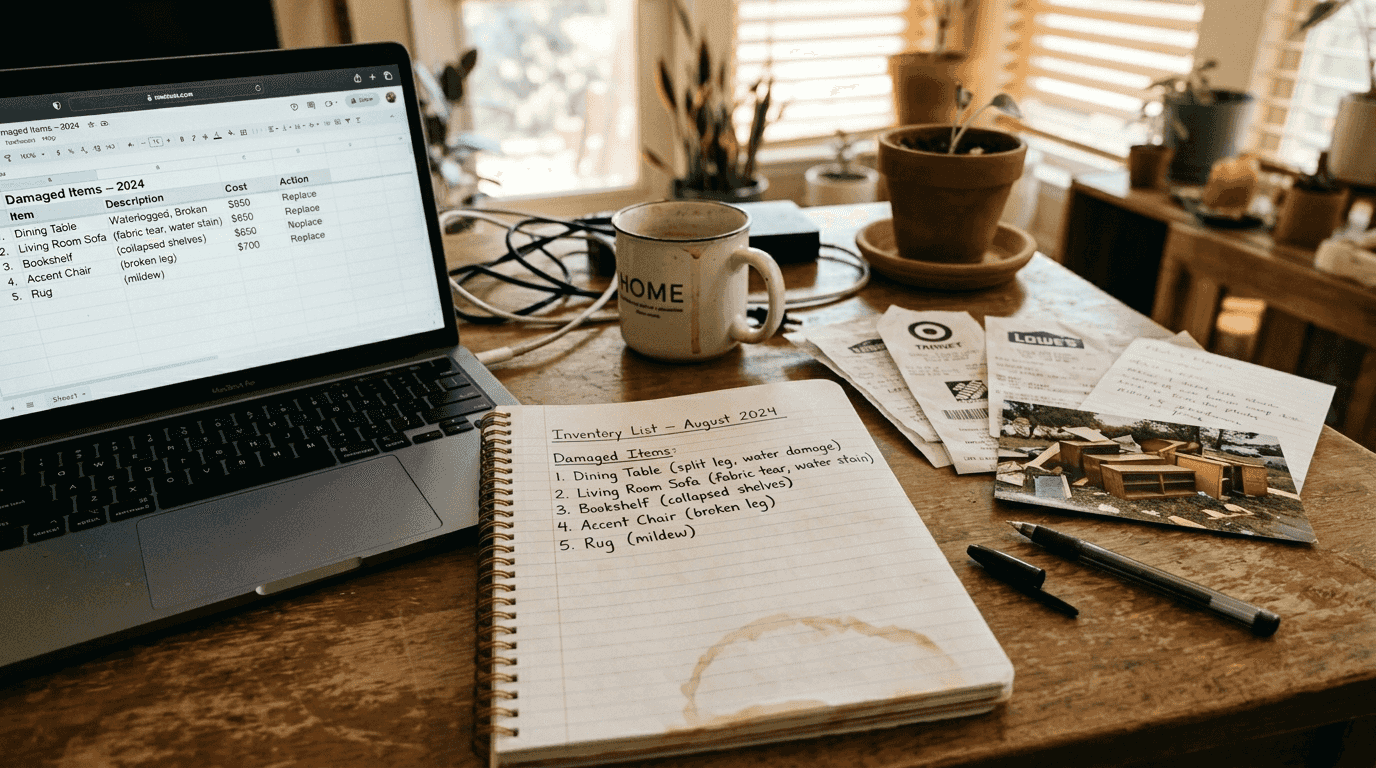
Repair estimates or invoices from licensed contractors demonstrate what it actually costs to restore your property. Georgia homeowners policies cover perils like fire, hail, and wind but exclude flood damage, so your contractor’s assessment must clearly identify the cause. Get multiple estimates to show market consistency and include material specifications, labor breakdowns, and completion timelines.
When damage involves theft, vandalism, arson, or other criminal activity, police reports become mandatory. These official documents establish that a covered event occurred and provide third-party verification insurers trust. Even if the crime seems minor, file a report immediately and include the case number in your claim submission.
Correspondence and claims forms create the paper trail that protects you if disputes arise. Keep copies of your initial claim form, every email or letter exchanged with your insurer, and notes from phone conversations including dates, times, and adjuster names. Documenting damage with photos and itemized lists is crucial for insurance claims success.
Pro Tip: Create a master spreadsheet tracking all documents by type, date submitted, and insurer response. This single-page overview lets you spot gaps instantly and proves you met all submission requirements if your claim goes to dispute.
Review the complete property damage claim documents list for additional items specific to your situation.
Specialized claim documents for business interruption and additional expenses
Business insurance claims introduce layers of complexity beyond standard property damage documentation. When operations shut down due to covered loss, you need to prove both the physical damage and the financial impact. Business interruption insurance compensates for lost profits and continuing expenses during covered operational disruptions, but only when you substantiate every dollar claimed.
Start with detailed financial statements documenting pre-loss revenue patterns. Insurers want to see profit and loss statements, tax returns, bank statements, and sales records spanning at least 12 months before the loss. These establish your baseline earnings and prove what income you actually lost. If your business shows seasonal variations, provide multi-year data demonstrating typical fluctuations so adjusters don’t lowball claims based on a slow month.
Logs of ongoing business activity during the interruption period prove which expenses continued despite closure. Document payroll for key employees you retained, rent or mortgage payments, loan obligations, insurance premiums, and utilities. Each continuing expense needs supporting invoices or bank statements showing actual payments made.
Itemize extra expenses separately, focusing on costs directly caused by the loss event. This category includes temporary relocation expenses, equipment rentals to maintain limited operations, expedited shipping to fulfill customer orders, and advertising to notify clients of your temporary location. Every extra expense claim needs a receipt and a brief explanation connecting it to the covered loss.
Supporting documents strengthen credibility. If suppliers couldn’t deliver materials because of your closure, get written statements. If customers canceled orders, save those emails. Utility companies can provide usage data showing the operational shutdown. Third-party evidence removes the “he said, she said” dynamic and forces insurers to accept your timeline.
Expert reports or third-party valuations add professional weight to complex claims. Accountants can analyze your financial records and project lost profits using industry-standard methodologies. Business valuation experts can assess goodwill damage or market share losses. While these services cost money upfront, they often pay for themselves by preventing insurers from using their own (lower) calculations.
Here’s a breakdown of essential business interruption documents:
| Document Category | Specific Items | Retention Period |
|---|---|---|
| Financial Records | P&L statements, tax returns, bank statements | 3-5 years pre-loss |
| Expense Proof | Invoices, receipts, payroll records | All interruption period |
| Revenue Evidence | Sales reports, customer contracts, order logs | 12-24 months pre-loss |
| Extra Costs | Relocation receipts, rental agreements, expedited fees | All interruption period |
| Third-Party Support | Supplier letters, customer emails, utility data | As applicable |
Pro Tip: Engage a forensic accountant early in complex business interruption claims. They can identify compensable losses you might overlook and present financial data in formats insurers can’t easily challenge.
Explore business interruption claim documents for Georgia to understand coverage variations by loss type.
Comparing insurance claim documents: tips to organize and maximize approval
With all these document types in play, strategic organization separates successful claims from denied ones. Think of your claim package as a legal brief where every piece of evidence builds toward an undeniable conclusion. The comparison below shows how different document types serve distinct purposes and where claimants commonly stumble.
| Document Type | Primary Purpose | Best Practice | Common Pitfall |
|---|---|---|---|
| Photos/Videos | Visual damage proof | Take immediately, include scale references | Waiting days to document, poor lighting |
| Itemized Inventory | Value substantiation | List brand, model, purchase date, receipts | Generic descriptions, missing valuations |
| Repair Estimates | Cost verification | Get 3+ licensed contractors, detailed breakdowns | Single estimate, vague scope of work |
| Financial Records | Loss quantification | Organize chronologically, highlight key figures | Incomplete periods, missing context |
| Correspondence Log | Timeline protection | Date every interaction, save all emails | Relying on memory, discarding notes |
Follow this step-by-step categorization method. First, create a “Damage Evidence” folder containing all photos, videos, and initial damage assessments. Second, build a “Financial Documentation” section with inventories, receipts, estimates, and for businesses, revenue records. Third, maintain a “Communications” file with every form, email, letter, and call log related to your claim. Fourth, add a “Supporting Documents” category for police reports, expert opinions, and third-party statements.
Here are critical dos and don’ts for faster processing:
- Do submit documents in PDF format with clear file names indicating content and date
- Do keep original documents secure and only send copies to insurers
- Do follow up within 48 hours if you don’t receive acknowledgment of submission
- Do maintain a master checklist showing which documents you’ve sent and when
- Don’t send disorganized batches of photos without explanatory captions
- Don’t assume verbal agreements with adjusters are binding without written confirmation
- Don’t delay documentation because you’re waiting for perfect information
- Don’t submit handwritten notes when typed, dated logs are available
Digital organization offers massive advantages over paper files. Use cloud storage services with automatic backup to prevent document loss. Create a folder structure matching your claim categories and name files descriptively. Instead of “IMG_2547.jpg,” use “Kitchen_Water_Damage_Jan15_2026.jpg.” This clarity helps both you and adjusters locate specific evidence quickly.
Public adjusters can increase settlements by 30% to over 3,800% by verifying and properly presenting claim documents. Their expertise in documentation requirements and negotiation tactics often pays for their fees many times over, especially on complex or high-value claims.
Pro Tip: Before submitting your claim package, review it as if you were a skeptical adjuster looking for reasons to deny. If you spot gaps or weak evidence, address them proactively rather than waiting for the insurer to question them.
Consult the insurance claim review guide for 2026 for current best practices and regulatory updates.
How public adjusters in Georgia help maximize your claim approval
Navigating insurance claims while dealing with property damage creates overwhelming stress for most homeowners and business owners. Public adjusters specialize in handling this burden by organizing, verifying, and presenting all necessary claim documentation on your behalf. They know exactly what Georgia insurers require and how to frame evidence for maximum impact. When you’re juggling repairs, business continuity, and family needs, having an expert manage the claims process removes a massive weight from your shoulders.
Public adjusters in Georgia increase claim settlement amounts significantly through skilled negotiation and thorough documentation. They catch valuation errors, identify covered damages you might miss, and push back against lowball offers with evidence insurers can’t dismiss. Their services span the entire claims lifecycle from initial damage assessment through final settlement, ensuring nothing falls through the cracks. Whether you’re in Atlanta, Marietta, or anywhere across Georgia, professional claim assistance levels the playing field against well-resourced insurance companies.
Early consultation makes the biggest difference. Engaging a public adjuster in Marietta or your local area before submitting your claim prevents costly documentation mistakes and establishes proper valuation from day one. They’ll review your policy, assess damage comprehensively, and build an airtight claim package that withstands insurer scrutiny. For complex situations involving denied or delayed claims, professional insurance claim help transforms frustrating roadblocks into resolved settlements.
Pro Tip: Most public adjusters work on contingency, meaning you pay nothing upfront and they only collect a percentage if you receive a settlement. This arrangement aligns their incentives with maximizing your payout and makes professional help accessible even when finances are tight after a loss.
Frequently asked questions
What documents do I need for a property damage insurance claim?
You need comprehensive damage photos, an itemized inventory of affected property, repair estimates from licensed contractors, your insurance policy, and all correspondence with your insurer. For specific loss types like theft or vandalism, include police reports. Business claims require additional financial records showing revenue and expenses.
How can I prove property damage effectively in my insurance claim?
Use high-quality photos and videos taken immediately after the loss, showing both wide angles and detailed close-ups. Create detailed lists of damaged items with approximate values and purchase information. Keep all evidence dated and stored securely in both digital and physical formats.
What should I do if my insurance claim is denied or delayed in Georgia?
Review the denial letter carefully to understand the specific reasons cited and gather additional documentation addressing those concerns. Unfair denials may constitute bad faith eligible for legal remedies. Consider consulting a public adjuster or insurance attorney, then file a formal appeal following your policy’s dispute resolution procedures and Georgia’s statutory timelines.
What financial records support a business interruption insurance claim?
Provide profit and loss statements, tax returns covering at least 12 months pre-loss, bank statements, and detailed expense logs. Business interruption claims require income and expense records sometimes spanning several years to establish revenue patterns. Document all continuing operational costs and extra expenses incurred during the interruption period with receipts and invoices.
How important is organizing and tracking my insurance claim documents?
Extremely important. Maintain a centralized file containing all claim-related documents organized by category and date. Keep copies and records of all submissions and insurer communications throughout the process. Proper organization speeds claims processing, prevents disputes over missing information, and strengthens your negotiating position if settlement discussions become contentious.