

Nearly one in three American homeowners face claim disputes with their insurance company after property damage strikes. This can turn a stressful event into a drawn-out battle for fair compensation. Understanding each step of the insurance claim process gives you a critical edge, from assessing damage to securing the highest possible settlement. This guide reveals proven strategies and key documentation tips used by experts to help American property owners protect their investment and financial peace of mind.
Table of Contents
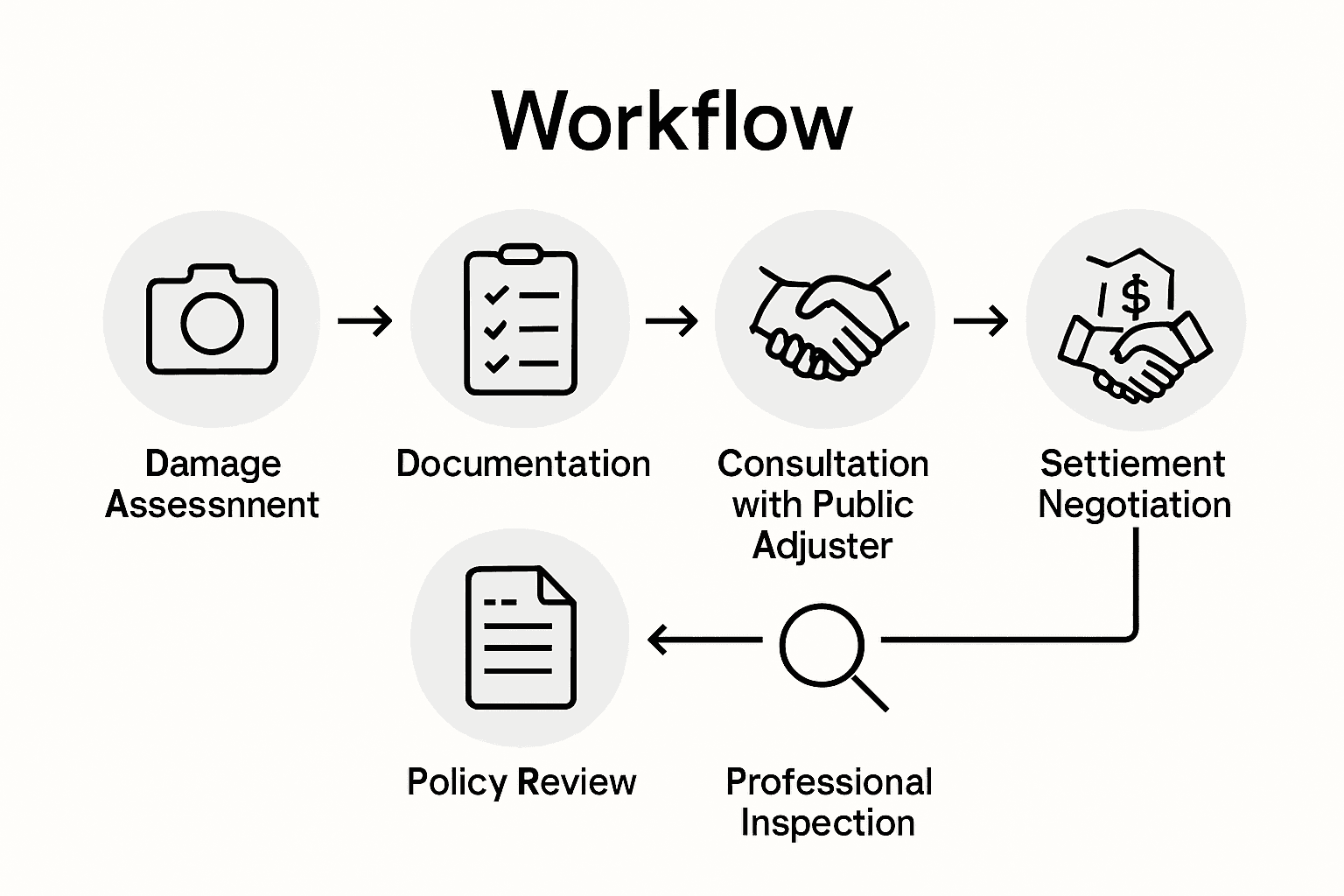
- Step 1: Assess Initial Property Damage And Gather Documentation
- Step 2: Contact And Consult With A Licensed Public Adjuster
- Step 3: Review And Interpret Your Insurance Policy Coverage
- Step 4: Coordinate Comprehensive Damage Inspection And Valuation
- Step 5: Negotiate With Insurance Companies For Maximum Settlement
- Step 6: Confirm Settlement And Complete Financial Recovery
Quick Summary
| Key Point | Explanation |
|---|---|
| 1. Thoroughly Document Damage | Capture high-quality photographs and a detailed written inventory to substantiate your property damage claim. |
| 2. Consult a Public Adjuster | Engage a licensed public adjuster to advocate for you and maximize your claim value through expert negotiation. |
| 3. Understand Your Policy | Carefully review your insurance policy to know what damages are covered and identify any potential gaps in coverage. |
| 4. Coordinate Professional Inspections | Schedule inspections with experts to create comprehensive assessments that highlight all visible and hidden damages. |
| 5. Prepare for Negotiation | Utilize well-organized documentation during negotiations to clearly present the full extent of your property damage and necessary repair estimates. |
Step 1: Assess Initial Property Damage and Gather Documentation
Successfully navigating an insurance claim begins with thorough documentation and precise damage assessment. Your first critical task is capturing comprehensive evidence that supports your property damage claim.
Start by conducting a systematic walkthrough of your damaged property. Systematically photograph every impacted area using a high resolution camera or smartphone. Focus on capturing clear images that reveal the full extent of the damage. Detailed documentation guidelines recommend creating multiple visual records showing wide angle views and close up details. For each damaged item or area, take multiple shots from different perspectives that clearly demonstrate condition and damage extent.
Beyond photography, compile a detailed written inventory listing all damaged property. Include specific information for each item: description, estimated age, purchase price, and current replacement cost. Gather supporting documentation like receipts, purchase records, and repair estimates. Original purchase documents help substantiate item value during insurance negotiations. Organize these materials chronologically and keep both digital and physical copies for maximum protection.
Pro tip: Back up all photographic and documentary evidence in multiple secure locations, including cloud storage and external hard drives, to prevent potential loss of critical claim documentation.
Below is a summary of common types of claim documentation and their value for insurance negotiation:
| Documentation Type | Primary Purpose | Value in Negotiations |
|---|---|---|
| Photographs | Visual proof of asset condition and loss | Corroborates extent of damage |
| Written Inventory | Details items, age, replacement value | Supports claim calculation |
| Receipts/Records | Verifies ownership and purchase price | Justifies reimbursement amounts |
| Professional Reports | Provides expert third-party validation | Increases credibility of claim |
Step 2: Contact and Consult With a Licensed Public Adjuster
Navigating complex insurance claims requires professional expertise and strategic support. Your next crucial step involves connecting with a licensed public adjuster who can effectively advocate for your claim.
Begin by researching reputable public adjusters in your area who specialize in your specific type of property damage. Understanding the cost structure and compensation models helps ensure alignment between your interests and the adjuster’s approach. Most public adjusters work on a contingency basis, meaning they receive a percentage of your final settlement, which motivates them to maximize your claim value. During initial consultations, ask detailed questions about their experience with similar claims, their success rate, and their specific strategy for your situation.
When meeting with potential public adjusters, prepare comprehensive documentation from your initial damage assessment. Bring photographs, inventories, preliminary repair estimates, and your insurance policy. A skilled public adjuster will thoroughly review these materials, provide an initial assessment of your claim’s potential, and explain how they can help navigate the complex negotiation process with your insurance company.

Pro tip: Request references from previous clients and verify the public adjuster’s professional licensing to ensure you are working with a qualified and experienced professional who can effectively represent your interests.
Step 3: Review and Interpret Your Insurance Policy Coverage
Understanding the intricacies of your insurance policy is a critical step in successfully navigating your property damage claim. This stage requires careful examination of your policy details to identify exactly what damages are covered and what limitations might impact your settlement.
Begin by thoroughly reading your entire insurance policy document, paying close attention to the declarations page, coverage sections, exclusions, and endorsements. Understanding the cooperative process between insured parties and loss adjusters helps you prepare comprehensive documentation. Look for specific details about your property type, covered perils, and the exact circumstances under which you can file a claim. Note the policy limits, deductibles, and any specific requirements for documenting and reporting property damage. If certain sections seem complex or ambiguous, highlight those areas for discussion with your public adjuster or insurance professional.
Carefully compare the documented damage from your initial assessment against the specific coverages outlined in your policy. Identify potential gaps or areas where your damage might fall into gray zones of coverage. This proactive approach allows you to anticipate potential challenges and gather additional evidence that strengthens your claim. Your public adjuster can help interpret complex policy language and provide strategic guidance on maximizing your potential settlement.
Pro tip: Create a summary document that cross references your specific property damage with corresponding policy sections to help your public adjuster quickly understand the scope of your potential claim.
Step 4: Coordinate Comprehensive Damage Inspection and Valuation
Professional damage inspection is a critical turning point in your insurance claim process. This stage transforms your initial damage documentation into a comprehensive professional assessment that will substantiate your claim.
Securing the affected site and conducting thorough investigations requires strategic coordination between you, your public adjuster, and potential expert inspectors. Schedule a detailed property inspection with professionals who specialize in your specific type of damage. These experts will systematically document every aspect of the property damage, creating a professional assessment that goes far beyond your initial photographs. They will use specialized equipment like moisture meters, thermal imaging cameras, and structural assessment tools to uncover hidden damage that might not be immediately visible.
During the inspection, actively participate and collaborate with the professionals. Take notes, ask questions, and ensure every damaged area is thoroughly examined and photographed. Preparing comprehensive documentation and evidence is crucial for substantiating your claim. Request copies of all inspection reports, photographs, and technical assessments. These documents will serve as critical evidence when negotiating with your insurance company, providing an objective, professional perspective on the extent of your property damage.
Pro tip: Request written damage assessments from multiple independent experts to create a robust and credible documentation package that strengthens your insurance claim.
Here is a reference table highlighting roles and responsibilities during the insurance claim process:
| Stakeholder | Key Responsibilities | Common Interactions |
|---|---|---|
| Property Owner | Document damage, gather records, lead process | Insurance company, adjusters |
| Public Adjuster | Assess claim, negotiate, interpret coverage | Property owner, insurers |
| Insurance Company | Evaluate claim, determine coverage, settle | Adjuster, property owner |
| Professional Inspector | Identify damage, provide expert assessment | Public adjuster, property owner |
Step 5: Negotiate With Insurance Companies for Maximum Settlement
Successful insurance claim negotiations require strategic preparation, clear communication, and comprehensive documentation. This stage transforms your carefully gathered evidence into a compelling case for fair compensation.
Understanding effective communication strategies with insurance adjusters is crucial for navigating the negotiation process. Approach discussions professionally and methodically, presenting your meticulously compiled documentation with confidence. Your public adjuster will help you organize your evidence, highlighting the most compelling aspects of your claim. Be prepared to articulate the full extent of your property damage, providing detailed repair estimates, professional inspection reports, and comprehensive documentation that demonstrates the true scope of your loss.
Preparing detailed estimates for permanent repairs strengthens your negotiating position. Develop a clear, itemized breakdown of all damages, including both visible and potential hidden damages uncovered during professional inspections. Remain calm and objective during negotiations, allowing your documented evidence to speak for itself. Your public adjuster will serve as a skilled advocate, interpreting complex insurance language and pushing back against potentially unfair initial settlement offers.
Pro tip: Maintain a professional and unemotional demeanor during negotiations, letting the facts and documentation drive the conversation rather than personal frustration or anger.
Step 6: Confirm Settlement and Complete Financial Recovery
The final stage of your insurance claim process involves carefully reviewing and finalizing your settlement to ensure you receive full and fair compensation for your property damage. This critical phase transforms your months of hard work into tangible financial recovery.
Reporting claims promptly and providing comprehensive information is essential during the settlement confirmation process. Carefully review the final settlement document with your public adjuster, checking every detail to confirm all negotiated items are accurately represented. Verify that the settlement covers all documented damages, including both visible and potential hidden damages. Pay close attention to the payment structure verify whether the settlement will be paid in a lump sum or through multiple installments. Ask your public adjuster to explain any complex language or technical terms in the settlement document to ensure you fully understand the terms.
Once you have thoroughly reviewed and approved the settlement, coordinate with your public adjuster to ensure smooth fund disbursement. Develop a strategic plan for using the settlement funds, prioritizing immediate repairs and replacements to prevent further property damage. Keep detailed records of all repair expenses and communications related to the settlement, as these documents may be important for future reference or potential tax purposes. Your public adjuster can provide guidance on managing the settlement funds effectively and connecting you with reputable contractors for necessary repairs.
Pro tip: Create a dedicated savings account for your insurance settlement funds to maintain clear financial tracking and prevent commingling with other personal finances.
Maximize Your Insurance Claim Success With Expert Public Adjusters
Facing the complex process of property damage claims can be overwhelming and stressful. From detailed damage documentation to negotiating with insurance companies, every step demands precision and expertise. This guide highlights key challenges like thorough damage assessment, policy interpretation, and strategic negotiation—areas where many homeowners and business owners struggle to secure the full compensation they deserve.
Do not let confusion or insurance delays drain your peace of mind. At Public Adjusters Atlanta, the licensed public adjusters we work with specialize in turning those daunting steps into clear actions tailored to your situation. We help you gather professional damage valuations, review your insurance policy details, and guide you through effective settlement discussions to ensure no claim opportunity is missed.
Take control of your insurance claim journey today
Visit Public Adjusters Atlanta now for a free damage evaluation and personalized claim review. Let our trusted team advocate for you every step of the way so you can recover your property and rebuild with confidence. Your maximum settlement is waiting—don’t wait another day to get started.
Frequently Asked Questions
How do I assess property damage before contacting a public adjuster?
To assess property damage, conduct a thorough walkthrough of the affected areas, taking high-quality photographs and documenting all damaged items. Create a detailed inventory listing the description, estimated age, purchase price, and current replacement cost for each item, and gather supporting documentation like receipts and repair estimates.
What should I expect during my first meeting with a public adjuster?
During your first meeting, the public adjuster will review your documentation, assess your claim’s potential, and discuss their strategy for negotiation. Bring all relevant materials, including photographs, inventory lists, and your insurance policy to facilitate a comprehensive evaluation of your situation.
How can I verify that a public adjuster is qualified?
Verify a public adjuster’s qualifications by checking their licensing status and requesting references from previous clients. Look for professionals with a strong track record and experience in handling similar types of insurance claims to ensure effective representation of your interests.
What documents are essential to include in my insurance claim submission?
Essential documents for your insurance claim submission include high-resolution photographs of damage, a detailed written inventory, receipts for damaged items, and reports from professional inspectors. Ensure that all materials are organized chronologically, as this will help streamline the negotiation process with your insurance company.
How should I prepare for negotiations with the insurance company?
To prepare for negotiations with the insurance company, organize your documentation and highlight the key aspects of your claim, including professional assessment reports and repair estimates. Practice articulating your points calmly and objectively, allowing your evidence to drive the conversation during discussions.
What steps should I take after confirming my settlement?
After confirming your settlement, carefully review the final settlement document to ensure all negotiated damages are accurately represented. Develop a plan for using the settlement funds, prioritizing immediate repairs to prevent further damage, and maintain detailed records of all related expenses and communications.