

Most American homeowners in Atlanta face serious setbacks when water damage insurance claims get denied. The stress of disputed claims and confusing policy details is overwhelming, leaving families at risk of financial loss. Understanding how to systematically document every loss with evidence and tap the power of expert public adjusters can make a huge difference. This guide reveals proven strategies for turning detailed records and professional support into a stronger case for the settlement you deserve.
Table of Contents
- Step 1: Assess Water Damage And Collect Evidence
- Step 2: Review Insurance Policy Coverage Details
- Step 3: Document Losses And Create A Damage Inventory
- Step 4: File Your Water Damage Insurance Claim
- Step 5: Consult A Public Adjuster For Claim Support
- Step 6: Verify Settlement And Pursue Maximum Compensation
Quick Summary
| Key Point | Explanation |
|---|---|
| 1. Document All Water Damage Thoroughly | Take comprehensive photos and videos of affected areas while ensuring personal safety for effective claims support. |
| 2. Review Your Insurance Policy Carefully | Understand the coverage details specific to water damage to avoid unexpected claim rejections. |
| 3. Create a Detailed Inventory of Damages | Document damaged items, including purchase details and receipts, to form a strong claim with substantial evidence. |
| 4. File Your Claim Promptly and Comprehensively | Notify your insurance company immediately and include all organized documentation for a strong initial claim submission. |
| 5. Consider Hiring a Public Adjuster | A public adjuster can help negotiate a better settlement by focusing on your interests and maximizing compensation. |
Step 1: Assess Water Damage and Collect Evidence
When water damage strikes your home, systematic documentation becomes your strongest ally in maximizing insurance claims. The first critical phase involves carefully assessing and thoroughly recording every aspect of the damage using strategic evidence collection to support your compensation request.
Start by ensuring personal safety and utility shutdown. Walk through your property methodically, capturing comprehensive photographic and video evidence of all affected areas. Focus on documenting visible damage to walls, floors, ceilings, and personal property. Use natural lighting and take wide angle shots that show entire rooms, then zoom in for detailed close ups of specific damage points. Record serial numbers of damaged appliances, capture water lines on walls, and photograph any visible mold growth or structural compromise. Maintain a detailed log noting exact times, locations, and descriptions of each documented damage area.
While documenting, remember preservation matters as much as collection. Handle potential evidence carefully to maintain its integrity for insurance assessment. Avoid removing or discarding damaged materials without proper documentation, and consider keeping small samples that demonstrate the extent of water infiltration. Professional water damage assessors will appreciate a methodical approach that provides clear visual and written proof of your property’s condition.
Pro tip: Create a dedicated digital folder organizing all damage documentation immediately to prevent potential file loss or accidental deletion.
Step 2: Review Insurance Policy Coverage Details
Understanding your insurance policy is crucial for successfully navigating water damage claims, which requires carefully examining the nuanced details of your specific coverage. Homeowners insurance policies often contain complex language that determines exactly what types of water damage will be compensated and under what circumstances.
Begin by locating your current policy document and reviewing its sections on water damage coverage. Pay close attention to specific perils covered, such as sudden pipe burst versus gradual water seepage, which insurers treat differently. Identify your policy’s coverage limits, deductible amounts, and any specific exclusions related to water damage. Many standard policies exclude flooding from natural sources, so understanding these details prevents unexpected claim rejections. Create a detailed checklist noting coverage types, maximum payout amounts, and specific conditions that qualify for reimbursement.
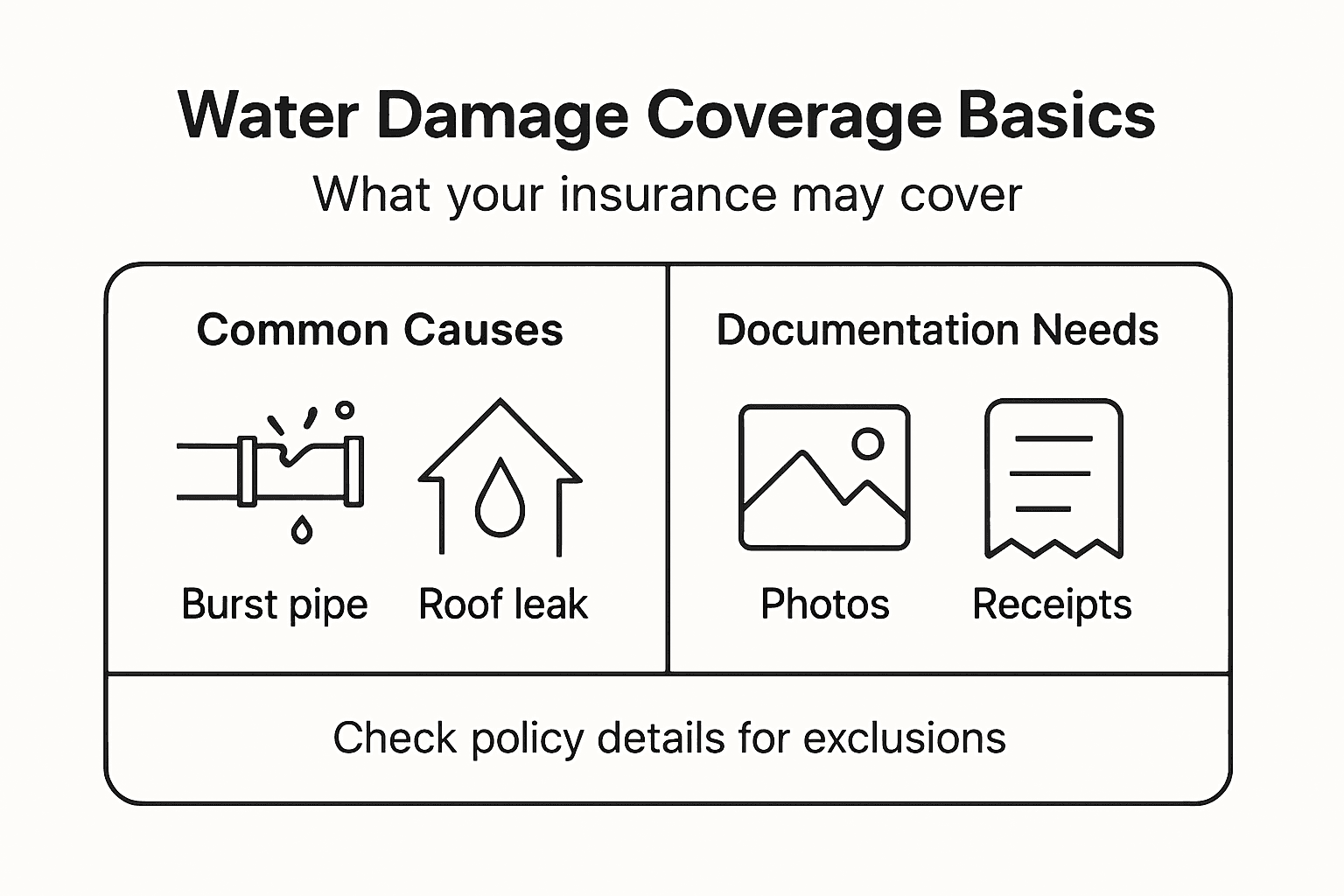
Here is a quick reference comparing typical water damage causes and how insurance policies often respond:
| Water Damage Cause | Usually Covered by Insurance? | Notes on Coverage |
|---|---|---|
| Sudden pipe burst | Typically covered | Must be sudden and accidental |
| Gradual water seepage | Often excluded | Considered maintenance issue |
| Appliance failure (washer) | Covered if accidental | Policy may limit payout |
| Sewer backup | Covered with special endorsement | Requires additional premium |
| Flooding from storms | Not covered by standard policy | Requires separate flood insurance |
If policy language seems confusing, do not hesitate to contact your insurance agent for clarification. Request a comprehensive explanation of each water damage scenario and how it aligns with your specific coverage. Take notes during these conversations and consider requesting written confirmation of discussed coverage details to protect your interests.
Pro tip: Photograph and digitally scan your entire insurance policy, storing multiple backup copies in secure cloud storage to ensure you never lose critical documentation.
Step 3: Document Losses and Create a Damage Inventory
Creating a comprehensive damage inventory is your critical weapon in maximizing insurance claim compensation. This systematic documentation process transforms your water damage experience from potential financial loss to a strategically supported insurance claim.

Start by thoroughly documenting property damages using a methodical approach. Photograph every affected area from multiple angles, capturing wide shots of entire rooms and close up details of specific damage points. For each damaged item, record its original purchase date, estimated value, and replacement cost. Use your smartphone to create a visual and written record that includes serial numbers for electronics, brand details for furniture, and approximate age of damaged property. Organize these documents in a digital folder with clear file names that describe the content precisely.
Expand your inventory beyond visual documentation. Collect and scan all relevant receipts, purchase records, and warranties for damaged items. Create a spreadsheet tracking each item’s details including purchase price, current market value, and repair or replacement estimates. If possible, gather previous appraisals or professional valuation documents that can substantiate your claim. Remember that detailed documentation transforms your claim from a simple report to a compelling financial argument.
Pro tip: Use cloud storage with automatic backup to ensure your damage documentation remains secure and accessible even if physical devices are compromised.
Step 4: File Your Water Damage Insurance Claim
Filing your water damage insurance claim requires precision, timing, and strategic documentation to maximize your potential compensation. Your goal is to transform your detailed evidence into a compelling financial recovery plan.
Notify your insurance company immediately after assessing and documenting the damage. Contact your insurance agent through their preferred communication channel, whether phone, email, or online portal. Provide a concise but comprehensive initial report including the date of damage, type of water damage, affected areas, and a preliminary damage estimate. Request a claim number and confirm the next steps in the claims process. During this initial communication, ask about potential additional living expense benefits if your home requires extensive repairs.
Prepare a detailed claim package that includes your carefully organized damage inventory, photographs, repair estimates, and any professional assessments. Include receipts for emergency repairs, temporary housing costs, and damaged property replacements. Be prepared to work closely with the insurance company’s assigned adjuster, who will conduct an on site evaluation. Maintain clear, professional communication and respond promptly to any additional information requests to keep your claim moving forward.
Pro tip: Create a dedicated email folder and physical file specifically for your insurance claim to keep all documentation organized and easily accessible throughout the claims process.
Step 5: Consult a Public Adjuster for Claim Support
Navigating complex water damage insurance claims can feel overwhelming, which is why engaging a professional public adjuster could be your strategic advantage in securing maximum compensation. These licensed professionals specialize in transforming challenging claims into successful financial recoveries.
Public adjusters work independently to assess property damages and advocate for your best interests. Unlike insurance company adjusters, they represent you exclusively, meticulously examining every aspect of your claim. During initial consultations, bring all documented evidence including photographs, damage inventories, repair estimates, and policy documents. These professionals will comprehensively analyze your claim, identifying potential overlooked damages and ensuring that your compensation accurately reflects the full extent of your water damage.
Choose a public adjuster with specific experience in water damage claims and verify their licensing credentials. Many offer free initial claim evaluations, allowing you to understand potential claim strategies without upfront costs. They can help interpret complex policy language, negotiate with insurance representatives, and potentially accelerate your claim settlement process. Their expertise often results in substantially higher claim payouts compared to what homeowners might negotiate independently.
The following table highlights the key differences between insurance company adjusters and public adjusters:
| Attribute | Insurance Company Adjuster | Public Adjuster |
|---|---|---|
| Who they represent | The insurance company | The homeowner exclusively |
| Primary goal | Minimize claim payouts | Maximize compensation for claimant |
| Fee structure | No fee to homeowner | Paid a percentage of claim recovered |
| Expertise focus | Broad property claims | Advocates, specializes in policy detail |
Pro tip: Request references and verify the public adjuster’s professional credentials before signing any agreements to ensure you are working with a reputable claim support specialist.
Step 6: Verify Settlement and Pursue Maximum Compensation
Reaching the settlement stage of your water damage insurance claim requires meticulous review and strategic negotiation to ensure you receive fair and complete compensation for your losses. Your final settlement represents the financial resolution of weeks or potentially months of careful documentation and advocacy.
Carefully examine each line item in your insurance settlement comparing the proposed compensation against your detailed damage documentation. Verify that every documented loss is accounted for, including structural damages, personal property replacement costs, and any additional living expenses incurred during repairs. Pay special attention to line items that seem undervalued or potentially overlooked, such as hidden moisture damage, potential mold remediation costs, or depreciation calculations for personal belongings.
If the initial settlement appears insufficient, prepare a comprehensive rebuttal package. Compile your original damage documentation, professional repair estimates, photographs, and any expert assessments that support a higher compensation amount. Consider consulting with your public adjuster or an independent property damage expert who can provide a professional evaluation challenging the insurance company’s initial assessment. Be prepared to negotiate professionally, presenting clear evidence that justifies a more comprehensive settlement.
Pro tip: Maintain a calm, professional demeanor during settlement negotiations and always communicate in writing to create a documented trail of your claim interactions.
Maximize Your Water Damage Insurance Claim with Expert Advocacy
Water damage claims are often complex and emotionally draining with intricate policy language, strict deadlines, and the challenge of proving every loss. This guide highlights common pain points like documenting damage thoroughly, understanding policy coverage, and negotiating settlements. Without professional support, many homeowners miss out on deserved compensation or face prolonged claim processes.
Rise above these challenges by partnering with skilled public adjusters who act exclusively on your behalf. At Public Adjusters Atlanta, the licensed adjusting team we connect you with specializes in water damage claims and offers personalized services such as detailed claim review, policy evaluation, and full damage assessment. We ensure your settlement reflects 100 percent of your losses by uncovering overlooked damages and advocating for maximum compensation.
Ready to turn your documented water damage into the compensation you deserve?

Contact Public Adjusters Atlanta now for a free damage evaluation and claim consultation. Take control of your insurance claim today and let experts guide you through every step to secure the best possible outcome.
Frequently Asked Questions
How can I assess water damage in my home for insurance claims?
Assess water damage by carefully documenting each affected area. Start by taking comprehensive photos and videos, including wide shots of entire rooms and close-ups of specific damage. Create a detailed log noting times, locations, and descriptions of damage for your insurance claim.
What should I include in my damage inventory for the insurance claim?
Include photographs, original purchase dates, estimated values, and replacement costs for each damaged item in your damage inventory. Organize documentation in a digital folder and maintain a spreadsheet to track details like serial numbers and repair estimates, ensuring you have everything ready for your claim.
How do I file a water damage insurance claim?
File your claim by notifying your insurance company immediately after assessing the damage. Provide a comprehensive report that includes the date of damage, affected areas, and any initial estimates. Prepare a detailed claim package and organize all supporting documentation to present a strong case.
When should I consider hiring a public adjuster for my water damage claim?
Consider hiring a public adjuster if navigating your water damage claim feels overwhelming or if you suspect your compensation may be too low. They can assess your damages, advocate for your interests, and potentially increase your claim payout. Engage their services early in the claims process for the best outcomes.
How can I verify that my insurance settlement is complete and accurate?
Carefully review your insurance settlement to ensure it covers all documented losses, including structural damages and personal property costs. Compare line items against your damage inventory and prepare a rebuttal package if any amounts seem insufficient or overlooked, presenting clear evidence to support your case.