

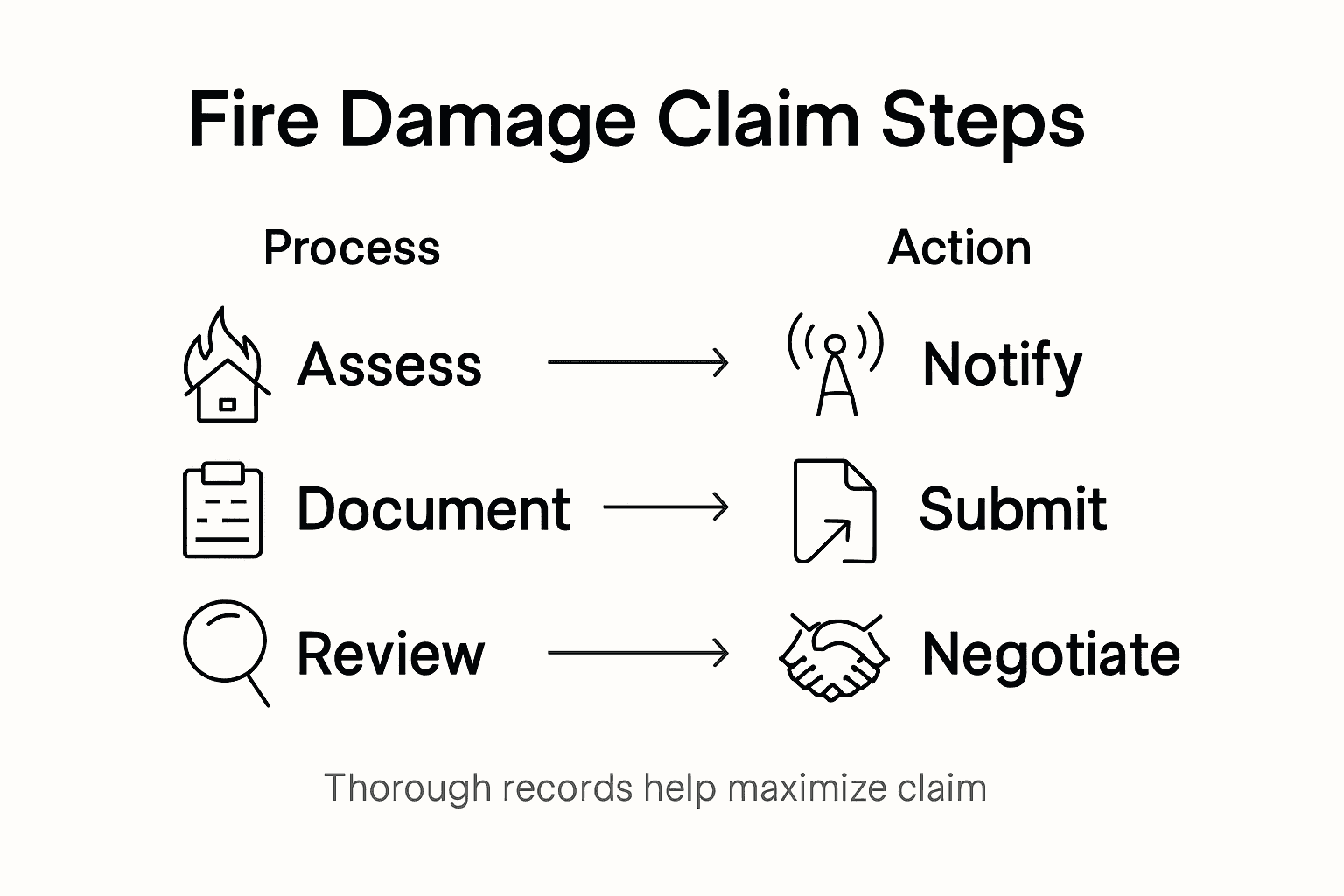
Every year, thousands of American families and small businesses in the Atlanta metro area face the aftermath of fire damage. The emotional and financial stress can feel insurmountable, especially when insurance claims become complicated and slow. Accurate documentation and strategic organization are key to securing the highest possible settlement. This guide empowers you to tackle every step confidently and avoid costly mistakes during your insurance claim process.
Table of Contents
- Step 1: Assess And Document Fire Damage Thoroughly
- Step 2: Review And Organize Insurance Policy Details
- Step 3: Contact And Notify Your Insurance Provider
- Step 4: Submit Comprehensive Claim Documentation
- Step 5: Monitor And Verify Insurance Adjuster Evaluation
- Step 6: Negotiate And Finalize Your Claim Settlement
Quick Summary
| Key Point | Explanation |
|---|---|
| 1. Document Everything Visually | Take high-resolution photos and videos of all damage, both overall and specific details to support your claim. |
| 2. Review Your Insurance Policy | Understand coverage limits and clauses regarding fire damage to maximize your settlement potential. |
| 3. Submit Comprehensive Documentation | Organize and submit all evidence with clarity to create a strong claim that showcases the full extent of your losses. |
| 4. Monitor Adjuster Evaluations | Compare the insurance adjuster’s assessment with your documentation to ensure fair compensation for damages. |
| 5. Negotiate for a Fair Settlement | Use detailed evidence during negotiations to advocate for a settlement that fully covers your documented losses. |
Step 1: Assess and Document Fire Damage Thoroughly
Navigating the aftermath of fire damage requires a systematic and thorough approach to documentation. Your goal is to create a comprehensive record that will support your insurance claim and help you recover maximum compensation. Damage assessment procedures are critical for establishing the extent of destruction and guiding your recovery process.
Start by documenting everything visually. Take high resolution photographs and videos of all affected areas room by room. Capture wide angle shots showing overall damage as well as close up images highlighting specific damage points. Include details like charred walls smoke stains water damage from firefighting efforts and structural compromises. Make multiple digital and printed copies of these images. Create a detailed written log accompanying your visual documentation noting exact locations dates and specific damage types.
Carefully catalog damaged personal property separately from structural damage. Create an itemized inventory listing each damaged item its approximate age original purchase price and estimated replacement cost. Gather supporting documentation like receipts appraisals and previous photos of these items. Fire investigation techniques recommend maintaining a systematic approach to ensure your documentation is comprehensive and credible.
Here is a quick reference comparing structural damage documentation and personal property documentation after a fire:
| Aspect | Structural Damage Documentation | Personal Property Documentation |
|---|---|---|
| Main Focus | Walls, roof, floors, foundation | Furniture, electronics, clothing, tools |
| Type of Evidence | Photos of building structure, reports | Photos of items, receipts, appraisals |
| Inventory Details | Room, location, repair estimates | Item age, purchase price, replacement cost |
| Key Documentation | Contractor assessments, engineer notes | Inventory lists, proof of ownership |
Expert Tip: Preserve any damaged items until your insurance adjuster has completed their initial assessment to prevent potential disputes about the extent of damage.
Step 2: Review and Organize Insurance Policy Details
Reviewing your insurance policy is a critical step in maximizing your fire damage settlement. Your objective is to understand every detail of your coverage and identify potential avenues for comprehensive compensation. Insurance claim support becomes significantly more effective when you approach your policy with strategic knowledge.

Carefully examine your policy document page by page. Focus on key sections including coverage limits dwelling protection personal property replacement provisions additional living expenses and specific fire damage clauses. Look for nuanced language about replacement cost versus actual cash value depreciation calculations and any riders or extensions that might apply to your specific situation. Pay special attention to the declarations page which summarizes your primary coverage details policyholder information and coverage limits.
Organize your policy documents systematically by creating a dedicated file folder both digitally and physically. Scan all documents and save multiple backup copies in secure locations. Create a summary sheet highlighting critical information such as policy number contact information coverage limits deductibles and key provisions. This organized approach will streamline communication with your insurance company and provide quick reference during the claims process.
Below is a summary of common insurance policy terms to help you organize your review:
| Term | What It Means | What to Check For |
|---|---|---|
| Dwelling Protection | Covers repairs to home structure | Coverage limits and exclusions |
| Personal Property | Covers belongings inside your home | Actual cash value vs. replacement |
| Additional Living Expenses | Pays for temporary housing | Duration and daily limits |
| Deductible | Amount paid before insurance applies | If different for fire-related losses |
| Declarations Page | Overview of main coverage details | Accuracy of limits and info |
Expert Tip: Request a complete certified copy of your policy documentation directly from your insurance agent to ensure you have the most current and comprehensive version available.
Step 3: Contact and Notify Your Insurance Provider
Initiating communication with your insurance provider is a critical step in the fire damage claims process. Your primary objective is to formally report the incident and start the official claims procedure. Insurance claims workflow requires prompt and precise communication to ensure a smooth resolution.
Contact your insurance provider immediately after documenting the damage. Call the claims hotline and request to open a fire damage claim. Be prepared to provide essential information including your policy number date of incident property address and a preliminary overview of the damage. Request a claim number and the name of the assigned claims adjuster. During this initial conversation document the representative’s name contact information and the specifics of your discussion. Follow up your phone call with a formal written notification via email or certified mail to create an official record of your claim.
Prepare a comprehensive information packet before your first communication. Gather your policy documents damage documentation photographs inventory lists and any preliminary repair estimates. This proactive approach demonstrates organization and can help expedite your claims process. Be clear concise and factual when describing the damage avoid emotional language and stick to verifiable details about the extent of destruction and potential repair requirements.
Expert Tip: Create a dedicated communication log tracking every interaction with your insurance company including dates times names and summaries of discussions.
Step 4: Submit Comprehensive Claim Documentation
Submitting comprehensive claim documentation is a pivotal moment in your fire damage recovery process. Your goal is to create an irrefutable record that supports the full extent of your property loss and potential compensation. Insurance claim filing requires meticulous attention to detail and strategic presentation of evidence.
Compile your documentation packet with precision and thoroughness. Include multiple copies of your detailed damage inventory photographs digital and printed evidence repair estimates professional assessment reports and all correspondence related to the fire incident. Organize these documents chronologically and create both digital and physical backup sets. Ensure each document is clear legible and professionally formatted. Include original receipts for damaged personal property replacement cost estimates from licensed contractors and any additional expert evaluations that substantiate the extent of your losses.
Submit your claim documentation through multiple channels to create an indisputable paper trail. Send physical copies via certified mail with return receipt requested electronically upload documents to your insurance provider secure portal and email digital copies to your assigned claims representative. Include a comprehensive cover letter summarizing the contents of your submission. Maintain copies of everything you send including tracking numbers and transmission confirmations. This systematic approach demonstrates your commitment to a transparent and thorough claims process.
Expert Tip: Make digital and physical backup copies of every single document before submitting anything to ensure you have complete records in case of potential loss or misplacement.
Step 5: Monitor and Verify Insurance Adjuster Evaluation
Assessing the insurance adjuster’s evaluation requires a strategic and proactive approach to ensure you receive fair compensation for your fire damage. Understanding the role of licensed insurance adjusters will help you navigate this critical stage of the claims process with confidence and precision.
Review the adjuster’s damage assessment meticulously. Compare their documented findings against your own comprehensive evidence. Request a detailed written report outlining their damage evaluation methodology calculation of depreciation replacement costs and total settlement recommendations. Pay close attention to how they assess structural damage personal property loss and additional living expenses. Cross reference their assessment with your original documentation professional contractor estimates and independent expert evaluations.
If discrepancies emerge prepare a structured response with supporting documentation. Highlight specific areas where you believe the adjuster’s assessment falls short. Be professional factual and methodical in your approach. Consider obtaining an independent third party assessment from a licensed public adjuster who can provide an objective evaluation of the insurance company’s initial settlement offer. This strategic step can often uncover overlooked damage and potentially increase your overall compensation.
Expert Tip: Request a line item breakdown of the adjuster’s evaluation and compare it against your own documentation to identify any potential gaps or undervalued aspects of your claim.
Step 6: Negotiate and Finalize Your Claim Settlement
Negotiating your fire damage claim settlement requires strategic communication and a clear understanding of your documentation. Understanding when to hire a public adjuster can significantly strengthen your negotiation position and maximize your potential compensation.
Approach negotiations with a systematic and professional mindset. Prepare a comprehensive presentation of your documented losses highlighting detailed evidence supporting your claim. Be ready to articulate specific reasons why the initial settlement offer falls short. Present your counterproposal with clear quantitative data professional repair estimates and comprehensive documentation. Focus on facts not emotions. Remain calm persistent and methodical throughout the negotiation process. Consider requesting an independent third party assessment if the insurance companys initial offer seems substantially lower than your documented damages.
Prioritize written communication during negotiations. Document every interaction including dates names and specific discussion points. Request all settlement discussions and counteroffers in written form. Before accepting any final settlement carefully review all terms ensuring they comprehensively cover structural damage personal property replacement additional living expenses and potential future restoration costs. Verify that the settlement agreement provides complete compensation for all documented fire related damages.
Expert Tip: Always negotiate from a position of preparedness by maintaining a comprehensive file of all claim related documentation and having multiple professional damage assessments ready to support your position.
Get the Full Fire Damage Settlement You Deserve Today
Facing the complex process of maximizing your fire damage claim can be overwhelming. From detailed damage documentation to negotiating with insurance adjusters the challenge of ensuring your insurance company fully compensates your losses is real and urgent. This article highlights crucial steps like reviewing your insurance policy carefully and submitting comprehensive claim documentation but even with all that preparation having an expert by your side can make all the difference.
Public Adjusters Atlanta specializes in representing homeowners and business owners throughout Georgia who are navigating these exact challenges. The licensed public adjusters we work with understand the nuances of fire damage claims and work relentlessly to protect your interests and maximize your settlement. Don’t risk leaving money on the table when you can have professional support handling your claim review, policy evaluation, and damage assessment every step of the way.
Contact us now at Public Adjusters Atlanta to schedule a free damage evaluation. Let us help turn your extensive documentation and efforts into the strongest possible insurance settlement. The sooner you act the sooner our experts can begin advocating for the full compensation you deserve.
Frequently Asked Questions
How do I document fire damage for my insurance claim?
To document fire damage, take high-resolution photographs and videos of all affected areas, both wide shots and close-ups. Create a detailed written log describing the damage, including locations and types, to support your insurance claim.
What should I look for in my insurance policy after a fire?
Review your insurance policy to identify coverage limits, dwelling protection, and personal property provisions. Focus on sections regarding replacement costs versus actual cash value, ensuring you understand how much you can claim for your losses.
How do I initiate a fire damage claim with my insurance provider?
To initiate a claim, contact your insurance provider immediately, provide your policy number, and report the fire damage. Open the claim, request a claim number, and document the representative’s details for future reference.
What comprehensive documents should I submit with my fire damage claim?
Compile a complete document packet that includes your damage inventory, photographs, repair estimates, and any correspondence related to the fire. Submit this documentation both electronically and via certified mail to ensure clear tracking and confirmation.
How can I negotiate my fire damage claim settlement effectively?
Negotiate by presenting a detailed account of your losses backed by evidence and professional estimates. Maintain written communication, and document all discussions, focusing on facts to support your counterproposal against the initial settlement offer.
What steps should I take if I disagree with the insurance adjuster’s evaluation?
If you disagree with the adjuster’s assessment, request a detailed written report and compare it with your own documentation. Consider obtaining an independent evaluation to support your case and highlight any discrepancies you find.