

Frustration grows for countless Atlanta homeowners when an insurance claim for property damage faces delay or denial. The process can feel overwhelming, especially when misinformation clouds your next steps. Knowing the real facts about insurance claims and understanding how to strengthen your case with expert claim documentation can make all the difference in your financial recovery and peace of mind.
Table of Contents
- Common Insurance Claim Myths Debunked
- Types of Property Damage Claims Defined
- Understanding Policyholder and Insurer Roles
- The Truth About Claim Denials and Delays
- Maximizing Settlements: Expert Insights
Key Takeaways
| Point | Details |
|---|---|
| Insurance Claims Can Be Approved | Many believe insurance companies always deny claims, but legitimate claims with proper documentation are often honored. |
| First Settlement Offers Are Negotiable | Homeowners should know they can challenge initial settlement offers to secure better compensation. |
| Not All Claims Affect Premiums | Filing a claim does not always result in increased premiums; various factors influence rate adjustments. |
| Documentation is Critical | Comprehensive and organized documentation improves claim success and settlement outcomes significantly. |
Common Insurance Claim Myths Debunked
Homeowners navigating insurance claims often encounter misleading information that can compromise their recovery efforts. Understanding the truth behind common insurance claim myths is crucial for protecting your property and financial interests.
Many people mistakenly believe that insurance is a financial burden with little practical value. In reality, insurance serves as a critical safety net, providing financial protection against unexpected property damages and potential catastrophic losses.
Here are some prevalent insurance claim myths that can significantly impact your recovery:
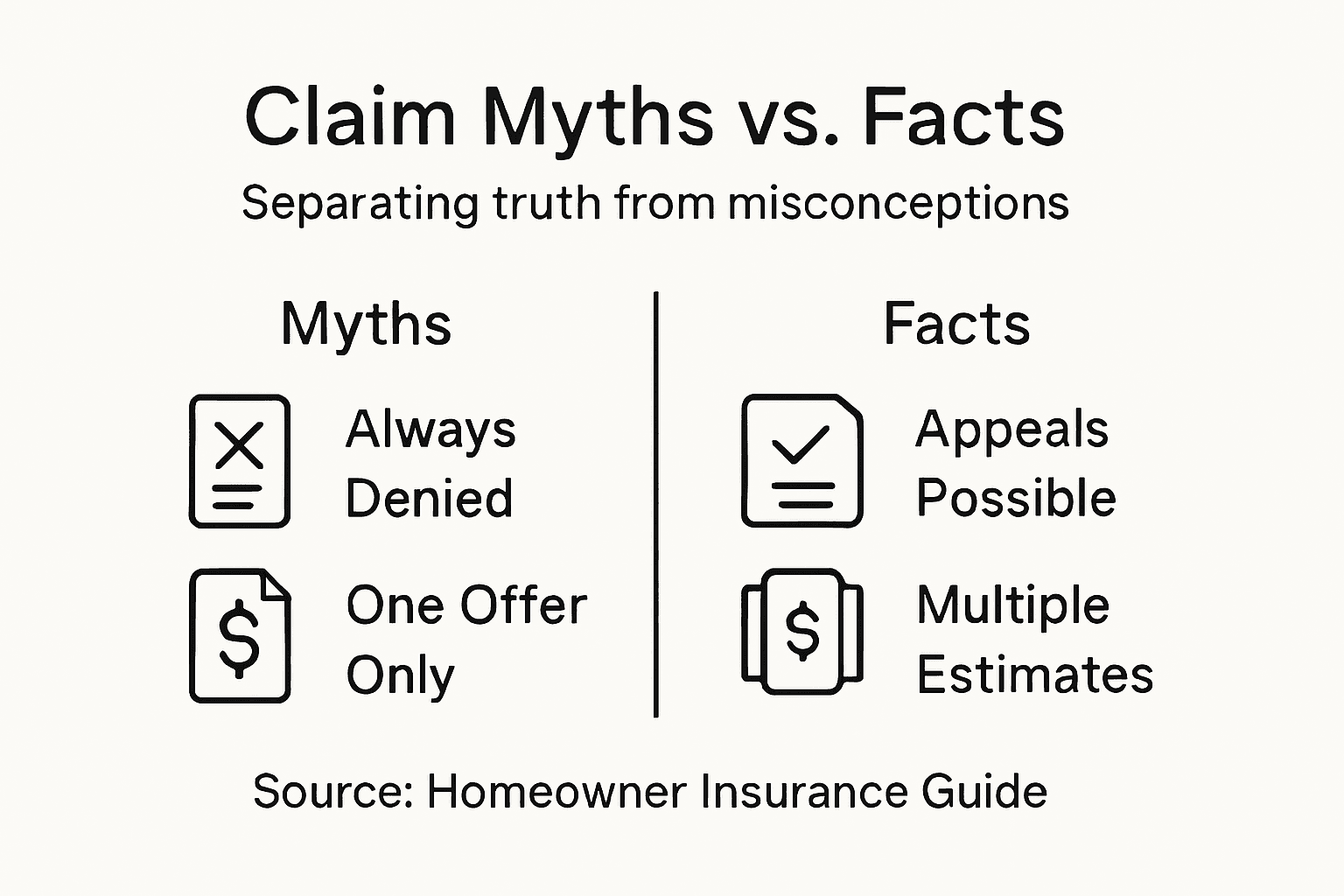
Myth 1: Insurance Companies Always Deny Claims
- Contrary to popular belief, insurers process and approve legitimate claims
- Valid claims with proper documentation are typically honored
- Proper preparation and evidence are key to successful claim resolution
Myth 2: You Must Accept the First Settlement Offer
- Initial settlement offers are often negotiable
- Homeowners have the right to challenge inadequate compensation
- Professional documentation can help maximize your claim’s value
Myth 3: Filing a Claim Will Automatically Raise Your Premiums
- Not all claims result in premium increases
- Factors like claim type, damage severity, and claim history matter
- Some states regulate how insurers can adjust rates after claims
Understanding these myths empowers homeowners to navigate insurance claims more effectively. Documentation, persistence, and knowing your policy’s details are essential for successful claim resolution.
Pro tip: Maintain comprehensive records of property damages, repair estimates, and communication with your insurance provider to strengthen your claim’s credibility.
Types of Property Damage Claims Defined
Property damage claims represent complex legal and insurance scenarios that protect homeowners from financial losses caused by various unexpected events. Different types of property damage claims encompass a wide range of scenarios that can significantly impact homeowners’ financial recovery and peace of mind.
Understanding the nuanced landscape of property damage claims is crucial for Atlanta homeowners seeking comprehensive protection. These claims typically fall into several distinct categories, each with unique characteristics and legal implications:
Natural Disaster Claims
- Damage from hurricanes, tornadoes, floods, and severe storms
- Often require specialized documentation and immediate reporting
- Coverage varies based on specific policy details
Accidental Damage Claims
- Unexpected incidents like burst pipes, electrical fires, or structural collapses
- Require detailed evidence of sudden and unintentional damage
- Typically covered under standard homeowners insurance policies
Negligence-Related Claims
- Damage resulting from third-party actions or property maintenance failures
- May involve complex liability determinations
- Potential for partial or full compensation depending on proven negligence
Intentional Damage Claims
- Vandalism, break-ins, or malicious property destruction
- Often require police reports and comprehensive documentation
- Different processing protocols compared to accidental damage
Homeowners must recognize that each claim type requires unique documentation, evidence collection, and strategic approach to maximize potential recovery. Professional guidance can significantly improve claim success rates and ensure comprehensive compensation.
The following table compares common types of property damage claims to help you better understand their distinct features:
| Claim Type | Typical Documentation Needed | Common Challenges |
|---|---|---|
| Natural Disaster | Weather reports, photos, receipts | Fast reporting, coverage limits |
| Accidental Damage | Incident report, contractor estimate | Proving sudden/unexpected damage |
| Negligence-Related | Maintenance logs, third-party info | Establishing liability, partial coverage |
| Intentional Damage | Police report, photos, witness statement | Faster investigation, claim scrutiny |
Proper documentation is the cornerstone of successful property damage claims, regardless of the damage type.
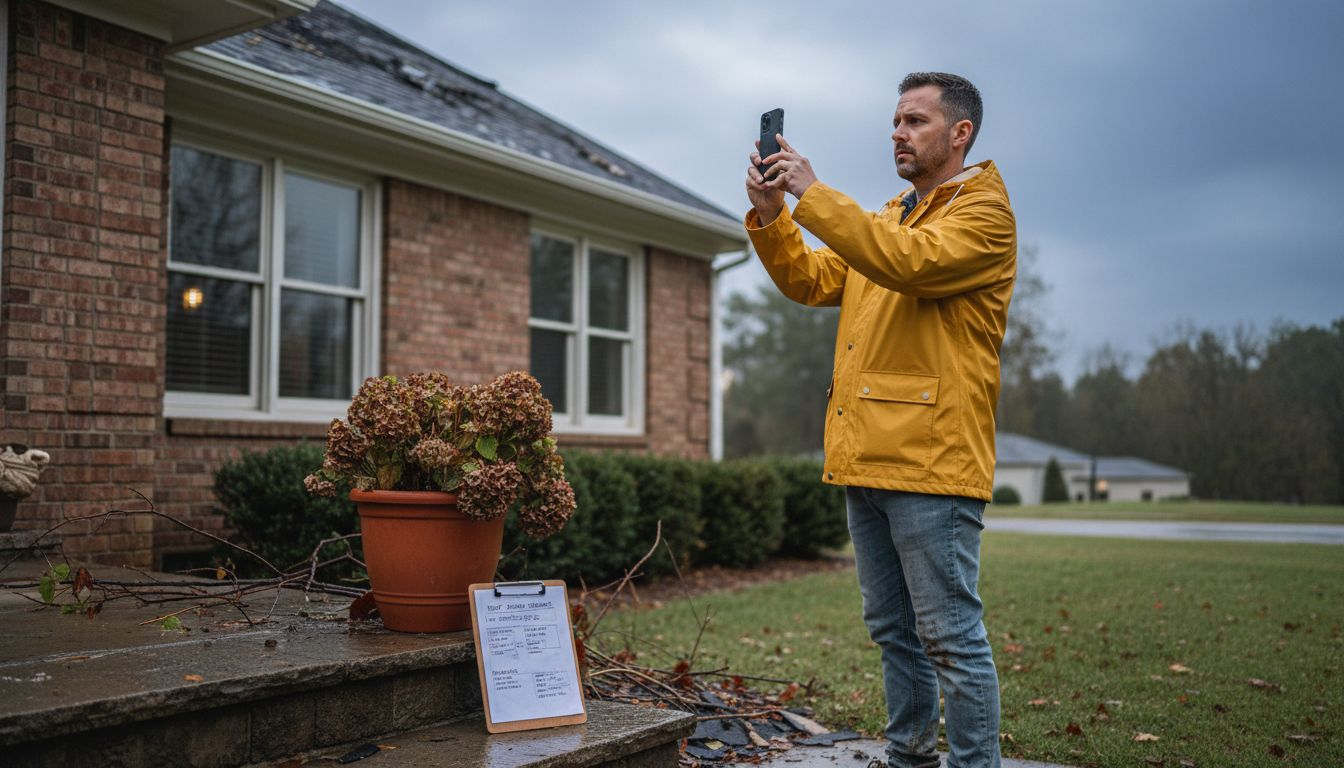
Pro tip: Photograph and thoroughly document all property damage immediately after discovery, preserving evidence that can strengthen your insurance claim and support your recovery efforts.
Understanding Policyholder and Insurer Roles
Effective insurance claims management requires a clear understanding of the distinct responsibilities of policyholders and insurers. Policyholder and insurer roles form a critical partnership that determines the success of any insurance claim process.
The insurance contract establishes a complex relationship with specific expectations for both parties. Policyholders and insurers have unique responsibilities that must be carefully navigated to ensure fair and efficient claim resolution:
Policyholder Responsibilities
- Accurately complete insurance application details
- Pay premiums consistently and on time
- Disclose all relevant property information
- Provide comprehensive documentation during claims
- Maintain property in reasonable condition
Insurer Responsibilities
- Underwrite policies based on risk assessment
- Issue clear policy documentation
- Investigate claims thoroughly and objectively
- Process valid claims in good faith
- Communicate claim status transparently
Key Interaction Points
- Initial policy application and risk evaluation
- Premium payment and policy maintenance
- Claim filing and documentation submission
- Claims investigation and assessment
- Settlement negotiation and resolution
Good-faith cooperation between policyholders and insurers is the foundation of a successful insurance relationship.
Understanding these roles helps homeowners navigate the complex landscape of insurance claims more effectively. Insurers aim to balance their commitment to policyholders with responsible risk management, while policyholders must provide accurate information and maintain their properties diligently.
Pro tip: Maintain a comprehensive file of all insurance documents, communications, and property maintenance records to support potential future claims and demonstrate your commitment to the insurance contract.
The Truth About Claim Denials and Delays
Navigating insurance claims can be a challenging process, with claim denials representing a significant obstacle for many homeowners. Insurance claim denials impact millions of policyholders annually, creating financial stress and uncertainty.
Understanding the root causes of claim denials and delays is crucial for homeowners seeking fair compensation for property damages. The landscape of insurance claims is complex, with multiple factors contributing to potential roadblocks:
Common Reasons for Claim Denials
- Incomplete or inaccurate documentation
- Policy coverage exclusions
- Missing critical information
- Missed filing deadlines
- Disputes over damage causation
Administrative Factors Causing Delays
- Insufficient initial claim information
- Complex verification processes
- Incomplete property damage assessment
- Communication gaps between parties
- Bureaucratic review procedures
Documentation Red Flags
- Vague damage descriptions
- Lack of photographic evidence
- Inconsistent repair estimates
- Missing maintenance records
- Incomplete property history documentation
Proactive documentation and thorough claim preparation can significantly reduce the likelihood of denials and delays.
Homeowners must approach insurance claims strategically, understanding that insurers require comprehensive and precise information to process claims efficiently. Meticulous record-keeping, prompt communication, and understanding policy details are essential in navigating potential challenges.
Pro tip: Create a dedicated digital and physical file containing all property documents, including maintenance records, repair estimates, and photographic evidence of damage to streamline your insurance claim process.
Maximizing Settlements: Expert Insights
Successful insurance claim settlements require strategic preparation and comprehensive understanding of the claims process. Claims transformation strategies are evolving to help homeowners maximize their recovery potential.
Expert adjusters emphasize the critical importance of detailed documentation and strategic claim presentation. Homeowners can significantly improve their settlement outcomes by implementing the following proven approaches:
Documentation Strategies
- Create comprehensive damage portfolios
- Capture high-resolution photographic evidence
- Obtain professional repair estimates
- Maintain meticulous repair and maintenance records
- Document timeline of damage progression
Negotiation Techniques
- Research comparable property damage claims
- Understand full scope of property damage
- Anticipate potential insurance company objections
- Present evidence systematically
- Remain professional and fact-focused
Technical Preparation
- Use technology to support claim documentation
- Leverage digital measurement tools
- Create detailed digital damage logs
- Utilize professional damage assessment technologies
- Organize electronic evidence repositories
Strategic preparation transforms claim documentation from a simple report into a compelling narrative of property damage.
Navigating insurance claims requires a combination of thorough documentation, strategic communication, and persistent follow-through. Homeowners who approach their claims methodically and professionally increase their likelihood of receiving fair compensation.
Below is a summary of best practices for maximizing your insurance settlement outcome:
| Best Practice | Benefit | Example Tool or Method |
|---|---|---|
| Detailed Documentation | Stronger claim credibility | Photographic evidence |
| Research Similar Claims | Higher negotiation leverage | Public loss databases |
| Use Technology | Efficient claim presentation | Digital measurement apps |
| Professional Estimates | Increased settlement accuracy | Licensed contractors |
Pro tip: Create a digital and physical evidence portfolio with timestamped photographs, professional estimates, and comprehensive documentation to present a compelling and organized claim narrative.
Don’t Let Insurance Claim Myths Hold You Back From the Compensation You Deserve
Dealing with insurance claims after property damage can feel overwhelming and confusing. The article highlights common myths that might make you hesitate or accept less than you deserve. If you are worried about claim denials, delays, or unfair settlement offers, you are not alone. Understanding your policy, documenting damage properly, and having a strong advocate on your side can make all the difference.
At Public Adjusters Atlanta, we specialize in representing homeowners across Georgia who face these exact challenges. The licensed public adjusters we work with provide expert claim review, thorough damage assessment, and skillful negotiation to ensure you receive full and fair compensation. Don’t let myths or insurer tactics reduce your claim’s value. Take control today. Visit Public Adjusters Atlanta now for a free damage evaluation and get the professional help you deserve.
Frequently Asked Questions
What are some common myths about insurance claims?
Many homeowners believe that insurance companies always deny claims, that they must accept the first settlement offer, or that filing a claim will automatically raise their premiums. Understanding the truth behind these myths is crucial for successful claim navigation.
How can I maximize my insurance claim settlement?
To maximize your settlement, maintain detailed documentation of damages, gather professional repair estimates, and strategically prepare for negotiations by researching similar claims. Presenting a well-organized claim with compelling evidence can significantly improve your chances of a favorable outcome.
What should I do if my insurance claim is denied?
If your claim is denied, review the denial letter to understand the reasons. Ensure you have provided complete and accurate documentation, and if possible, gather additional evidence to support your case. You can challenge the denial by appealing through your insurance company’s process or seeking professional assistance.
What documentation is required for filing a property damage claim?
Typically, you’ll need to provide a detailed incident report, photographs of the damage, repair estimates, and any correspondence with your insurer. Comprehensive and well-organized documents can aid in the effective processing of your claim.