

Most American homeowners in the Atlanta area are shocked to learn that nearly one million property damage claims are filed in Georgia each year. Unexpected disasters can leave families overwhelmed by technical insurance jargon and lengthy claims processes. If you want a fair settlement and expert guidance, understanding exactly what adjusters do is crucial. This article offers clear, practical insights that can help Atlanta homeowners make informed decisions and safeguard their property investment.
Table of Contents
- What Adjusters Do in Georgia Insurance Claims
- Types of Adjusters: Public vs. Independent
- Licensing and Legal Requirements for Georgia Adjusters
- Responsibilities and Limitations of Adjusters
- Choosing an Adjuster and Common Pitfalls
- Costs, Settlement Impacts, and Alternatives
Key Takeaways
| Point | Details |
|---|---|
| Role of Adjusters | Insurance adjusters in Georgia assess property damage claims, balancing homeowneer compensation with insurance company interests. |
| Types of Adjusters | Georgia has three main adjuster types: Insurer Adjusters represent companies, Independent Adjusters offer flexible assessments, and Public Adjusters advocate for homeowners. |
| Licensing Requirements | Becoming a licensed adjuster in Georgia entails completing a 40-hour course, passing an exam, and meeting background check standards. |
| Importance of Transparency | Homeowners should request detailed written assessments from adjusters to ensure clarity and transparency throughout the claims process. |
What Adjusters Do in Georgia Insurance Claims
Insurance adjusters play a critical role in processing property damage claims across Georgia, serving as key intermediaries between homeowners and insurance companies. These professionals systematically investigate and evaluate insurance claims by conducting comprehensive damage assessments and determining appropriate compensation. Insurance claims adjusters in Georgia have a complex responsibility of balancing fair compensation for homeowners with protecting insurance company interests.
The typical claims adjustment process involves multiple strategic steps. Adjusters first conduct thorough site inspections, carefully documenting property damage through photographs, measurements, and detailed written reports. They interview property owners, review policy documentation, and consult expert resources to understand the full scope of damage. Adjusters then calculate repair or replacement costs, compare them against policy coverage limits, and develop settlement recommendations that account for both structural and personal property damages.
Georgia adjusters must navigate intricate legal and technical requirements during claims processing. They analyze multiple factors including damage extent, policy terms, local building codes, and repair estimates. Claims investigation techniques require precise documentation and objective evaluation to ensure fair settlements. Most adjusters utilize specialized software and technical tools to generate accurate damage assessments and monetary valuations.
Pro tip: Always request a detailed written assessment from your insurance adjuster that itemizes every aspect of damage and proposed settlement to ensure complete transparency during the claims process.
Types of Adjusters: Public vs. Independent
In Georgia’s insurance landscape, three primary types of adjusters operate, each with distinct roles and responsibilities. Claims adjusters in Georgia are categorized into insurer adjusters, independent adjusters, and public adjusters, each representing different perspectives in the insurance claims process. Understanding these variations is crucial for homeowners navigating property damage claims.
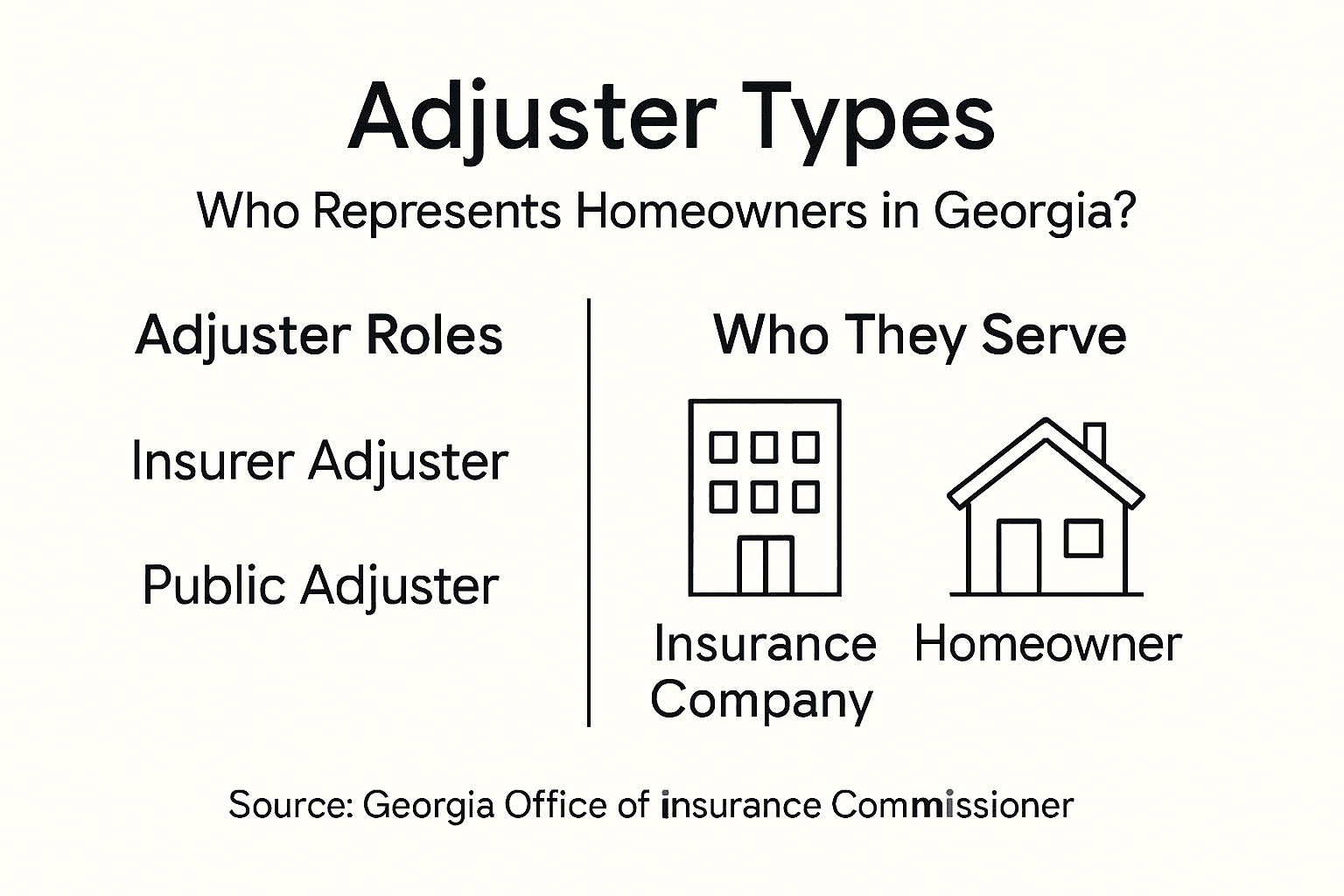
Insurer adjusters are direct employees of insurance companies, working exclusively to represent the company’s interests during claim evaluations. They assess damages, investigate claims, and determine settlement amounts from the insurer’s perspective. Independent adjusters, by contrast, function as freelance professionals who are contracted by insurance companies on an as-needed basis. These adjusters provide flexible claims investigation services across multiple insurance providers, offering expertise without being permanently attached to a single company.
Public adjusters represent a unique category, working solely on behalf of property owners. These licensed professionals advocate for homeowners to ensure maximum possible compensation for property damage claims. Unlike insurer or independent adjusters, public adjusters are compensated through a percentage of the final settlement, which directly incentivizes them to secure the most comprehensive financial recovery for their clients. Their specialized knowledge of insurance policies, damage assessment, and negotiation strategies makes them valuable allies for homeowners facing complex insurance claims.
Pro tip: Before hiring any type of adjuster, verify their professional licensing status and request detailed references to ensure you’re working with a reputable claims professional.
Here’s a concise comparison of Georgia’s main types of insurance adjusters and who they serve:
| Adjuster Type | Who They Represent | Payment Structure | Key Advantage |
|---|---|---|---|
| Insurer Adjuster | Insurance Company | Salary/Company paid | Deep knowledge of insurer processes |
| Independent Adjuster | Insurance Company | Contract/Fee per assignment | Flexible, multi-provider expertise |
| Public Adjuster | Homeowner | Percentage of settlement | Maximizes homeowner claim recovery |
Licensing and Legal Requirements for Georgia Adjusters
Becoming a licensed insurance adjuster in Georgia requires navigating a comprehensive regulatory process designed to ensure professional competence and consumer protection. Insurance adjuster licensing involves multiple critical steps that prospective professionals must successfully complete to practice legally in the state.
The licensing journey begins with a mandatory 40-hour pre-licensing educational course that covers essential insurance claim handling principles, legal requirements, and ethical standards. After completing the coursework, candidates must pass the Georgia Adjuster Exam, which tests their understanding of state insurance regulations, claim assessment protocols, and professional conduct standards. Additionally, applicants are required to submit electronic fingerprints for background checks, ensuring the integrity of individuals entering the claims management profession.
Regulatory oversight for insurance adjusters in Georgia is strictly managed by the Georgia Office of the Commissioner of Insurance and Safety Fire. This government agency establishes and enforces licensing requirements, monitors professional conduct, and ensures that adjusters maintain high standards of practice. Continuing education is mandatory for license renewal, compelling adjusters to stay current with evolving insurance laws, technological advancements, and best practices in claims management. The rigorous licensing process ultimately protects consumers by guaranteeing that only qualified, knowledgeable professionals handle complex insurance claims.
Pro tip: Maintain detailed records of your continuing education credits and license renewal documentation to ensure uninterrupted professional status.
Responsibilities and Limitations of Adjusters
Insurance adjusters in Georgia play a complex role that requires meticulous investigation and balanced professional judgment. Adjuster responsibilities encompass a comprehensive range of duties designed to thoroughly evaluate property damage claims while maintaining legal and ethical standards.

The primary responsibilities of adjusters include conducting detailed property damage investigations, which involve systematic evidence collection, comprehensive damage assessments, and thorough documentation. Adjusters must interview witnesses, inspect damaged properties, review insurance policy details, and consult technical experts to develop accurate claim evaluations. Their investigative process requires gathering photographic evidence, measuring structural damage, estimating repair costs, and comparing findings against specific policy coverage terms. However, adjusters operate under strict limitations that prevent them from making unilateral decisions about claim settlements or policy interpretations.
Each type of adjuster maintains unique boundaries within their professional scope. Insurer adjusters represent the insurance company’s interests, public adjusters advocate for homeowners, and independent adjusters provide objective third-party assessments. Despite these differences, all adjusters must adhere to regulatory guidelines, ethical standards, and legal frameworks that govern insurance claim processes. They cannot guarantee specific claim outcomes, bind insurance companies to settlements without authorization, or override established policy provisions. Their fundamental role remains facilitating fair, transparent claim evaluations that protect both policyholder and insurance company interests.
Pro tip: Always request a detailed written documentation of the adjuster’s investigation process and findings to ensure transparency and comprehensive claim understanding.
Choosing an Adjuster and Common Pitfalls
Selecting the right insurance adjuster requires careful consideration and strategic evaluation of multiple factors that can significantly impact your claim’s outcome. Effective adjuster selection demands a comprehensive approach that goes beyond surface-level credentials, focusing on professional competence, communication skills, and proven track record.
Homeowners should prioritize several critical criteria when evaluating potential adjusters. First, verify professional licensing and certification, ensuring the adjuster is legally authorized to practice in Georgia. Request and thoroughly check references, examining past client experiences and success rates in similar property damage claims. Pay close attention to the adjuster’s specialization – some professionals excel in specific damage types like fire, water, or storm damage. Investigate their fee structure carefully, understanding whether they charge a percentage of the claim settlement or a flat rate, and how this might impact your potential recovery.
Common pitfalls in the adjuster selection process include overlooking potential conflicts of interest, failing to understand contract terms, and not thoroughly investigating the adjuster’s professional background. Many homeowners mistakenly assume all adjusters operate identically, but public adjusters, independent adjusters, and insurance company adjusters have distinctly different motivations and approaches. Red flags include adjusters who promise unrealistic settlement amounts, refuse to provide clear documentation, or pressure you into quick decisions. Transparency, detailed communication, and a willingness to meticulously document every aspect of the claim should be non-negotiable standards when choosing a professional to represent your interests.
Pro tip: Always request a comprehensive written agreement that clearly outlines the adjuster’s scope of work, fee structure, and expected deliverables before signing any contract.
Costs, Settlement Impacts, and Alternatives
Navigating the financial landscape of insurance claims requires a nuanced understanding of potential costs and strategic alternatives. Public adjuster compensation typically involves a percentage-based commission structure that can significantly influence overall claim settlement dynamics, making careful financial analysis essential for homeowners.
Public adjusters usually charge between 10% to 20% of the total claim settlement, which might initially seem like an additional expense but often results in substantially higher recoveries. Their expertise can uncover hidden damages, provide comprehensive documentation, and negotiate more aggressively than standard insurance company adjusters. Homeowners should conduct a careful cost-benefit analysis, recognizing that while the adjuster’s fee reduces the net settlement, their professional intervention can potentially increase the gross settlement amount by 20% to 40% compared to self-managed or insurance-adjuster processed claims.
Alternative approaches to claims management include self-representation and relying exclusively on insurance company adjusters, each with distinct advantages and limitations. Self-representation requires extensive personal time investment, detailed documentation skills, and comprehensive understanding of insurance policy intricacies. Insurance company adjusters, while seemingly cost-free, fundamentally represent the insurance provider’s interests. Public adjusters emerge as a strategic middle ground, offering professional representation with a direct financial incentive to maximize claim recovery while maintaining objectivity and expertise in navigating complex property damage scenarios.
Pro tip: Request a detailed written breakdown of potential fees and expected settlement improvements before engaging a public adjuster to ensure complete financial transparency.
This table highlights factors that impact public adjuster fees in Georgia:
| Fee Factor | Typical Range/Details | Impact on Homeowner Recovery |
|---|---|---|
| Fee Percentage | 10% to 20% of settlement | Reduces net payout but may increase total settlement |
| Complexity of Claim | Higher for complex cases | May justify cost if more recovery achieved |
| Negotiation & Documentation | More thorough means higher fees | Better chance for full damage compensation |
Maximize Your Georgia Homeowner Claim with Expert Public Adjusters
Understanding the vital role that adjusters play in protecting your insurance claim is the first step toward securing the compensation you deserve. When facing complex property damage from fire, storm, or water, the detailed investigation, thorough documentation, and fair settlement negotiation discussed in this article can feel overwhelming. To avoid common pitfalls and ensure transparency, having a trusted public adjuster who advocates solely for you can make all the difference.
Public adjusters licensed in Georgia specialize in damage assessment, claim review, and policy evaluation to help you navigate complicated insurance processes. Their knowledge and negotiation skills increase your chances of maximizing your settlement so you are not shortchanged by insurer or independent adjusters working for the company. Learn how a dedicated professional can protect your interests and provide the personalized attention your claim needs by visiting Public Adjusters Atlanta.
Take control of your insurance claim today and avoid costly mistakes others make when handling adjusters alone.
Do not let your claim be undervalued or delayed. Contact Public Adjusters Atlanta now for a free damage evaluation and start working with licensed experts who fight to get you the full settlement you are entitled to.
Frequently Asked Questions
What is the primary role of insurance adjusters in Georgia?
Insurance adjusters in Georgia evaluate property damage claims by inspecting the damage, documenting their findings, and determining fair compensation based on the policy coverage and repair costs.
What are the types of adjusters available, and who do they represent?
There are three main types of adjusters: insurer adjusters (employees of insurance companies), independent adjusters (freelancers contracted by insurers), and public adjusters (who represent homeowners). Each type has distinct roles in the claims process.
How do public adjusters differ from insurer adjusters?
Public adjusters advocate for homeowners to ensure they get the maximum compensation for their claims, while insurer adjusters work on behalf of the insurance company, assessing claims from the company’s perspective.
What are the key responsibilities of insurance adjusters?
Insurance adjusters are responsible for conducting thorough investigations into property damage, collecting evidence, interviewing witnesses, and developing accurate claim evaluations based on policy terms and the extent of the damage.