

When an unexpected disaster damages your Atlanta property, insurance claims can quickly become a stressful puzzle. The difference between a denied claim and a fair payout often comes down to how well you document your losses and communicate with your insurer. Building a strong case with organized documentation and clear communication gives you real power during the claims process, helping you avoid common pitfalls and work toward a better settlement.
Table of Contents
- Step 1: Gather Essential Documentation and Evidence
- Step 2: Notify Your Insurance Provider Immediately
- Step 3: Engage a Public Adjuster for Expert Guidance
- Step 4: Document All Communication and Updates
- Step 5: Review and Negotiate Settlement Offers
Quick Summary
| Essential Insight | Detailed Explanation |
|---|---|
| 1. Gather Comprehensive Documentation | Collect all relevant records to support your claim, such as photographs, repair estimates, and a detailed inventory of damages. |
| 2. Notify Your Insurance Provider Promptly | Report the damage to your insurer ASAP to protect your rights and establish an official record of the claim. |
| 3. Engage a Public Adjuster | A licensed public adjuster can advocate for you and significantly improve your claim outcome by negotiating on your behalf. |
| 4. Document All Communications | Keep a meticulous log of every interaction with your insurance company to prevent misunderstandings and disputes in the claims process. |
| 5. Review and Negotiate Settlement Offers | Analyze the initial settlement offer carefully and be prepared to counter with detailed evidence showing why more compensation is warranted. |
Step 1: Gather Essential Documentation and Evidence
When filing an insurance claim, your documentation can make or break your settlement. Think of your paperwork like a legal defense attorney for your property damage claim your evidence speaks volumes about the losses you’ve experienced.
Start by collecting physical records that prove your losses comprehensively. This means pulling together your insurance policy, photographs of damage, repair estimates, police reports if applicable, and a detailed inventory of damaged items. Professional adjusters recommend creating a digital folder with high-resolution images showing damage from multiple angles. Take close up shots that capture specific areas of destruction and wide angle images demonstrating overall property impact. Include timestamps on all photographs to establish credibility.
Keep meticulous communication records with your insurance company. Save every email, text message, and voicemail related to your claim. These documents create a paper trail that can protect you if disputes arise later. Track the names of representatives you speak with, dates of communication, and summaries of discussions. Your goal is building an airtight case that leaves no room for ambiguity about your property damage.
Pro Tip: Consider using cloud storage or an external hard drive to backup all claim documentation in multiple secure locations to prevent potential loss of critical evidence.
Step 2: Notify Your Insurance Provider Immediately
The moment disaster strikes your property your first critical move is alerting your insurance company about the damage. Your goal is establishing an official record quickly and protecting your right to compensation.
Timely insurance claim notification can significantly impact your settlement potential. Most insurance policies require you to report incidents within specific timeframes typically ranging from 24 hours to a few weeks after the event. When you contact your insurer prepare to provide basic incident details including the exact time of damage, location, type of incident and preliminary assessment of destruction. Professional adjusters recommend using multiple communication channels such as emergency hotlines phone calls email or online claim portals to ensure your notification is received and documented.
During your initial notification stay calm and stick to factual information. Document the conversation details including the representative’s name date and time of contact and any reference number assigned to your initial report. Avoid speculating about fault or making statements that could potentially limit your claim. Your primary objective is creating an official record that demonstrates you are proactively addressing the property damage.
Pro Tip: Keep a dedicated folder with digital and physical copies of all initial communication records to create a comprehensive documentation trail for your insurance claim.
Step 3: Engage a Public Adjuster for Expert Guidance
Navigating an insurance claim can feel like walking through a complex legal maze. A public adjuster serves as your personal advocate transforming that maze into a clear pathway toward maximum compensation.

When selecting a public adjuster, focus on finding a licensed professional with deep experience in your specific type of property damage. Public adjuster benefits guide highlights that these experts understand insurance company tactics and can dramatically improve your settlement outcome. They will comprehensively document your losses document evidence and negotiate directly with your insurance provider using professional strategies that most homeowners cannot effectively implement on their own.
The best public adjusters offer a free initial consultation where they evaluate your claim potential and explain their fee structure. Typically they work on a contingency basis meaning they receive a percentage of your final settlement. This alignment of interests motivates them to secure the highest possible compensation. During your initial meeting ask about their track record specific experience with your type of property damage and request references from previous clients in the Atlanta metro area.
Pro Tip: Interview at least three public adjusters and request detailed documentation of their past claim success rates before making your final selection.
Step 4: Document All Communication and Updates
Your insurance claim is a complex journey where every interaction matters. Tracking and recording every single communication becomes your strategic weapon in securing a fair settlement.
Claims handling best practices emphasize the critical importance of maintaining meticulous communication records. Create a dedicated digital and physical file where you log every single interaction chronologically. This means capturing details like date time names of representatives contact methods conversation summaries and any promises or commitments made. Screenshot text messages save email threads print out physical correspondence and maintain a running log of phone call details including the representatives name their direct contact information and key discussion points.
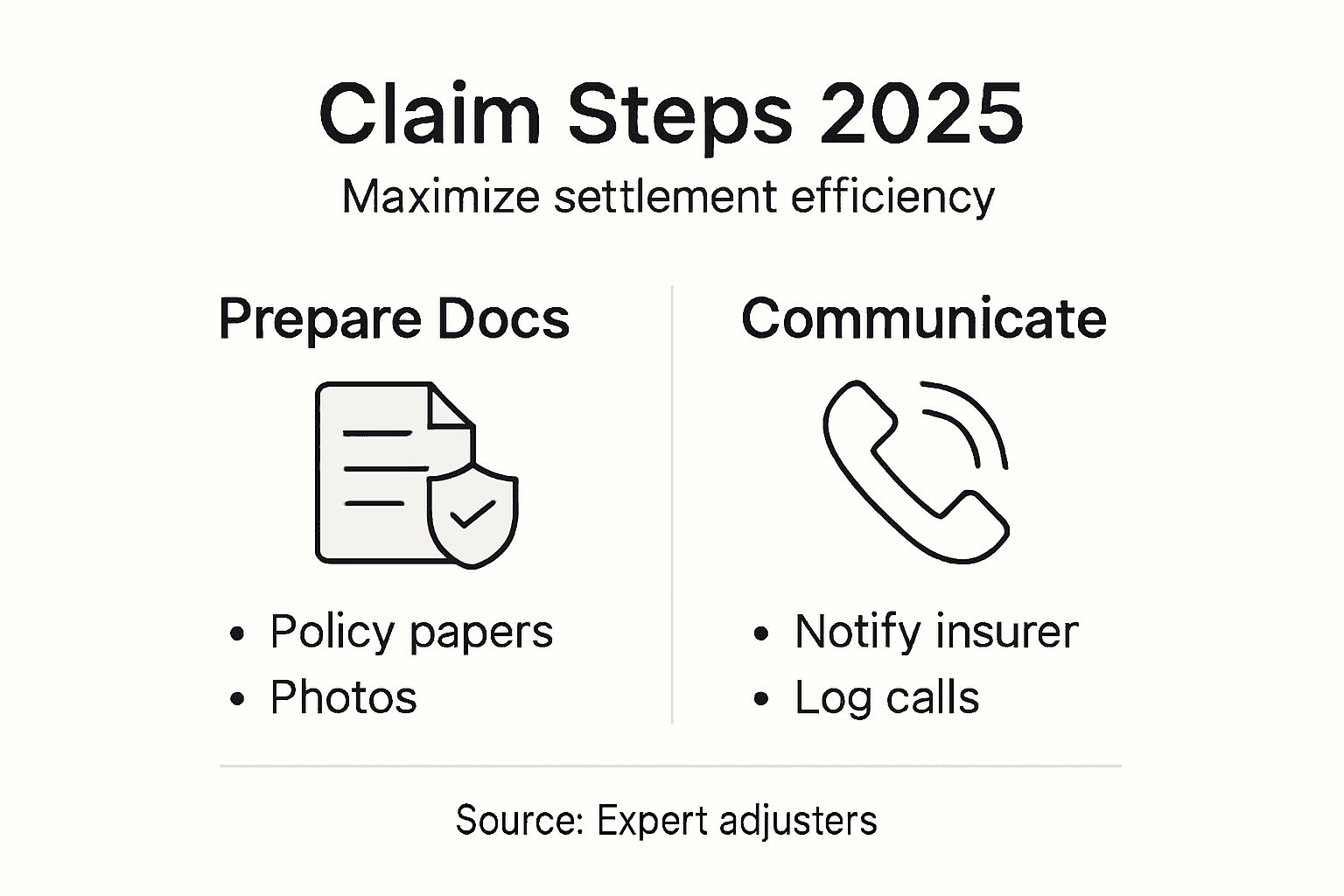
Consistent communication documentation serves multiple purposes. It creates a transparent record that protects you from potential disputes prevents misunderstandings and provides clear evidence of your proactive engagement throughout the claims process. Insurance companies are more likely to take your claim seriously when you demonstrate organized professional and thorough communication tracking. Your records become a powerful tool that can expedite your settlement and protect your interests if any disagreements arise.
Pro Tip: Use a cloud based spreadsheet or dedicated claims management app to centralize and timestamp all communication records for easy access and comprehensive tracking.
Compare these communication tracking methods for insurance claims:
| Method | Accessibility | Security Level |
|---|---|---|
| Cloud spreadsheet | Access from anywhere | Data encrypted online |
| Claims app | Mobile notifications | App-specific protection |
| Paper logbook | Immediate offline access | Risk of physical loss |
| Email folders | Easy search and backup | Depends on account security |
Step 5: Review and Negotiate Settlement Offers
After weeks of documentation and communication, your insurance claim reaches a critical moment where dollars are finally on the table. Understanding how to strategically review and negotiate your settlement offer can mean the difference between financial relief and frustration.
Insurance settlement negotiation strategies require a systematic approach grounded in comprehensive evidence. When you receive the initial settlement offer carefully compare it against your documented losses repair estimates and supporting documentation. Insurance companies often start with lowball offers expecting negotiation. Analyze each line item methodically checking for discrepancies or undervalued damages. Cross reference repair estimates from multiple contractors and include detailed photographic evidence to substantiate your claim for higher compensation.
Successful negotiation requires emotional detachment and professional persistence. Prepare a counterproposal that systematically breaks down why the current offer falls short. Use precise language highlighting specific evidence supporting your valuation. Be prepared to articulate your position clearly without becoming confrontational. If the insurance adjuster seems unresponsive consider requesting a detailed written explanation for their valuation or involving your public adjuster to escalate negotiations professionally.
Pro Tip: Always maintain a professional tone during negotiations and be willing to provide additional documentation that objectively supports your claim value.
Here’s a quick overview of the key steps involved in filing a property insurance claim:
| Step | Primary Action | Critical Benefit |
|---|---|---|
| 1 | Gather documentation | Builds strong evidence for your loss |
| 2 | Notify insurer promptly | Protects your right to compensation |
| 3 | Engage a public adjuster | Maximizes potential settlement |
| 4 | Record all communications | Prevents disputes and confusion |
| 5 | Review and negotiate offer | Increases final compensation amount |
Maximize Your Insurance Settlement with Expert Help in Atlanta
Filing an insurance claim can feel overwhelming with all the documentation, timely notifications, and negotiation challenges involved. You want to avoid lowball offers and ensure every damaged item is fully accounted for. The article “Insurance Claim Tips 2025: Maximize Your Settlement Fast” highlights critical steps like gathering evidence, notifying your insurer immediately, and engaging a public adjuster for expert guidance—key strategies to protect your rights and boost your payout.
At Public Adjusters Atlanta, we understand how stressful managing property damage claims can be after incidents like fire, storm, or mold. The licensed public adjusters we work with act as passionate advocates who thoroughly review your claim, assess your policy, and negotiate directly to maximize your settlement. Don’t navigate this complex process alone when trusted experts are ready to support you.
Take control of your insurance claim today by visiting Public Adjusters Atlanta. Get a free damage evaluation and expert advice tailored for homeowners and business owners across Georgia. Act now to secure the fair compensation you deserve before time-sensitive deadlines or policy hurdles affect your claim.
Frequently Asked Questions
What type of documentation do I need for my insurance claim?
To maximize your settlement, gather essential documentation such as your insurance policy, photographs of the damage, repair estimates, and a detailed inventory of damaged items. Organize these materials in a digital folder for easy access and to build a strong case for your losses.
How quickly should I notify my insurance provider after property damage?
You should notify your insurance provider immediately after damage occurs, ideally within the timeframe specified in your policy, which can range from 24 hours to a few weeks. Prepare to provide details about the incident to establish an official record right away.
How can a public adjuster help me with my insurance claim?
A public adjuster can serve as your personal advocate, documenting your losses and negotiating directly with your insurance company for you. Engage their services early on to ensure you maximize your potential settlement based on their expertise in claims handling.
What should I include in my communication log during the claims process?
Maintain a detailed log of every interaction with your insurance provider, including dates, times, names of representatives, and summaries of conversations. This log will serve as critical evidence in your case should any disputes arise later on.
How can I effectively negotiate my insurance settlement offer?
To negotiate your insurance settlement effectively, carefully compare the initial offer with your documented losses and repair estimates. Prepare a counterproposal highlighting specific evidence that justifies a higher compensation amount and present your case professionally to maintain momentum in the negotiation.
What steps should I take to ensure all my claim documentation is safe?
To keep your claim documentation secure, utilize cloud storage or an external hard drive for backups in multiple locations. This practice helps prevent loss of critical evidence in case of unforeseen events, ensuring you have access to everything needed for your claim.