

Property damage from fire or water can leave homeowners and small business owners in Atlanta facing tough choices and feeling overwhelmed. Quick claims and fair settlements depend on the strength of your documentation, policy knowledge, and timely action. This guide breaks down the most effective steps, highlighting how thorough documentation and a clear understanding of your insurance policy can help you secure the compensation you deserve and restore your property with confidence.
Table of Contents
- Step 1: Document All Property Damage Thoroughly
- Step 2: Review Your Insurance Policy Details
- Step 3: Notify Your Insurance Provider Promptly
- Step 4: Coordinate Professional Damage Assessment
- Step 5: Negotiate and Track Claim Progress
- Step 6: Verify Settlement and Secure Repairs
Quick Summary
| Essential Insight | Explanation |
|---|---|
| 1. Document Property Damage | Thoroughly document damage through detailed photos and inventory to strengthen your insurance claim. |
| 2. Understand Insurance Policy | Review your policy for coverage limits and exclusions to maximize your potential settlement. |
| 3. Notify Insurer Immediately | Contact your insurance provider right after damage occurs to expedite the claims process. |
| 4. Coordinate Professional Assessment | Engage a certified assessor for an accurate evaluation to support your damage claim effectively. |
| 5. Stay Organized During Negotiation | Keep detailed records of communications and claim progress to strengthen your negotiating stance. |
Step 1: Document All Property Damage Thoroughly
Documenting property damage thoroughly is crucial for ensuring a successful insurance claim. Your goal is to create comprehensive visual and written evidence that supports the full extent of your loss.
Start by conducting a systematic and thorough property damage assessment. Detailed photographic documentation will serve as critical evidence for your insurance claim. Use these strategies to capture comprehensive damage records:
- Take wide-angle photos that show overall damage context
- Capture close-up shots highlighting specific damage details
- Use digital camera or smartphone with high-resolution settings
- Enable timestamp and geolocation features for verification
- Photograph from multiple angles to show comprehensive damage
Create a detailed written inventory documenting each damaged item. Include specific information like:
- Item name and description
- Estimated replacement cost
- Purchase date and original price
- Current condition before damage
- Approximate damage percentage
Thorough documentation can significantly accelerate your insurance claim processing and maximize potential settlement amounts.
Back up all digital photographs and documentation in multiple secure locations, including cloud storage and external hard drives. Consider creating both physical and digital copies of your damage records.
Pro tip: Keep a running digital spreadsheet with itemized damage details, which can help you track and organize your claim more efficiently.
Step 2: Review Your Insurance Policy Details
Reviewing your insurance policy is a critical first step in preparing for a property loss claim. Your goal is to understand exactly what coverage you have and how to maximize your potential settlement.
Carefully examine your policy’s fine print, paying close attention to specific policy coverage terms. Key areas to focus on include:
- Coverage limits for dwelling and personal property
- Specific deductible amounts
- Policy exclusions and exceptions
- Types of damage covered
- Replacement cost versus actual cash value provisions
Organize your policy review systematically by following these steps:
- Locate your complete policy document
- Review the declarations page for overview
- Study detailed coverage sections thoroughly
- Highlight important terms and conditions
- Note any questions for your insurance agent
Understanding your policy’s nuances can mean the difference between a minimal payout and full compensation for your property loss.
Maintain a detailed record of your policy review, including notes, highlighted sections, and any correspondence with your insurance provider. This documentation can prove invaluable during the claims process.

This reference table highlights important policy review elements and their impact on your insurance claim:
| Policy Element | What to Look For | Impact on Claim |
|---|---|---|
| Coverage Limits | Total maximum payout | Establishes compensation cap |
| Deductible Amount | Minimum out-of-pocket expenses | Affects net reimbursement |
| Exclusions/Exceptions | Types of non-covered damage | Denies certain losses |
| Settlement Method | Replacement vs. cash value | Changes payout type and size |
Pro tip: Create a digital folder with scanned copies of your entire insurance policy and keep digital and physical backups to ensure you always have quick access to critical information.
Step 3: Notify Your Insurance Provider Promptly
Notifying your insurance provider immediately after property damage occurs is crucial for ensuring a smooth claims process. Your timely communication can significantly impact the speed and success of your insurance settlement.
Contact your insurance company as soon as possible using prompt notification strategies. When making your initial report, be prepared with the following critical information:
- Your specific policy number
- Date and time of damage
- Initial damage description
- Location of property damage
- Type of incident causing damage
- Current property condition
Follow these recommended steps when contacting your insurance provider:
- Call your insurance agent or company’s claims hotline
- Request a claim number for your records
- Ask about immediate next steps
- Confirm preferred documentation method
- Understand initial inspection procedures
Timely reporting can help expedite your claim and potentially access emergency financial assistance more quickly.
Maintain a detailed log of all communications with your insurance provider, including names of representatives, dates, times, and conversation summaries. This documentation can prove invaluable if any disputes arise during the claims process.
Pro tip: Consider using email or certified mail to create an official record of your initial damage notification, which provides additional documentation beyond phone conversations.
Step 4: Coordinate Professional Damage Assessment
Professional damage assessment is a critical step in ensuring accurate documentation and maximizing your insurance claim. Your goal is to obtain a comprehensive and objective evaluation of the property damage.
Understand the importance of professional damage assessment strategies that provide detailed insights into your property’s condition. When coordinating a professional assessment, consider these key elements:
- Credentials of the damage assessment professional
- Comprehensive documentation requirements
- Detailed measurement and evaluation techniques
- Photographic and written evidence collection
- Specific area-by-area damage analysis
Follow these steps to coordinate an effective professional damage assessment:
- Research and select a certified damage assessment expert
- Schedule a thorough property inspection
- Prepare all relevant documentation in advance
- Accompany the assessor during the inspection
- Request a detailed written report
A professional damage assessment can significantly influence your claim’s outcome by providing an objective, expert evaluation of property losses.
Ensure you receive a comprehensive report that includes detailed descriptions, measurements, photographic evidence, and estimated repair or replacement costs. This documentation will be crucial for your insurance claim process.
Here is a summary of key differences between self-assessment and professional property damage assessment:
| Aspect | Self-Assessment Approach | Professional Assessment Approach |
|---|---|---|
| Accuracy | Relies on owner’s judgment | Uses expert analysis and tools |
| Documentation | Basic photos and notes | Detailed reports and measurements |
| Evidence Strength | Often viewed as subjective | Considered objective and reliable |
| Claim Impact | May limit claim outcomes | Typically improves settlement |
Pro tip: Request multiple copies of the assessment report and store digital and physical backups in secure locations to protect against potential loss or damage.
Step 5: Negotiate and Track Claim Progress
Negotiating and tracking your insurance claim is a critical phase that determines the success of your property loss settlement. Your objective is to stay proactive, organized, and strategic throughout the claims process.
Master effective claim tracking strategies to ensure maximum transparency and timely resolution. Key strategies for negotiation and tracking include:
- Maintain detailed communication records
- Track all written and verbal interactions
- Monitor claim status regularly
- Document every conversation
- Know your policy’s specific terms
Implement a systematic approach to claim negotiation and tracking:
- Create a dedicated claims communication folder
- Log all interactions with exact dates and times
- Request written confirmation of verbal agreements
- Follow up consistently on claim status
- Be prepared to provide additional documentation
Persistent and methodical tracking can significantly improve your chances of receiving a fair and comprehensive settlement.
Understand that negotiation is a collaborative process. Remain professional, patient, and persistent while advocating for your rightful compensation. Having organized documentation will strengthen your position during discussions.
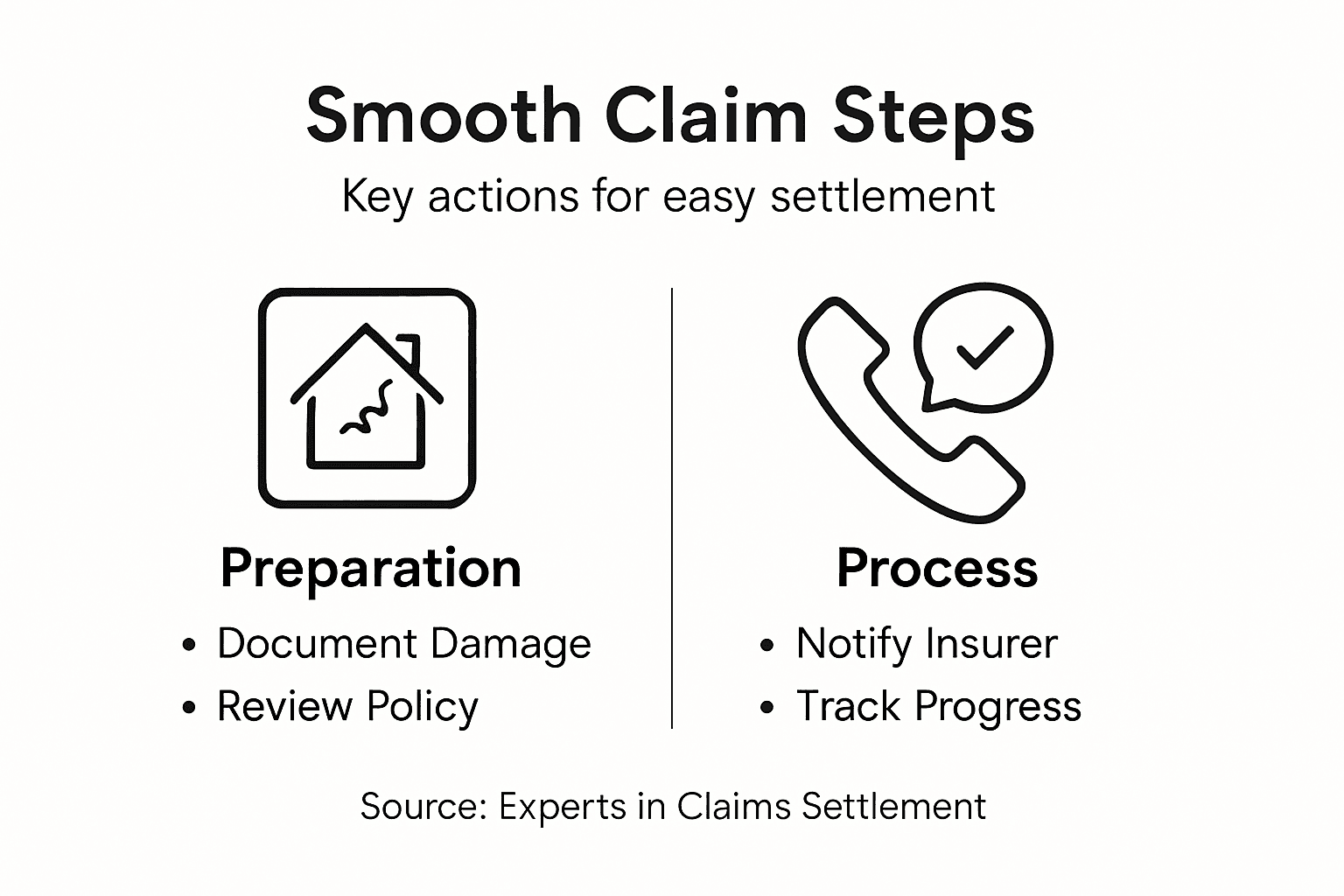
Pro tip: Use a spreadsheet or dedicated claims tracking app to centralize all documentation, making it easier to reference and present information quickly during negotiations.
Step 6: Verify Settlement and Secure Repairs
Finalizing your insurance claim requires careful verification of the settlement and strategic planning for property repairs. Your objective is to ensure you receive fair compensation and restore your property to its pre-damage condition.
Understand settlement fund management guidelines to navigate the complex process of claim resolution. Key considerations during this phase include:
- Review settlement document details
- Verify total compensation amount
- Check payment installment schedule
- Understand fund distribution requirements
- Confirm mortgage lender endorsement procedures
Follow these systematic steps to verify and secure repairs:
- Carefully review settlement documentation
- Confirm total compensation matches damage assessment
- Obtain multiple repair contractor estimates
- Coordinate with mortgage lender if applicable
- Document all repair-related expenses
Thorough verification and documentation can prevent future disputes and ensure complete property restoration.
Remain proactive in tracking repair progress and maintaining comprehensive records of all financial transactions. Communicate regularly with both your insurance provider and chosen repair professionals to ensure smooth implementation of the settlement.
Pro tip: Create a dedicated spreadsheet tracking settlement funds, contractor invoices, and repair progress to maintain complete financial transparency.
Get Expert Help for a Smooth and Fair Property Loss Claim Settlement
Experiencing property damage can leave you overwhelmed by complex insurance terms and detailed steps such as thorough damage documentation, prompt claim notification, and professional damage assessment. The article highlights key challenges like understanding your policy, negotiating effectively, and verifying settlements—all critical for maximizing your compensation. Don’t let these hurdles delay or reduce what you deserve.
Partner with experienced professionals at Public Adjusters Atlanta who specialize in guiding homeowners and business owners through every claim step with expert claim reviews, policy evaluations, and damage assessments. By working with licensed public adjusters, you gain an advocate committed to securing full and fair settlements while simplifying the process. Take control of your claim today—visit Public Adjusters Atlanta to request your free damage evaluation and make sure your loss is accurately represented.
Frequently Asked Questions
What should I do first after a property loss?
First, document all property damage thoroughly. Start by taking detailed photographs and creating a written inventory of damaged items to support your insurance claim.
How do I review my insurance policy for a property loss claim?
Carefully read your insurance policy to understand coverage limits, deductibles, and any exclusions. Highlight key details and note questions to discuss with your insurance agent.
How do I notify my insurance provider about a property loss?
Contact your insurance company immediately after property damage occurs. Be prepared with your policy number, a description of the damage, and the location of the incident to facilitate the claims process.
Why is a professional damage assessment important for my claim?
A professional damage assessment provides an objective evaluation of the property damage, which can strengthen your insurance claim. Schedule an assessment to receive a detailed report of damages and estimated repair costs.
How do I effectively negotiate my insurance claim?
Stay organized and maintain detailed communication records throughout the claim process. Log every interaction and follow up regularly to ensure your claim progresses toward a favorable settlement.
What steps should I take to verify my settlement and manage repairs?
Review your settlement document carefully and confirm the total compensation amount matches the damage assessment. Obtain estimates from repair contractors and document all expenses to ensure proper management of the settlement funds.
Recommended
- How To Negotiate Insurance Settlement For Maximum Payout
- Insurance Claim Process Guide For Maximizing Settlements
- How Insurance Claims Work: Maximizing Your Settlement
- Insurance Claim Tips 2025: Maximize Your Settlement Fast
- Quick and Effective Storm Cleanup Strategies
- A Littleton Homeowner’s Guide To Water Damage Floor Repair