

Many homeowners believe fire damage assessment is simply cataloging what burned. This misconception costs Georgia property owners thousands in lost insurance compensation every year. A proper fire damage assessment goes far beyond visible destruction, uncovering hidden structural damage, smoke infiltration, and secondary water damage that insurers often overlook. Understanding this comprehensive process is essential for maximizing your insurance claim and ensuring full recovery after a devastating fire. This guide breaks down what fire damage assessment truly involves, how professional public adjusters strengthen your claim, and practical steps you can take to secure the compensation you deserve.
Table of Contents
- Understanding Fire Damage Assessment And Its Importance
- Step By Step Process Of Fire Damage Assessment For Insurance Claims
- How Public Adjusters Support Fire Damage Assessment And Help Maximize Claims
- Practical Tips For Homeowners And Businesses: Applying Fire Damage Assessment To Maximize Compensation
- Get Expert Help With Your Fire Damage Assessment And Insurance Claims
- What Does A Fire Damage Assessment Include?
- How Can I Prepare For A Fire Damage Assessment?
- Do I Need A Public Adjuster For My Fire Damage Claim?
- How Long Does The Fire Damage Assessment And Insurance Claim Process Take?
Key takeaways
| Point | Details |
|---|---|
| Comprehensive scope | Fire damage assessment evaluates structural destruction, smoke damage, soot residue, water infiltration, and electrical system impacts. |
| Professional advantage | Public adjusters document hidden damages and negotiate with insurers to increase settlement amounts significantly. |
| Documentation matters | Detailed photographic evidence and itemized records strengthen claims and prevent undervaluation by insurance companies. |
| Timing is critical | Early assessment prevents claim delays and ensures you meet filing deadlines for maximum compensation. |
Understanding fire damage assessment and its importance
Fire damage assessment is crucial to determine the full extent of loss for accurate insurance claims. This systematic evaluation identifies all damage types resulting from fire incidents, including destruction you cannot see immediately. For Georgia homeowners and business owners, understanding this process directly impacts how much compensation you receive from your insurance provider.
A thorough assessment examines multiple damage categories. Structural destruction includes compromised walls, ceilings, floors, and load bearing elements. Smoke damage penetrates porous materials like drywall, insulation, and fabrics, creating persistent odors and health hazards. Soot residue coats surfaces throughout your property, requiring specialized cleaning or replacement. Water damage from firefighting efforts often rivals fire destruction itself, causing warping, mold growth, and material deterioration. Electrical system damage poses safety risks and may not be visible without professional inspection.
Georgia’s humid climate complicates fire damage recovery. Moisture from firefighting combines with high humidity to accelerate mold growth and structural degradation. Local building codes in Atlanta and surrounding counties require specific repairs and upgrades after fire incidents, adding complexity to your claim. Professional evaluation ensures your assessment accounts for these regional factors, preventing insurance companies from undervaluing your loss.
Common fire damage types assessed include:
- Structural destruction to foundations, framing, and roofing systems
- Smoke damage affecting air quality and material integrity
- Soot residue requiring professional remediation
- Water infiltration from firefighting operations
- Electrical system damage creating safety hazards
Documentation quality determines claim outcomes. Insurance adjusters working for your carrier prioritize minimizing payouts, often overlooking secondary damage or underestimating repair costs. A comprehensive fire & smoke damage claims assessment conducted by professionals working for you creates an evidence based foundation for negotiating fair compensation.
Step by step process of fire damage assessment for insurance claims
Accurate stepwise assessment helps ensure all damage is documented for insurance compensation. The fire damage assessment process follows a systematic approach that uncovers every element affecting your property’s value and safety. Understanding these steps helps you prepare effectively and recognize when corners are being cut.
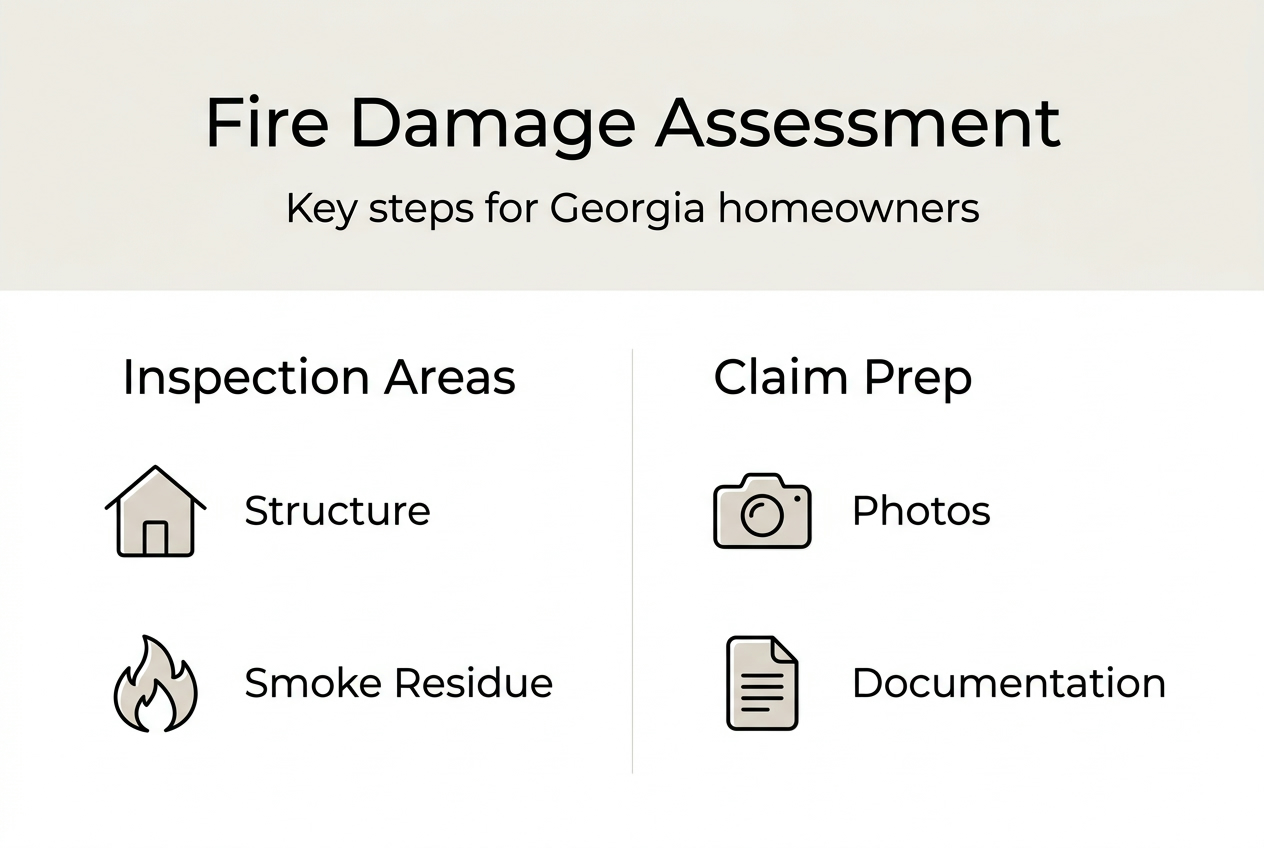
Initial safety inspection establishes whether the property is structurally sound enough for detailed evaluation. Inspectors check for collapse risks, hazardous materials, and environmental dangers before proceeding.
Documentation of visible damage begins with comprehensive photography and videography. Every room, surface, and damaged item receives detailed visual records from multiple angles, creating irrefutable evidence for your claim.
Detailed itemization catalogs each damaged possession, fixture, and structural element. This inventory includes purchase dates, replacement costs, and condition assessments that justify your compensation request.
Assessment of hidden damage reveals problems invisible during surface inspection. Professionals use moisture meters, thermal imaging, and structural analysis to find water infiltration behind walls, compromised electrical wiring, and weakened support structures.
Estimation of repair and replacement costs calculates actual expenses for restoring your property. These estimates factor in current material prices, labor rates, and code compliance requirements specific to Georgia.
Preparation of comprehensive reports compiles all findings into formats insurance companies must acknowledge. Professional reports include photographic evidence, itemized inventories, cost estimates, and technical analyses that withstand insurer scrutiny.
Pro Tip: Keep detailed photographic evidence and notes at every step to strengthen your claim. Take photos before any cleanup begins, document the fire damage restoration process as it progresses, and maintain a chronological record of all communications with your insurance company.
The assessment timeline varies based on damage severity and property size. Residential properties typically require one to three days for thorough evaluation, while commercial properties may need a week or more. Rushing this process increases the risk of missing damage that becomes expensive problems later, so prioritize thoroughness over speed.

How public adjusters support fire damage assessment and help maximize claims
A public adjuster is a licensed professional who represents property owners in insurance claim negotiations, not insurance companies. Unlike company adjusters who work to minimize payouts, public adjusters help homeowners navigate complex assessment and negotiation processes, increasing claim approval rates significantly.
Public adjusters bring specialized expertise to fire damage assessment. They understand insurance policy language, recognize tactics insurers use to reduce payouts, and know exactly what documentation strengthens your position. Their experience with Georgia building codes, local contractor rates, and regional damage patterns ensures your claim reflects true restoration costs rather than lowball estimates.
The benefits of hiring a public adjuster during fire damage assessment include:
- Expert damage evaluation that uncovers hidden problems insurance company adjusters miss
- Detailed claim filing with comprehensive documentation that withstands insurer challenges
- Insurance negotiation conducted by professionals who understand carrier tactics and legal requirements
- Claims follow up ensuring timely responses and preventing deliberate delays
Public adjusters document damages with forensic precision. They photograph every affected area, catalog all damaged items with replacement value research, and compile technical reports that justify your compensation request. This thoroughness prevents insurance companies from disputing your claim based on insufficient evidence or questioning damage severity.
Negotiation expertise separates public adjusters from DIY claim attempts. They understand policy coverage limits, exclusion clauses, and depreciation calculations that insurers use to reduce payments. When carriers offer inadequate settlements, public adjusters present counterarguments supported by independent estimates, comparable claims data, and policy interpretation that protects your rights.
Property owners who hire public adjusters receive settlements averaging 747% higher than those who negotiate independently, according to industry studies on claim outcomes.
Pro Tip: Hire a public adjuster early to avoid missing hidden damages and strengthen your claim. Engaging professional representation before filing prevents costly mistakes and establishes your commitment to thorough documentation that insurers take seriously.
Public adjusters handle all communication with your insurance company, relieving stress during an already difficult time. They manage paperwork, respond to insurer requests, and ensure you meet all deadlines without constant worry. This advocacy allows you to focus on temporary housing, family needs, and planning your recovery while professionals protect your financial interests. Many public adjusters offer fire damage public adjuster help with no upfront costs, working on contingency fees paid only when you receive your settlement.
Practical tips for homeowners and businesses: applying fire damage assessment to maximize compensation
Applying best practices in assessment and claim submission leads to higher settlement amounts. Common mistakes in fire damage claims cost Georgia property owners thousands in lost compensation. Incomplete documentation gives insurers justification to reduce payouts. Underestimating damage severity by focusing only on visible destruction ignores hidden problems that become expensive repairs later. Accepting initial settlement offers without negotiation leaves money on the table, as first offers typically represent minimum payouts rather than fair compensation.
| Assessment Approach | Pros | Cons | Typical Outcome |
|---|---|---|---|
| DIY Assessment | No upfront costs, immediate control | Missed hidden damage, weak documentation, limited negotiation power | 30-50% lower settlements |
| Professional/Public Adjuster | Comprehensive evaluation, expert negotiation, maximized payouts | Contingency fee from settlement | 70-90% higher settlements |
Prepare thoroughly before contacting your insurance company. Document everything immediately after the fire, even before official inspectors arrive. Your early photographs provide baseline evidence that prevents disputes about damage timing or severity.
Recommended documents to maintain include:
- Comprehensive photographs and videos of all damaged areas
- Itemized inventory of destroyed or damaged possessions
- Repair estimates from licensed contractors familiar with Georgia codes
- Police and fire department reports documenting the incident
- Receipts proving ownership and value of damaged items
- Correspondence records of all insurance company communications
Communicate effectively with insurance representatives by staying factual and organized. Provide requested information promptly but never speculate about damage you have not verified. Avoid casual statements about fault or damage extent that insurers might use against you later. Keep written records of every conversation, including dates, times, participant names, and discussion summaries.
Know your policy coverage inside and out. Review your policy immediately after a fire to understand coverage limits, deductibles, exclusions, and special provisions. Many homeowners discover too late that certain damage types require specific documentation or have limited coverage windows. Understanding these details prevents missed opportunities and strengthens your negotiating position.
Timelines and deadlines for filing claims vary by insurer and policy type. Most Georgia policies require prompt notification, typically within days of discovering damage. Formal claim submission deadlines range from 30 to 90 days depending on your carrier. Missing these deadlines can result in claim denial regardless of damage severity, so treat every timeline as non negotiable. Professional insurance claim tips to maximize settlement emphasize that early action and thorough preparation consistently produce better outcomes than rushed, incomplete submissions.
Consider professional assistance for fire damage repair claims in Atlanta GA when damage exceeds $10,000, involves structural issues, or requires extensive documentation. The complexity of modern insurance policies and aggressive cost reduction tactics by carriers make professional representation increasingly valuable for significant losses.
Get expert help with your fire damage assessment and insurance claims
Navigating fire damage assessment and insurance claims without professional guidance often results in inadequate compensation. Georgia property owners face complex policy language, aggressive insurer tactics, and technical documentation requirements that overwhelm even experienced business owners. The licensed public adjusters we work with specialize in fire damage claims throughout the Atlanta area, bringing decades of combined experience to maximize your settlement.
We understand Georgia specific regulations, local building codes, and regional contractor pricing that impact claim valuations. Our team conducts comprehensive assessments uncovering hidden damage that insurance company adjusters routinely miss. We handle all communication with your carrier, prepare bulletproof documentation, and negotiate settlements that reflect true restoration costs rather than lowball offers.
Schedule a free consultation to review your policy and discuss your claim strategy. Early professional involvement prevents costly mistakes and establishes strong documentation from day one. The adjuster’s contingency fee structure means you pay nothing upfront and only when we secure your settlement. Contact our adjusting firms in Atlanta or reach out to our public adjusting Marietta GA office to start maximizing your fire damage compensation today.
Pro Tip: Understanding insurance claim negotiation basics before filing strengthens your position and increases settlement amounts significantly.
What does a fire damage assessment include?
A comprehensive fire damage assessment evaluates structural integrity, smoke penetration, soot contamination, water damage from firefighting, and secondary issues like electrical system compromise. Professional assessors examine visible destruction and use specialized equipment to detect hidden damage behind walls, under flooring, and within building systems. The scope includes documenting every affected area with photographs, creating itemized inventories of damaged possessions, and preparing detailed cost estimates for repairs and replacements. Georgia assessments also account for local building code requirements that may mandate upgrades during restoration, ensuring your claim covers all necessary expenses. This thorough approach prevents insurance companies from undervaluing your loss by claiming certain damages are unrelated or pre existing. For detailed information on what fire & smoke damage claims should cover, consult with licensed professionals familiar with Georgia insurance regulations.
How can I prepare for a fire damage assessment?
Gather all available documentation before the assessment begins, including photographs you took immediately after the fire, receipts proving ownership and value of damaged items, and any police or fire department reports. Create a preliminary inventory of destroyed or damaged possessions, noting purchase dates and approximate values to expedite the professional assessment process. Ensure the property is safe and accessible for inspectors by coordinating with fire officials to obtain clearance if necessary, but do not begin cleanup or repairs that might remove evidence of damage extent. Secure the property against further damage from weather or vandalism while preserving the fire scene for documentation purposes. Review your insurance policy to understand coverage limits and special documentation requirements that might affect the assessment. Following insurance claim preparation tips helps ensure you maximize compensation by providing assessors with comprehensive information from the start.
Do I need a public adjuster for my fire damage claim?
Hiring a public adjuster becomes increasingly valuable as claim complexity and damage severity increase. For losses exceeding $10,000, involving structural damage, or requiring extensive documentation, professional representation typically results in significantly higher settlements that more than offset contingency fees. Public adjusters prove especially beneficial when insurance companies dispute damage extent, offer inadequate initial settlements, or employ delay tactics to pressure you into accepting less. Their expertise in policy interpretation, damage assessment, and negotiation consistently produces better outcomes than independent claim attempts. Even for smaller claims, the stress reduction and time savings of professional handling may justify the cost. Many Georgia homeowners discover that when to hire a public adjuster depends less on damage amount than on their comfort level navigating complex insurance processes and advocating against trained company adjusters whose job is minimizing payouts.
How long does the fire damage assessment and insurance claim process take?
Initial assessment typically occurs within days to a week after the fire, depending on property accessibility and assessor availability. The comprehensive evaluation process itself takes one to three days for residential properties and up to a week or more for commercial buildings. Insurance claim approval timelines vary widely based on damage complexity, documentation completeness, and insurer responsiveness, ranging from a few weeks for straightforward claims to several months for disputed or complicated cases. Timely filing is critical, as Georgia policies typically require prompt notification within days and formal claim submission within 30 to 90 days depending on your carrier. Delays in documentation or missed deadlines can result in claim denial regardless of damage legitimacy, making early action essential. Understanding insurance claim process timelines helps you plan temporary housing, coordinate repairs, and manage financial obligations while waiting for settlement approval and payment.
Recommended
- Fire Damage Atlanta GA – USA Professional Fire Damage Restoration
- Fire Damage Atlanta GA – The Fire Damage Restoration In USA
- Fire Damage Acworth GA 30101 – Fire Damage Restoration In Acworth GA
- Fire Damage Repair Claim Atlanta GA – Repairing Fire Damaged Homes
- Post Construction Cleaning Guide for Ready-to-Rent Homes
- 7 Top Renovation Trends 2025 for South Georgian Bay Homes