

You might assume your property damage claim will settle in 30 days. In reality, most homeowners and business owners in Atlanta experience timelines stretching 60 to 90 days or longer. Understanding each phase of the insurance settlement process and the factors that cause delays empowers you to manage expectations, avoid common pitfalls, and potentially accelerate your payout. This guide walks you through the complete timeline, identifies obstacles you can control, and shows how expert help can cut waiting time while boosting your settlement amount.
Table of Contents
- Understanding The Insurance Settlement Timeline
- Key Milestones And What To Expect In Your Claim
- Common Delays And How To Address Them
- Role Of Public Adjusters In Maximizing Claims And Speed
- Common Misconceptions About Insurance Settlement Timelines
- Practical Tips For Homeowners And Business Owners
- Maximize Your Insurance Settlement With Local Experts
- Frequently Asked Questions
Key Takeaways
| Point | Details |
|---|---|
| Standard Timeline | Insurance claims typically take 30 to 90 days but complex cases can extend beyond 6 months. |
| Documentation Impact | Complete, accurate records prevent the most common delays and speed adjuster evaluation. |
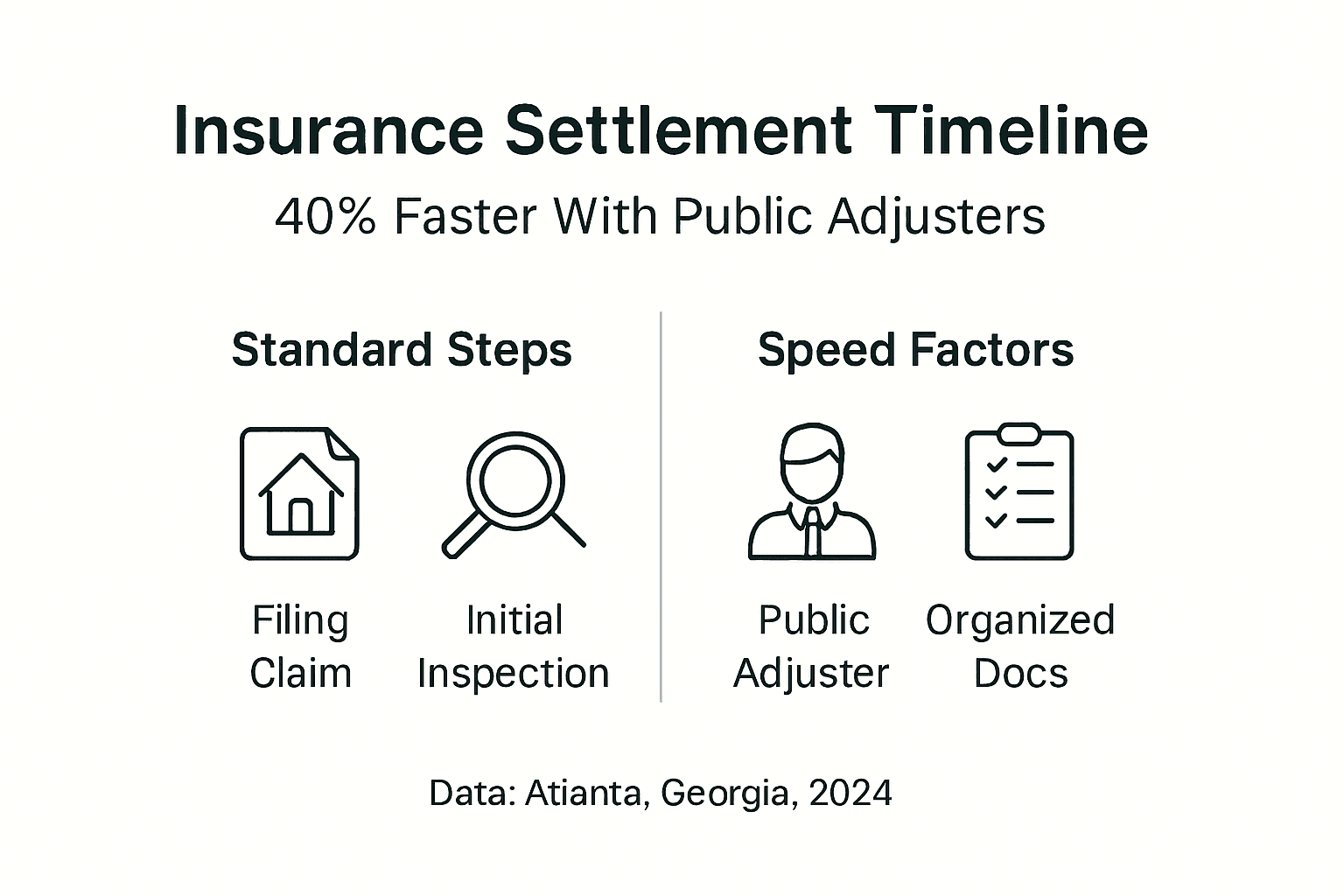
| Expert Advantage | Public adjusters reduce processing time by up to 40% and increase settlements by 17% on average. |
| Proactive Communication | Consistent follow up and prompt responses to insurer requests keep your claim moving forward. |
| Realistic Expectations | Understanding milestones and legal requirements helps you anticipate wait times and avoid frustration. |
Understanding the Insurance Settlement Timeline
Every insurance claim follows a predictable sequence of events. Recognizing these phases helps you anticipate what comes next and prepare accordingly. The typical process includes six major steps:
- Claim Notification – You report the damage to your insurer, starting the official timeline.
- Documentation Gathering – You collect photos, repair estimates, receipts, and other evidence of loss.
- Adjuster Inspection – The insurance company sends an adjuster to assess the damage in person.
- Claim Evaluation – The insurer reviews all documentation and determines coverage and payout amount.
- Negotiation – You or your representative discuss the settlement offer and advocate for fair compensation.
- Final Settlement – The insurer issues payment once both parties agree on terms.
For most homeowners in Atlanta, this cycle completes in 30 to 90 days. Business property claims often require longer timelines due to higher complexity, multiple vendors, and extensive documentation needs. Business Insurance Claim Timeline Explained notes that complex business property claims involving multiple vendors and repairs can take 6 months or longer to finalize due to coordination complexity.
Georgia insurance regulations establish minimum standards for insurer responsiveness, which affects several of these phases. Knowing these legal benchmarks helps you hold your insurer accountable and recognize when delays fall outside normal ranges. The Atlanta property damage claim process provides additional context on how local regulations shape your experience.
Key Milestones and What to Expect in Your Claim
Each stage in the settlement timeline has typical durations and specific requirements. Understanding these milestones lets you track progress and identify when your claim stalls.
| Milestone | Typical Timeframe | Your Required Actions |
|---|---|---|
| Claim Notification | Day 1 | Report damage immediately, provide initial details |
| Acknowledgment | Within 10 days | Confirm receipt of insurer communication |
| Adjuster Inspection | 3 to 14 days | Schedule appointment, prepare damage documentation |
| Evaluation | 7 to 30 days | Submit additional requested documents promptly |
| Negotiation | 14 to 45 days | Review offer, counter if necessary, provide supporting evidence |
| Payment | 5 to 15 days after agreement | Review settlement, deposit check, confirm claim closure |
Georgia law requires insurers to acknowledge your claim within 10 days of filing, as noted in Property Damage Claim Process For Atlanta Homes. The adjuster inspection typically occurs within 3 to 14 days after you file, though adjuster availability and claim volume can push this window.
The evaluation and negotiation phases vary the most. Simple claims with clear coverage and undisputed damage move quickly. Claims involving structural issues, mold, contested policy interpretations, or multiple damage types require extended review and back and forth discussions. Business interruption claims add another layer of complexity because they require income documentation and projections.
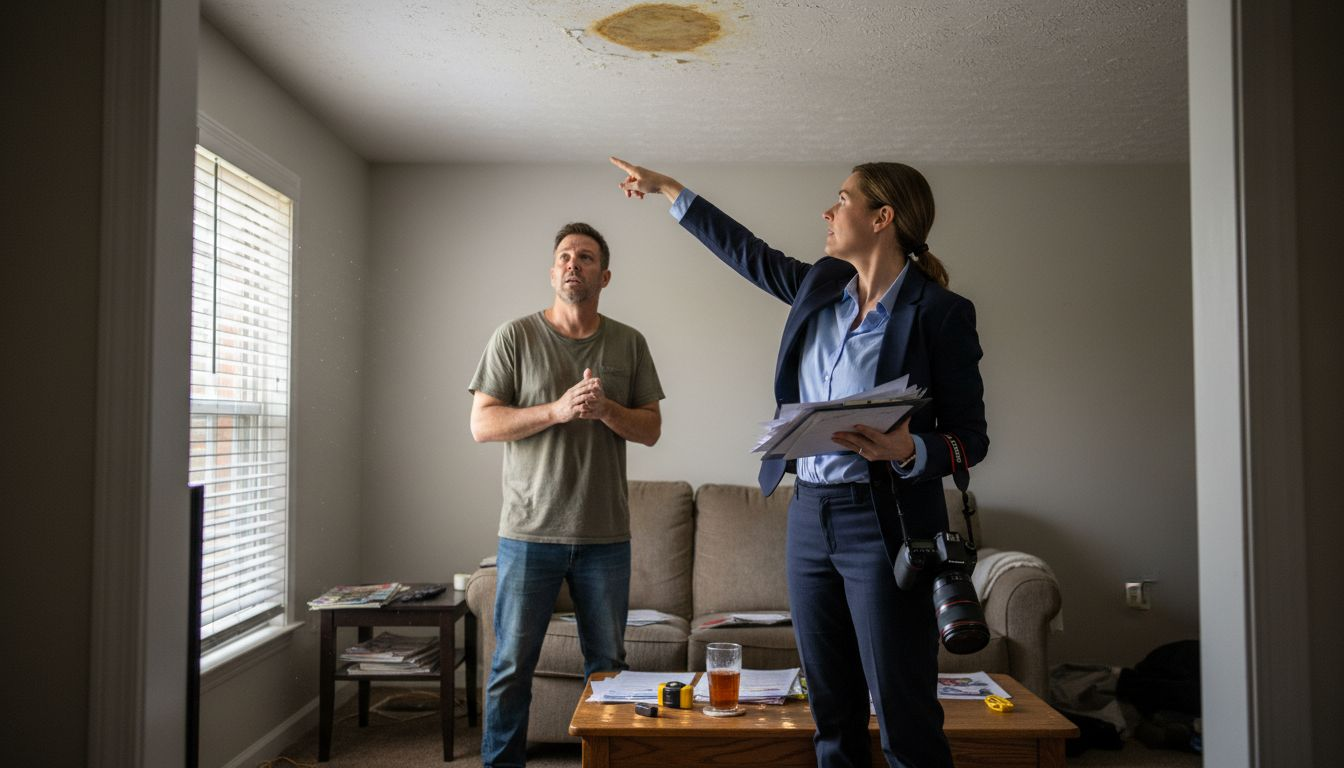
Pro Tip: Gather all your documentation before the adjuster arrives. Having photos, contractor estimates, receipts, and repair histories ready demonstrates preparedness and can shorten the evaluation phase by weeks.
Understanding property damage claim milestones in detail helps you recognize when your claim progresses normally versus when intervention might be necessary.
Common Delays and How to Address Them
Even with the best preparation, certain obstacles slow down insurance settlements. Recognizing these common delays lets you take proactive steps to minimize their impact on your timeline.
- Incomplete Documentation – Missing photos, receipts, or repair estimates force adjusters to request additional information, restarting review cycles.
- Disputed Damage Assessments – When your contractor’s estimate significantly exceeds the adjuster’s assessment, negotiations extend while both sides justify their numbers.
- Coverage Disputes – Disagreements over whether specific damage falls under your policy terms often require legal interpretation and slow resolution.
- Late Communication – Failing to respond promptly to insurer requests or missing scheduled appointments pushes back every subsequent milestone.
- Complex Multi Claim Scenarios – Properties with simultaneous damage from multiple causes require separate evaluations and coordination.
Common Causes of Insurance Claim Delays confirms that major delays in insurance settlements often arise from incomplete documentation and contested damage assessments.
To prevent these setbacks, organize all evidence of damage immediately after discovery. Take comprehensive photos from multiple angles, save all receipts related to emergency repairs, and obtain detailed written estimates from licensed contractors. Maintain a dedicated file with copies of every document you send to your insurer and every communication you receive.
“The single most effective way to speed your claim is responding to every insurer request within 48 hours. Delays on your end multiply through every subsequent phase.”
Pro Tip: Notify your insurer within 24 hours of discovering damage, even if you cannot provide complete documentation yet. This meets policy requirements and officially starts the timeline, preventing potential coverage disputes over late reporting.
You can explore common causes of delays in Atlanta claims for local context on how Georgia specific factors influence timelines.
Role of Public Adjusters in Maximizing Claims and Speed
Hiring a public adjuster fundamentally changes both the timeline and the outcome of your insurance claim. These licensed professionals work exclusively for you, not the insurance company, and their expertise addresses the exact bottlenecks that cause delays.
Public Adjusters and Faster Insurance Settlements demonstrates that engaging a public adjuster can reduce settlement time by up to 40% by streamlining documentation and negotiation processes. Public adjusters know exactly what evidence insurers require and present it in formats that expedite adjuster review. They also understand policy language and coverage nuances that help avoid disputes before they start.
Beyond speed, public adjusters significantly improve settlement amounts. How Public Adjusters Help Maximize Your Claim reports that public adjusters improve settlement value on average by 17%. This increase comes from thorough damage assessment, accurate repair cost estimates, and skilled negotiation that counters low initial offers.
When to Consider a Public Adjuster:
- Your claim exceeds $50,000 in estimated damages
- The damage involves complex structural issues, mold, or hidden problems
- Your insurer denies coverage or disputes significant portions of your claim
- You run a business and cannot dedicate time to managing the claim process
- Initial settlement offers seem unreasonably low compared to repair estimates
Public adjusters prove especially valuable for business owners coordinating multiple contractors, documenting business interruption losses, and managing claims while keeping operations running. Their project management skills and industry relationships accelerate every phase.
Learn more about public adjusters in Georgia and review our public adjuster checklist to determine if expert representation fits your situation. Additional insights on how public adjusters improve claim settlements can help you make an informed decision.
Common Misconceptions About Insurance Settlement Timelines
Several widespread myths create false expectations and unnecessary frustration during the claims process. Understanding the reality behind these misconceptions helps you approach your claim with accurate expectations.
- Myth: All claims settle within 30 days. Reality: While simple claims occasionally resolve this quickly, most homeowner claims take 60 to 90 days, and complex or business claims often exceed six months.
- Myth: The initial offer represents full compensation. Reality: Insurance companies typically start with conservative offers 20% to 40% below actual repair costs, expecting negotiation.
- Myth: Insurers automatically apply all available coverage. Reality: Many policies include endorsements, riders, and coverage extensions that insurers will not mention unless you specifically request them.
- Myth: You must accept the adjuster’s damage assessment. Reality: You have the right to obtain independent contractor estimates and challenge the insurer’s assessment with supporting evidence.
- Myth: Hiring help costs more than it gains. Reality: Public adjusters work on contingency, taking a percentage only of what they recover, and the settlement increase typically far exceeds their fee.
These misunderstandings often lead property owners to accept inadequate settlements or give up when claims take longer than expected. Recognizing these patterns lets you persist through normal delays and advocate effectively for fair treatment.
Explore common insurance misconceptions to deepen your understanding of how insurance language and processes work in practice.
Practical Tips for Homeowners and Business Owners
Applying the insights from earlier sections requires concrete action steps. These practical strategies help you manage your claim efficiently and maximize your settlement.
- Document Everything Immediately – Take photos and videos of all damage before making any repairs beyond emergency measures. Capture wide shots showing context and close ups revealing specific issues. Date stamp everything.
- Create a Claim File – Maintain one organized location (physical folder or cloud storage) containing every photo, receipt, estimate, email, and form related to your claim. Update it daily during active phases.
- Communicate in Writing – Follow up every phone conversation with an email summarizing what was discussed and agreed. This creates a paper trail that protects you if disputes arise later.
- Respond Within 48 Hours – When your insurer requests additional documentation or information, provide it as quickly as possible to prevent timeline extensions.
- Obtain Multiple Estimates – Get detailed written estimates from at least two licensed contractors before the adjuster inspection, giving you negotiation leverage.
- Review Your Policy Thoroughly – Read your entire policy document, highlighting coverage limits, deductibles, and exclusions so you understand what should be covered.
- Consider Expert Help Early – For claims exceeding $50,000 or involving complex damage, consult a public adjuster during the documentation phase rather than waiting until negotiations stall.
- Track Milestones Against Timelines – Use the milestone table from earlier to monitor whether your claim progresses normally or falls behind expected timeframes.
Pro Tip: Create a simple spreadsheet tracking each milestone, the expected completion date based on typical timelines, the actual completion date, and any delays with explanations. This visual tool helps you identify patterns and know when to escalate concerns.
For comprehensive guidance tailored to Atlanta property owners, review our insurance claim tips for Atlanta property owners covering strategies specific to Georgia regulations and local insurance practices.
Maximize Your Insurance Settlement with Local Experts
Navigating insurance settlements requires expertise, persistence, and time that many property owners cannot spare while dealing with damage recovery. Our team of licensed public adjusters specializes in accelerating claims and maximizing settlements for Atlanta homeowners and business owners.
We handle every aspect of your claim, from initial documentation through final negotiation, ensuring you receive every dollar your policy covers. Our local knowledge of Georgia insurance regulations and relationships with regional contractors and adjusters give you a significant advantage.
Whether you are in Atlanta, Marietta, or surrounding communities, our adjusting firms in Atlanta provide personalized service focused on your unique situation. We offer free damage evaluations and work on contingency, so you pay nothing unless we increase your settlement. Learn about public adjusting in Marietta GA or explore insurance claim negotiation basics to understand how we advocate for you. Contact us today to start accelerating your property damage insurance settlement and securing the compensation you deserve.
Frequently Asked Questions
What is the average timeline for an insurance settlement in Atlanta?
Most residential property damage claims in Atlanta settle within 60 to 90 days from initial filing to payment. Simple claims with clear coverage occasionally resolve in 30 to 45 days, while complex claims involving structural damage, mold, or coverage disputes can extend beyond six months. Business property claims typically take longer due to additional documentation requirements and coordination complexity.
How can I speed up my property damage insurance claim?
Provide complete, organized documentation upfront before the adjuster inspection to eliminate information requests that restart review cycles. Respond to every insurer communication within 48 hours and maintain consistent follow up on claim status. Hiring a public adjuster can reduce processing time by up to 40% through expert documentation and negotiation that addresses insurer concerns proactively.
When should I consider hiring a public adjuster?
Consider hiring a public adjuster when your claim exceeds $50,000, involves complex structural issues or hidden damage, or when the insurer disputes significant coverage. Public adjusters prove especially valuable for business owners who cannot dedicate extensive time to claim management and for any situation where initial settlement offers seem unreasonably low. Their contingency fee structure means you only pay if they increase your settlement.
What documentation is essential for a smooth claim process?
Essential documentation includes comprehensive photos and videos of all damage from multiple angles, dated receipts for any emergency repairs, detailed written estimates from licensed contractors, proof of ownership for damaged items, and your complete insurance policy with all endorsements. Maintain copies of every communication with your insurer and a timeline log documenting when damage occurred and when you reported it.
Can I negotiate after accepting an initial settlement offer?
Once you sign a release and accept payment, you typically cannot reopen negotiations for additional compensation related to the same damage event. However, you can and should negotiate before accepting any offer. Most initial offers are intentionally conservative, and insurers expect counteroffers supported by contractor estimates and evidence. Never sign a release until you are certain the amount covers all repair costs.