

Many Georgia homeowners believe mold damage claims are straightforward and fully covered by insurance, only to face denial or limited payouts when they file. The reality is far more nuanced. Insurance coverage for mold depends heavily on what caused the problem, how quickly you responded, and the specific terms of your policy. In Georgia’s humid climate, understanding these distinctions can mean the difference between thousands in out-of-pocket costs and full compensation. This guide walks you through exactly what mold damage claims involve in 2026, from coverage rules to filing strategies that maximize your settlement.
Table of Contents
- How Homeowners Insurance Covers Mold Damage In Georgia
- Common Reasons Mold Damage Claims Are Denied Or Limited
- Navigating Mold Damage Claims: Step-By-Step Process And Documentation
- Understanding Mold Coverage Limits And Options For Georgia Property Owners
- Get Expert Help Filing Your Mold Damage Insurance Claim In Georgia
- What Is Mold Damage Claim FAQ
Key takeaways
| Point | Details |
|---|---|
| Coverage depends on cause | Insurance covers mold only when linked to sudden, accidental water events like burst pipes. |
| Neglect voids claims | Gradual leaks, poor maintenance, or high humidity typically exclude mold coverage entirely. |
| Limits often apply | Standard policies cap mold coverage between $1,000 and $10,000 without additional riders. |
| Documentation is critical | Photos, inspection reports, and detailed records strengthen your claim and settlement potential. |
| Expert help maximizes outcomes | Public adjusters navigate complex claims to secure full compensation and expedite settlements. |
How homeowners insurance covers mold damage in Georgia
Standard Georgia homeowners policies cover mold damage only when it results from a covered peril. Homeowners insurance typically covers mold damage if it’s the result of a covered peril, such as a burst pipe or water heater failure. This means sudden, accidental water damage events qualify for coverage, while gradual problems do not.
Covered events include:
- Burst pipes that flood your home unexpectedly
- Accidental appliance overflows like washing machine malfunctions
- Water heater failures that release large volumes of water
- Roof leaks from storm damage that allow water intrusion
- Plumbing system breaks that cause immediate flooding
The critical word here is sudden. If water damage develops slowly over weeks or months, your insurer will likely deny the claim. Georgia’s humid climate makes this distinction especially important because moisture problems can escalate quickly once they start. You might discover mold weeks after a covered event, but as long as the original water damage was sudden and accidental, coverage should apply.
Most standard policies include mold coverage caps ranging from $1,000 to $10,000. Some insurers require separate mold endorsements or riders to extend these limits. Before filing a mold damage insurance claim in Marietta or anywhere in Georgia, review your policy declarations page to understand your specific coverage amounts and any special conditions.
Pro Tip: Request a copy of your full policy, not just the declarations page, to identify exclusions or sub-limits that might affect your mold claim in 2026.
Understanding the difference between covered and excluded perils is the foundation of every successful mold damage claim. Without this knowledge, you risk filing claims that insurers will automatically reject.
When you file a mold insurance claim in Atlanta, insurers will investigate the water damage source thoroughly. They want to confirm the event was truly sudden and accidental, not the result of deferred maintenance or ongoing issues you ignored. Document everything from the moment you discover water damage to strengthen your position.
Common reasons mold damage claims are denied or limited
Insurance companies deny or limit mold claims more frequently than most other property damage types. Mold caused by neglect, high humidity, or ongoing leaks is typically not covered by homeowners insurance. Understanding these exclusions helps you avoid filing doomed claims and focus on legitimate coverage scenarios.
The most common denial reasons include:
- Gradual water damage from slow leaks you failed to repair promptly
- Poor home maintenance like clogged gutters causing water intrusion
- High indoor humidity from inadequate ventilation or climate control
- Condensation buildup on windows, pipes, or HVAC systems
- Failure to mitigate damages after discovering water problems
- Pre-existing mold conditions that existed before your policy started
Insurers consider mold prevention a homeowner responsibility. If an adjuster determines you could have prevented the problem through reasonable maintenance, they will deny coverage entirely. Georgia’s humid summers make this especially relevant because you must actively control indoor moisture levels through dehumidifiers, proper ventilation, and prompt leak repairs.
Many policies exclude mold coverage unless you purchase a separate rider or endorsement. Even with coverage, sub-limits often apply. A $250,000 homeowners policy might cap mold remediation at just $5,000, leaving you responsible for costs beyond that amount. These limits reflect insurers’ concerns about mold claims’ unpredictable severity and remediation costs.
Pro Tip: If you discover any water leak or moisture problem, document it immediately and begin repairs within 24 to 48 hours to demonstrate you took reasonable steps to prevent mold growth.
Timing matters enormously in mold claims. Insurers expect you to act quickly once you discover water damage. Waiting days or weeks to address the problem gives them grounds to argue you failed to mitigate damages, which can reduce or eliminate your settlement. When filing a mold removal insurance claim in Atlanta, be prepared to show you acted promptly and reasonably throughout the process.
Navigating mold damage claims: step-by-step process and documentation
Filing a successful mold damage claim requires methodical documentation and strategic timing. Water damage is one of the leading causes of mold, making it essential to connect your claim to a covered water event. Follow these steps to maximize your settlement potential:
- Report the water damage to your insurer within 24 to 48 hours of discovery, even before mold appears.
- Document everything with photos and videos showing water sources, affected areas, and visible damage.
- Stop ongoing water intrusion immediately by shutting off water sources or covering roof leaks.
- Remove standing water and begin drying affected areas to demonstrate mitigation efforts.
- Hire certified mold inspectors to assess contamination levels and identify all affected materials.
- Obtain written estimates from licensed remediation contractors for cleanup and repairs.
- Keep detailed records of all communications with your insurance company, including claim numbers and adjuster names.
Your documentation creates the foundation for your entire claim. Take photos from multiple angles showing water sources, damaged materials, and mold growth patterns. Video walkthroughs provide context that static images cannot capture. Save all receipts for emergency repairs, temporary housing, or professional inspections.
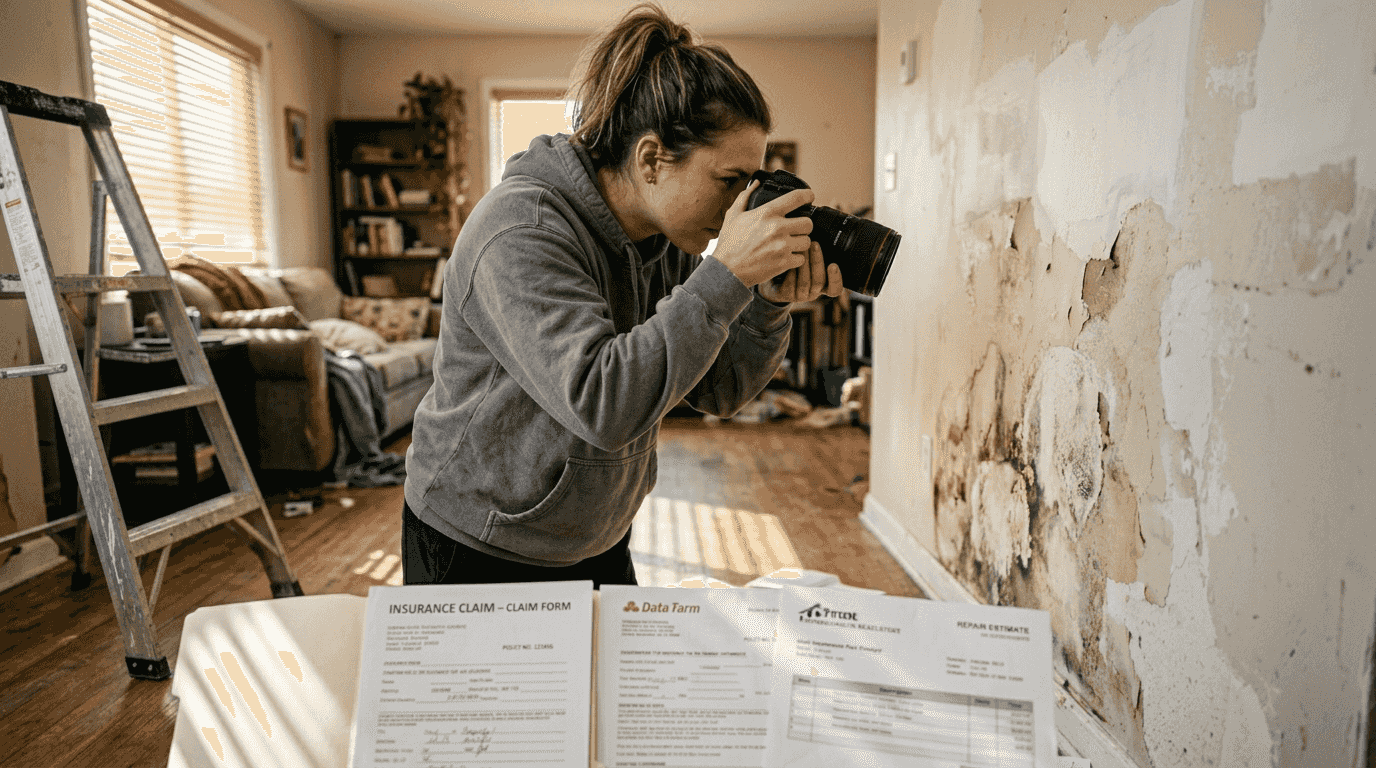
Professional involvement strengthens claims significantly. Certified mold inspectors provide objective assessments that insurers cannot easily dispute. Their reports detail contamination levels, affected square footage, and necessary remediation steps. This documentation proves the extent of damage and justifies your settlement demands.
Consider hiring a public adjuster early in the process. Following the public adjuster workflow guide for insurance claims ensures you meet all deadlines and documentation requirements. Public adjusters understand what evidence insurers need and how to present it persuasively.
| Documentation Type | Purpose | Timing |
|---|---|---|
| Photos and videos | Prove damage extent and water source | Immediately upon discovery |
| Mold inspection report | Establish contamination levels objectively | Within 48 to 72 hours |
| Remediation estimates | Justify settlement amount requested | Before insurer’s adjuster visit |
| Communication logs | Track all interactions with insurer | Ongoing throughout claim |
| Receipts and invoices | Document mitigation and repair costs | Save all related expenses |
Understanding what is a public adjuster helps you decide when to involve professional representation. These licensed professionals work exclusively for policyholders, not insurance companies, to negotiate maximum settlements. They handle documentation, communicate with insurers, and challenge lowball offers on your behalf.
Pro Tip: Create a dedicated folder for your mold claim containing copies of all documents, photos, estimates, and correspondence to stay organized throughout the potentially lengthy claims process.
When filing a mold insurance claim in Marietta or elsewhere in Georgia, expect your insurer to send an adjuster to inspect the damage. Be present during this inspection and provide all documentation you have gathered. Point out all affected areas and explain the timeline of events clearly and factually.
Understanding mold coverage limits and options for Georgia property owners
Many insurance policies include mold limitations or exclusions that significantly restrict what insurers will pay. Standard homeowners policies typically limit mold coverage between $1,000 and $10,000, regardless of actual remediation costs. In Georgia’s humid climate, where mold can spread rapidly through HVAC systems and wall cavities, these limits often prove inadequate.
Your coverage options include:
- Standard policy limits, usually $1,000 to $5,000 for basic coverage
- Enhanced limits through mold endorsements, extending coverage to $10,000 to $25,000
- Separate mold riders offering $50,000 or more in specialized coverage
- Exclusions requiring separate policies for any mold coverage whatsoever
Some insurers exclude mold coverage entirely from standard policies, requiring you to purchase separate endorsements upfront. Others include minimal coverage automatically but allow you to buy higher limits. Review your policy annually because insurers frequently adjust mold coverage terms as claims trends change.
| Coverage Type | Typical Limit | Best For | Annual Cost |
|---|---|---|---|
| Standard inclusion | $1,000 to $5,000 | Basic protection, low-risk homes | Included in base premium |
| Mold endorsement | $10,000 to $25,000 | Moderate protection, typical homes | $50 to $150 additional |
| Separate rider | $50,000 plus | High-risk properties, humid climates | $200 to $500 additional |
| Full exclusion | $0 | Requires separate mold policy | N/A, separate policy needed |
Georgia’s climate makes extended mold coverage particularly valuable. Summer humidity levels regularly exceed 70%, creating ideal conditions for mold growth after any water intrusion. Homes with crawl spaces, basements, or poor ventilation face even higher risks. When comparing policies, prioritize mold coverage limits alongside deductibles and premiums.
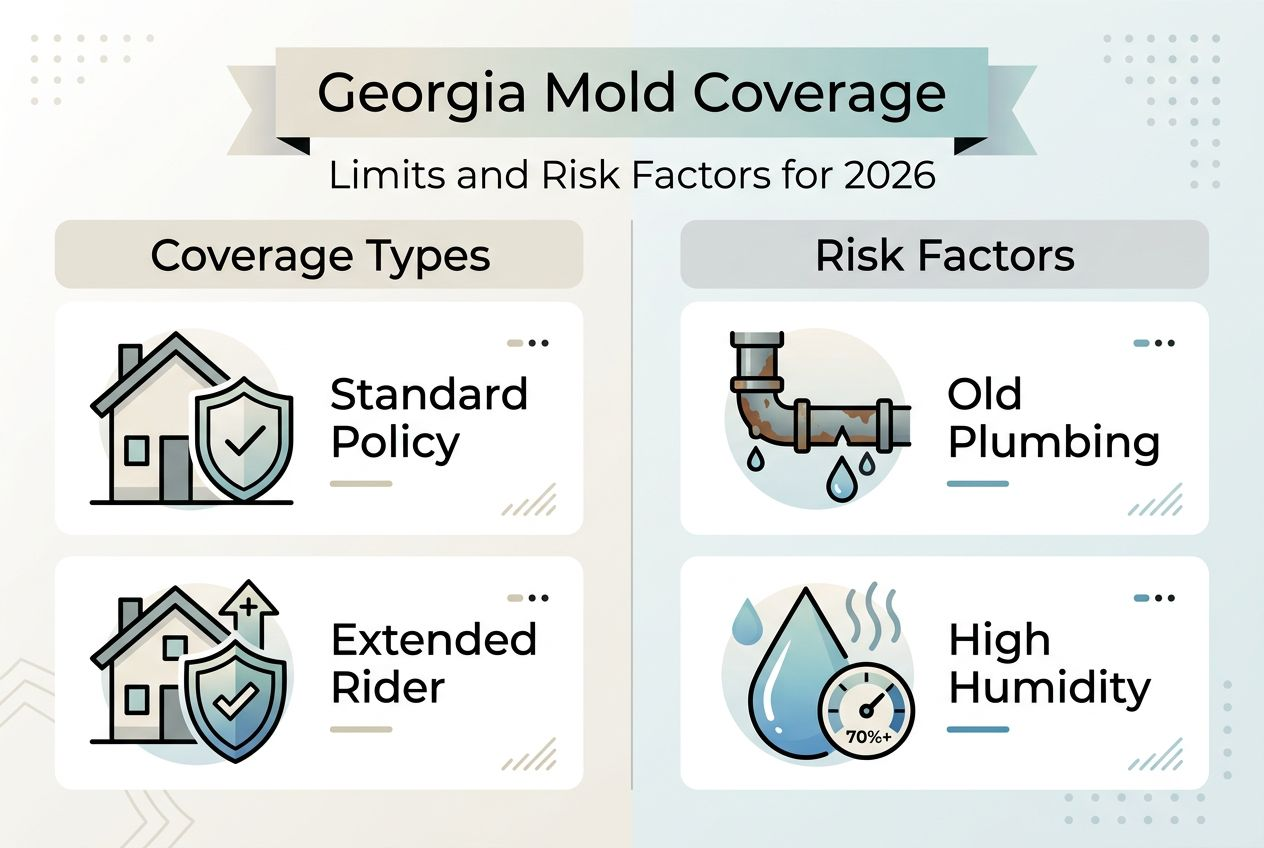
Consider your property’s specific risk factors when selecting coverage. Older homes with outdated plumbing, properties near water sources, or buildings with previous water damage history all benefit from higher mold limits. The cost difference between standard and enhanced coverage is often minimal compared to out-of-pocket remediation expenses.
Working with public adjusters in Atlanta, GA helps you understand your policy’s mold provisions and identify gaps in coverage. They can recommend appropriate endorsements before you need them and explain how different coverage levels affect your financial exposure.
Pro Tip: When renewing your homeowners policy in 2026, specifically ask your agent about mold coverage limits and the cost to increase them, as many agents do not proactively discuss these options.
If you discover your coverage is inadequate after mold damage occurs, professional insurance claim help becomes even more critical. Public adjusters can identify coverage provisions you might overlook and negotiate settlements that maximize your policy’s available benefits.
Get expert help filing your mold damage insurance claim in Georgia
Navigating mold damage claims requires specialized knowledge of coverage rules, documentation requirements, and negotiation strategies that most property owners lack. Insurance companies employ experienced adjusters whose job is to minimize payouts, putting you at a significant disadvantage without professional representation.
Public adjusters level the playing field by working exclusively for you, not the insurance company. They review your policy to identify all applicable coverage, document damage comprehensively, and negotiate directly with insurers to secure maximum settlements. Their expertise in public adjuster services can mean the difference between a $5,000 settlement and full remediation costs of $25,000 or more. For Georgia property owners facing complex mold situations, professional insurance claim assistance reduces stress while improving outcomes. Mold damage claim experts understand Georgia’s humid climate challenges and how to present claims that insurers cannot easily dismiss or undervalue.
What is mold damage claim FAQ
What types of mold damage does homeowners insurance cover in Georgia?
Insurance covers mold resulting from sudden, accidental water events like burst pipes, appliance malfunctions, or storm damage. Coverage excludes mold from gradual leaks, poor maintenance, high humidity, or condensation. The water source must be a covered peril under your specific policy terms.
How quickly should I file a mold damage claim after discovery?
Report water damage to your insurer within 24 to 48 hours of discovery, even before mold appears. Georgia’s humid climate accelerates mold growth, making prompt action essential. Delays can give insurers grounds to deny claims based on failure to mitigate damages.
Can I file mold damage claims for commercial property?
Yes, commercial property insurance policies cover mold damage under similar conditions as residential policies. Coverage depends on the water damage cause and your specific policy terms. Commercial claims often involve higher coverage limits and more complex documentation requirements than residential claims.
What documentation is essential for mold damage claims?
Essential documentation includes photos and videos of water sources and damage, certified mold inspection reports, remediation estimates from licensed contractors, and detailed logs of all insurer communications. Save receipts for emergency repairs, temporary housing, and professional services. Comprehensive documentation strengthens your negotiating position and justifies higher settlements. Review mold insurance claim procedures to ensure you capture all necessary evidence.
When should I hire a public adjuster for mold damage claims?
Hire a public adjuster as soon as you discover significant mold damage or if your insurer denies or undervalues your claim. Early involvement allows adjusters to document damage properly and present stronger initial claims. Their expertise becomes especially valuable when dealing with coverage disputes, policy interpretation questions, or settlements below remediation costs. Understanding the role of a public adjuster helps you decide when professional representation makes financial sense for your specific situation.