

Many Georgia homeowners receive low payouts or outright denials on storm damage claims because they skip vital preparation steps or fail to document damages properly. Understanding how to navigate your insurance policy, document storm damage correctly, and negotiate with adjusters can mean the difference between a minimal payout and full coverage for repairs. This guide walks you through each critical step to file and maximize your storm damage insurance claim in Georgia.
Table of Contents
- Understanding Your Insurance Coverage And Preparing To File
- Documenting And Assessing Storm Damage Properly
- Navigating The Insurance Claim Process And Inspections
- Reviewing And Negotiating Your Insurance Settlement Offer
- Get Expert Help Maximizing Your Storm Damage Claim
- Frequently Asked Questions
Key takeaways
| Point | Details |
|---|---|
| Document damage first | Take time-stamped photos and videos before contacting your insurance company to preserve claim validity. |
| Engage certified contractors | Have a local contractor inspect damage and attend adjuster visits to ensure all repairs and code upgrades are included. |
| Understand policy coverage | Review your policy for peril protections, exclusions, deductibles, and Georgia’s 80% replacement cost rule affecting payouts. |
| Obtain multiple estimates | Gather repair estimates from reputable contractors to strengthen negotiation leverage with your insurer. |
| Review settlements carefully | Compare settlement offers against contractor estimates and contest undervaluations before accepting. |
Understanding your insurance coverage and preparing to file
Before filing any storm damage claim, you need to know exactly what your insurance policy covers and what it excludes. Georgia homeowners policies typically cover property damage from fire, hail, and wind but exclude flood damage, which requires a separate NFIP policy. Many homeowners mistakenly assume their standard policy covers all water damage, leading to denied claims after storms.
Georgia’s 80% Replacement Cost Rule significantly impacts claim values. If your home is underinsured below 80% of its replacement cost, your payout will be proportionally reduced even for covered damages. This rule catches many homeowners off guard during the claims process.
Read your insurance policy thoroughly before any damage occurs. Identify your coverage limits, deductibles, exclusions, and any special endorsements. Understanding policy coverage and exclusions is fundamental to smooth claims processing and helps you set realistic expectations for your settlement.
Prepare a claims documentation system before you need it:
- Store your policy documents in an accessible digital and physical location
- Create a home inventory with photos of valuable items and property features
- Keep contractor contact information and maintenance records organized
- Know your policy’s claim filing deadlines and notification requirements
Proper preparation prevents the most common mistakes that lead to reduced payouts. When you understand your insurance coverage, you can identify gaps early and take action to protect your financial interests before storm damage occurs.
Documenting and assessing storm damage properly
The moment storm damage occurs, your first priority is safety, followed immediately by thorough documentation. Take detailed, time-stamped photos and videos of every damaged area, including roofs, siding, windows, interior water damage, and debris. Capture wide shots showing context and close-ups revealing specific damage.
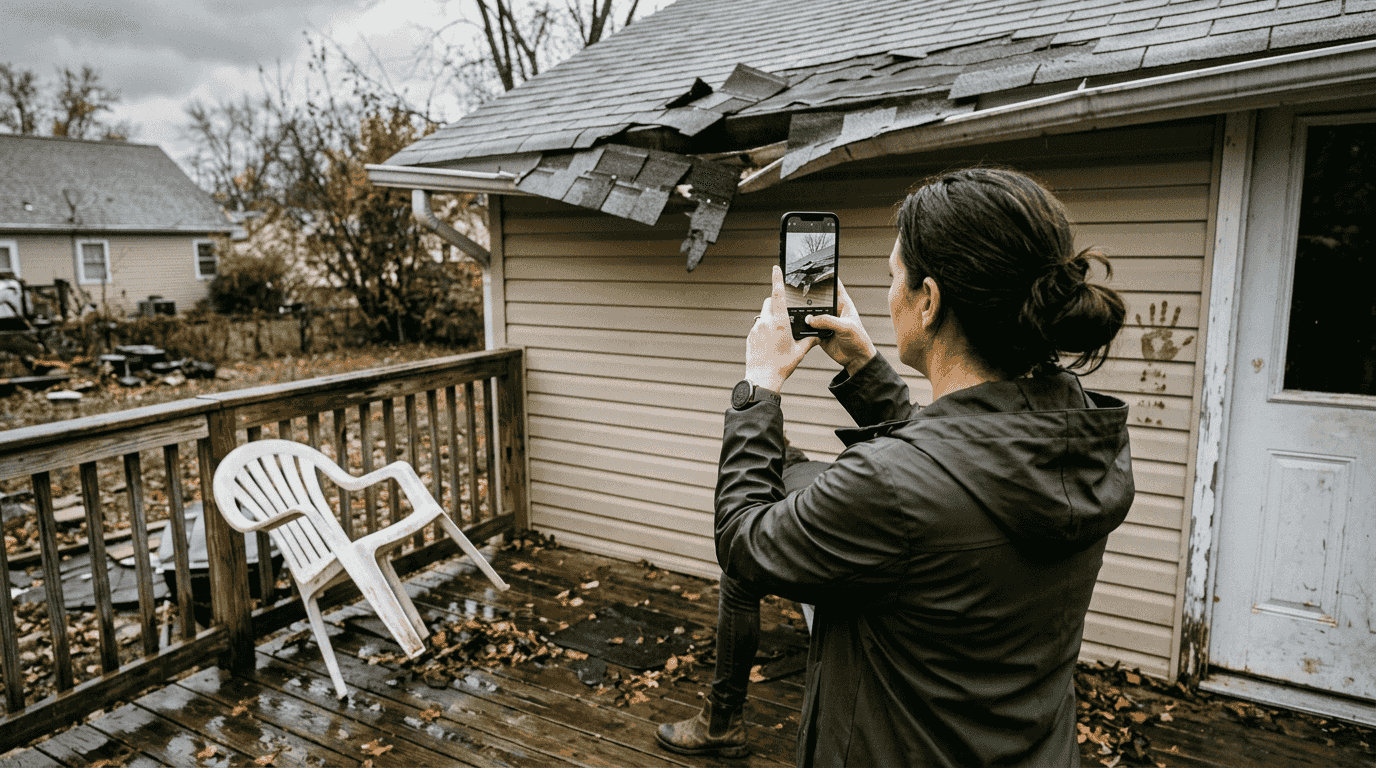
Here’s a critical mistake that costs homeowners thousands: contacting insurance before documenting damage leads to denials or reduced settlements. Insurers may claim pre-existing conditions or argue that damage occurred before the storm. Your comprehensive documentation timeline establishes when damage happened and its extent.
Engage a local certified roofing contractor to conduct a professional inspection before filing your claim. Your contractor should provide a detailed written damage report that meets insurer criteria, identifying all visible and hidden damage. This report becomes essential evidence supporting your claim valuation.
Have your contractor present during the insurance adjuster’s inspection. Contractors recognize damage patterns and code-required upgrades that adjusters might overlook or minimize. Their presence ensures complete recognition of structural issues, weather damage, and necessary repairs meeting Georgia building standards.
Document these specific areas thoroughly:
- Roof damage including missing shingles, granule loss, hail dents, and underlayment exposure
- Structural components like fascia, soffits, and decking
- Gutters, downspouts, and drainage systems
- Exterior siding, windows, and doors
- Interior ceilings, walls, and floors showing water intrusion or impact damage
- Property contents damaged by storm effects
Pro Tip: Create a damage timeline noting exactly when the storm occurred, when you discovered each damaged area, and when you took documentation photos. This chronology helps counter insurer arguments about damage timing or causation.
Your storm damage documentation forms the foundation of your entire claim. Invest time in thorough evidence gathering before initiating contact with your insurance company to maximize your leverage during settlement negotiations.
Navigating the insurance claim process and inspections
Once you’ve documented damage and obtained a contractor assessment, you’re ready to file your claim. Follow these steps systematically:
- Contact your insurance company’s claims department and request a claim number
- Submit all required paperwork including your policy information and damage documentation
- Provide your contractor’s written damage assessment with your initial claim filing
- Schedule the adjuster inspection at a time when your contractor can attend
- Prepare a complete damage inventory to present during the inspection
- Take notes during the adjuster visit documenting everything discussed and observed
The adjuster inspection determines your settlement value, making contractor presence essential. Contractor attendance during adjuster inspections ensures all code updates are included in claim payouts. Without professional representation, adjusters may overlook required repairs or undervalue necessary work.
Georgia’s 2025 building code updates significantly impact storm damage claims. The IRC R905 mandate requires upgrades such as drip edge installation on eaves and rakes, plus ice and water shield in valleys. These code-required improvements must be covered by insurers when replacing damaged roofing systems, potentially adding thousands to your settlement.
Work collaboratively with both your contractor and the insurance adjuster. Your contractor identifies all damage and required code upgrades, while the adjuster documents findings for the insurance company. This three-way interaction ensures nothing gets missed and all parties understand the full scope of necessary repairs.
Review the adjuster’s preliminary report carefully before they finalize their assessment. Contest any omissions, undervaluations, or disputed damage areas immediately with supporting evidence from your contractor and documentation. Once adjusters submit final reports, revisions become much harder to obtain.
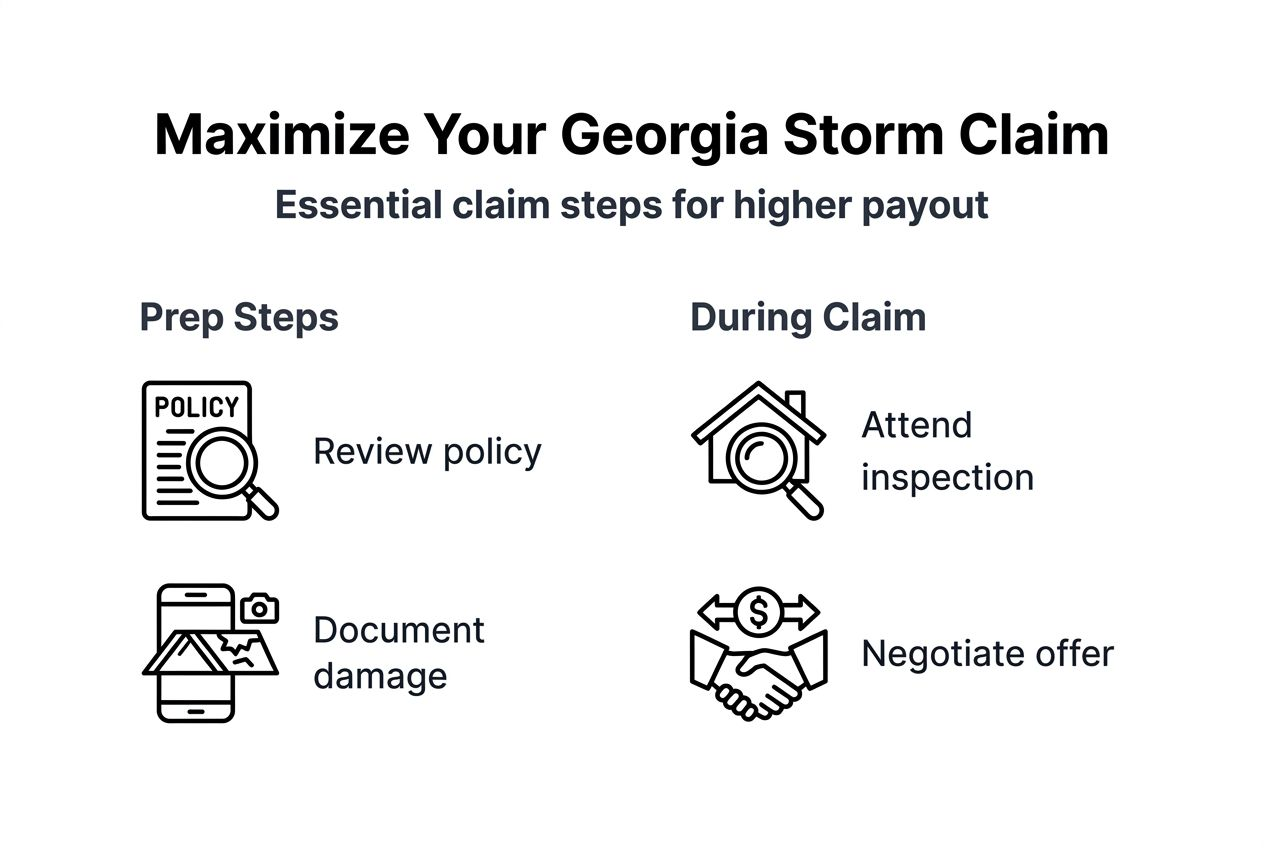
Pro Tip: Request a detailed line-item breakdown of the adjuster’s damage assessment before they leave your property. Compare this against your contractor’s estimate on-site to identify discrepancies while the adjuster can still make corrections.
Navigating the insurance claim process requires persistence and attention to detail. Stay organized, maintain professional communication, and ensure every damaged item and required repair appears in the adjuster’s final documentation.
Reviewing and negotiating your insurance settlement offer
When your settlement offer arrives, resist the temptation to accept immediately. Break down every component to understand what the insurer is covering, what they’re excluding, and how they calculated values. Settlement offers typically include actual cash value (depreciated), replacement cost value, your deductible, and covered code upgrade costs.
Compare settlement figures against multiple repair estimates from reputable contractors. Significant discrepancies between your contractor estimates and the insurance offer indicate potential undervaluation. Focus on these specific comparison points:
- Square footage calculations for roofing, siding, or flooring replacements
- Material quality and specifications matching your existing property
- Labor rates reflecting current local market costs
- Code upgrade requirements mandated by Georgia building standards
- Supplemental damages like water intrusion or structural repairs
Common undervaluations to watch for include omitted interior damages, incomplete code upgrade coverage, low material quality allowances, and excluded necessary repairs the adjuster deemed pre-existing. Be especially alert to settlement components that don’t account for 2025 Georgia code requirements, as these represent significant value often left out of initial offers.
Never accept the first settlement without thorough review and comparison. Insurance companies expect negotiation and often make initial offers below actual repair costs. Prepare a detailed counteroffer citing specific undervaluations with supporting contractor estimates and code requirements.
If negotiations stall or the insurer refuses reasonable adjustments, consider escalating with professional help. Public adjusters and insurance attorneys specialize in negotiating insurance settlements and can leverage expertise and legal knowledge to secure fair payouts.
Document all settlement communications in writing. Email confirmations of phone conversations, keep copies of all correspondence, and maintain a negotiation timeline. This paper trail protects you if disputes escalate to formal complaints or legal action.
Get expert help maximizing your storm damage claim
Navigating storm damage claims in Georgia grows more complex each year as building codes evolve and insurers scrutinize claims more carefully. Professional public adjusters bring critical expertise in documenting damages, interpreting policies, and negotiating with insurance companies to maximize your settlement.
Experienced public adjusters work exclusively for you, not the insurance company, ensuring your claim includes all necessary repairs, code-required upgrades, and accurate valuations. They handle the paperwork, inspections, and negotiations while you focus on protecting your property and family.
For claims involving significant damage or settlement disputes, insurance claim attorneys in Atlanta provide legal representation to challenge unfair denials or inadequate offers. Legal expertise becomes invaluable when insurers refuse reasonable settlements or dispute coverage interpretations.
Local Georgia professionals understand regional building codes, common storm damage patterns, and insurer practices specific to your area. This knowledge translates directly into higher settlements and smoother claim processes with fewer delays and disputes.
Frequently asked questions
How long do I have to file a storm damage claim in Georgia?
Most Georgia homeowners policies require prompt notification, typically within a few days of discovering damage, with formal claim filing within 60 to 90 days. Review your specific policy for exact deadlines, as missing filing windows can result in complete claim denials. Prioritize immediate safety measures and damage documentation, then contact your insurer as soon as practically possible.
What documentation is required for a successful storm damage insurance claim?
You need time-stamped photos and videos showing all damaged areas from multiple angles. Obtain written damage assessments and detailed repair estimates from certified contractors. Include your insurance policy documents highlighting relevant coverage sections. Maintain records of all communications with adjusters, contractors, and your insurance company throughout the claims process.
Can I handle a storm damage claim without professional help?
While filing independently is possible, professional assistance typically results in more thorough claims and substantially higher payouts. Public adjusters and attorneys navigate complex code requirements, negotiate effectively, and handle detailed paperwork efficiently. Their expertise often saves significant time, reduces stress, and improves settlement outcomes enough to more than cover their fees.
What if my insurance company denies my storm damage claim?
Document the denial reasons in writing and review them against your policy coverage terms. Gather additional evidence supporting your claim, including contractor assessments and damage timelines. File a formal appeal with your insurance company citing specific policy language and evidence. Consider hiring a public adjuster or attorney to represent your interests if the denial appears unjustified.
Do Georgia building code upgrades get covered in storm damage claims?
Yes, when storm damage necessitates roof or structural replacement, insurers must cover code-required upgrades such as drip edge installation and ice and water shield in valleys. These 2025 Georgia IRC mandates apply even if your original installation predates the code changes. Ensure your contractor identifies all applicable code upgrades during damage assessment to include them in your claim.