

Many Georgia property owners discover too late that their insurance policy doesn’t cover what they assumed it would. When disaster strikes, confusion about dwelling coverage, personal property limits, and liability provisions can cost you thousands in denied or underpaid claims. This guide breaks down property damage coverage essentials, explains how different policies respond to common Georgia risks like storms and water damage, and shows you how to navigate the claims process to maximize your settlement. You’ll learn what your policy actually covers, how to avoid common pitfalls, and when professional help makes the difference between frustration and fair compensation.
Table of Contents
- What Property Damage Coverage Means And What It Includes
- Common Causes Of Property Damage In Georgia And How Coverage Applies
- Navigating Property Damage Claims: Process And Tips For Georgia Property Owners
- Differences Between Property Damage Coverage And Liability Insurance
- Get Expert Help With Your Property Damage Claim In Georgia
Key takeaways
| Point | Details |
|---|---|
| Coverage varies by policy | Property damage insurance includes different protections like dwelling, personal property, and liability, with exclusions that vary by insurer. |
| Georgia faces unique risks | Storms, water damage, and fire are common causes of property claims in the state, and understanding how your policy responds is critical. |
| Timing affects outcomes | Filing claims promptly and documenting damage thoroughly increases your chances of maximum settlement in Georgia. |
| Public adjusters boost payouts | Licensed adjusters negotiate with insurers on your behalf and can increase settlements by approximately 30% on average. |
| Know the difference | Property damage coverage protects your assets, while liability insurance covers damages you cause to others. |
What property damage coverage means and what it includes
Property damage coverage is the portion of your insurance policy that pays for repairs or replacement when your home or business suffers physical harm from covered perils. Understanding what your property damage insurance coverage actually protects helps you avoid surprises when filing a claim. Most policies divide coverage into distinct categories, each with specific limits and conditions.
Dwelling coverage protects the physical structure of your home or commercial building, including walls, roof, foundation, and attached structures like garages. Personal property coverage extends to belongings inside the structure, such as furniture, electronics, clothing, and equipment. Liability coverage pays for damages if someone is injured on your property or if you accidentally damage someone else’s property. Additional living expenses coverage reimburses temporary housing costs if your property becomes uninhabitable due to covered damage.
Georgia property policies commonly exclude certain types of damage. Flood damage typically requires separate flood insurance, while earthquake coverage is another add-on. Maintenance related issues like gradual water seepage from neglected gutters often fall outside standard coverage. Mold damage may be excluded unless it results directly from a covered peril like a burst pipe. Understanding these exclusions prevents the shock of denied claims.
Reviewing your policy documents reveals your specific coverage limits, deductibles, and exclusions. Many property owners never read their policies until disaster strikes, only to discover gaps in protection. Pay attention to replacement cost versus actual cash value provisions, which dramatically affect how much you receive for damaged items. Replacement cost pays to rebuild or replace without depreciation, while actual cash value deducts depreciation based on age and condition.
Pro Tip: Schedule an annual policy review with your agent to ensure your coverage keeps pace with property improvements, inflation, and changing risks in Georgia.
A public adjuster can interpret complex policy language and identify coverage you didn’t know existed. These licensed professionals work exclusively for you, not the insurance company, to maximize your claim payout. They understand how to apply policy provisions to your specific damage and negotiate settlements that reflect the full scope of your loss.
Common causes of property damage in Georgia and how coverage applies
Georgia’s climate and geography create specific property damage risks that homeowners and business owners face regularly. Storms, fire, water damage, and vandalism rank among the most frequent causes of insurance claims in the state. Severe thunderstorms bring high winds, lightning, and hail that damage roofs, siding, and windows. Tornadoes, though less common than in other states, strike parts of Georgia and cause catastrophic structural damage.
Fire damage from lightning strikes, electrical faults, or accidents destroys property quickly and often triggers additional water damage from firefighting efforts. Standard homeowners and commercial policies typically cover fire and smoke damage as a named peril, making these claims relatively straightforward when properly documented. Smoke residue and odor remediation are usually covered as part of fire damage restoration.
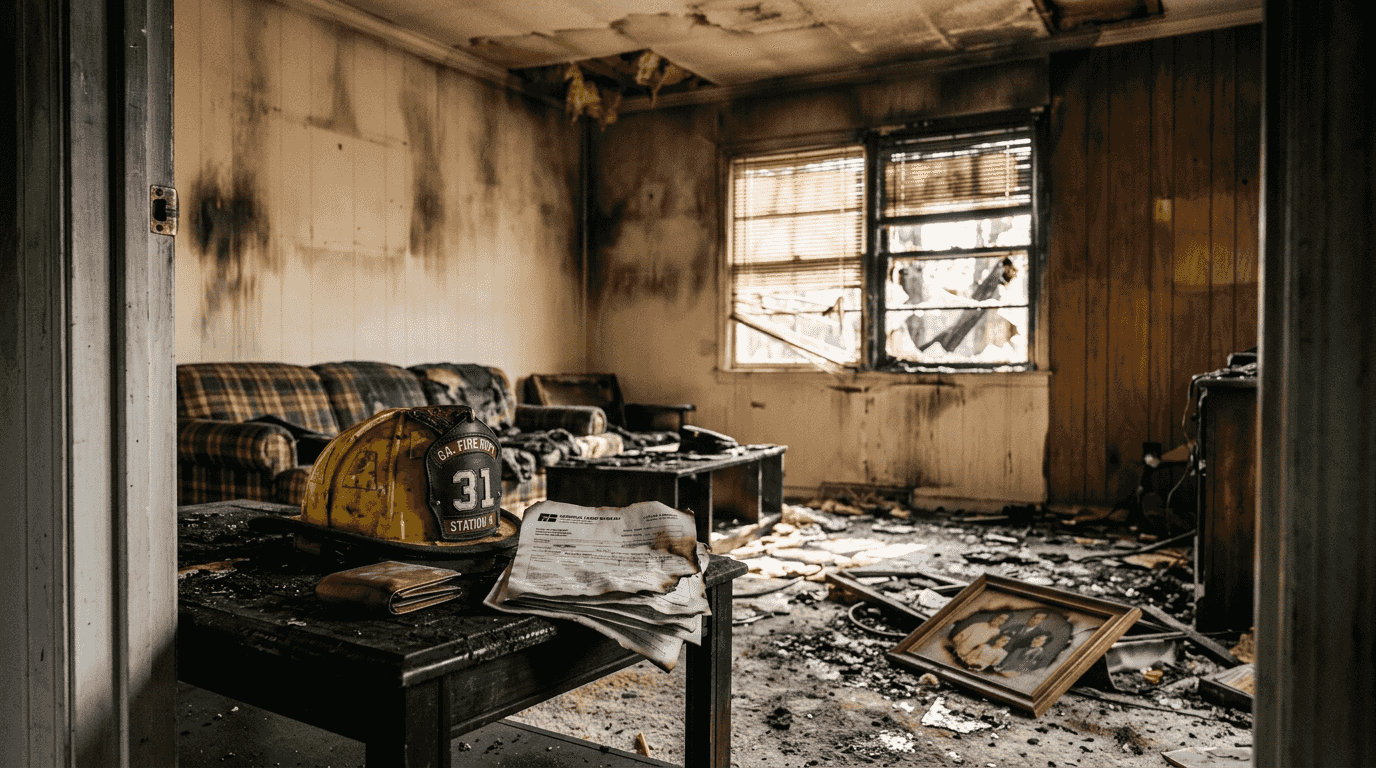
Water damage presents more complexity because coverage depends on the source. Sudden and accidental water damage from burst pipes, appliance malfunctions, or roof leaks during storms is generally covered. Gradual leaks from poor maintenance, flooding from external water sources, or sewer backups often require separate endorsements or policies. Georgia’s humid climate increases mold risk, but insurers typically cover mold only when it results from a covered water damage event.
Hail storms strike Georgia with surprising frequency, particularly in northern counties. Hail damage to roofs, vehicles, and siding is covered under most policies, but insurers often dispute the extent of damage or attribute it to wear and tear. Documenting hail impact immediately after a storm strengthens your claim. Vandalism and theft are covered perils, though deductibles apply and proof of forced entry may be required.
| Damage Type | Common Causes in Georgia | Typical Coverage Response | Key Considerations |
|---|---|---|---|
| Storm damage | High winds, lightning, fallen trees | Usually covered as named peril | Document damage immediately, separate wind from flood |
| Fire damage | Lightning, electrical, accidents | Covered including smoke and water from firefighting | Keep receipts for temporary housing and belongings |
| Water damage | Burst pipes, roof leaks, appliances | Covered if sudden and accidental | Maintenance issues often excluded, act fast to prevent mold |
| Hail damage | Severe thunderstorms | Covered but often disputed | Get professional inspection, photograph all impacts |
Maintenance issues complicate many claims. Blocked gutters that cause water to infiltrate walls or foundations may be denied as preventable damage. Insurers argue that proper maintenance would have prevented the loss, shifting responsibility to the property owner. Regular gutter cleaning and home inspections create documentation that your property was well maintained, strengthening your position if damage occurs.
Pro Tip: Take photos of your property’s condition seasonally and after major weather events to establish a baseline for future claims and prove that damage was sudden, not gradual.
Navigating property damage claims: process and tips for Georgia property owners
Filing a property damage claim in Georgia requires methodical documentation and strategic communication with your insurer. Timely and thorough claim filing directly impacts your settlement amount and approval speed. Following a proven process protects your interests and maximizes compensation.
Start by reviewing your insurance policy immediately after discovering damage. Note your coverage limits, deductibles, and any time limits for reporting claims. Most policies require notification within a reasonable timeframe, often 24 to 72 hours for emergency situations. Contact your insurance company to report the claim and receive a claim number. Document this initial contact with date, time, and the representative’s name.
Secure your property to prevent further damage, which is your responsibility under most policies. Board up broken windows, tarp damaged roofs, and shut off water if pipes burst. Keep receipts for emergency repairs and temporary protection measures, as these are typically reimbursable. Take extensive photos and videos of all damage from multiple angles before making any repairs. Capture wide shots showing context and close-ups revealing specific damage details.
Create a detailed inventory of damaged personal property including purchase dates, costs, and current condition. Gather receipts, credit card statements, or photos showing items before damage occurred. For structural damage, measure affected areas and note all visible issues like cracks, water stains, or compromised materials. Written descriptions supplement visual documentation and create a comprehensive damage record.
The insurance company will assign an adjuster to inspect your property and estimate repair costs. Their estimate often undervalues damage or overlooks hidden issues like water damage inside walls. You have the right to obtain independent estimates from licensed contractors. Present these estimates to the adjuster along with your documentation to support a higher settlement.
Working with a licensed public adjuster changes the dynamic entirely. Public adjusters handle the entire claims process on your behalf, from initial documentation through final settlement. They know how to identify all covered damage, prepare detailed estimates that insurers respect, and negotiate effectively to maximize your payout. Their fee, typically a percentage of the settlement, is often offset by the significantly higher settlement they secure.
Avoid common mistakes that reduce claim value. Never sign a release or accept a settlement without fully understanding what you’re agreeing to. Insurers sometimes offer quick settlements that seem generous but fall short of actual repair costs. Don’t make permanent repairs before the adjuster inspects unless absolutely necessary for safety, and document everything if you must proceed. Never exaggerate damage, as this can void your entire claim and potentially constitute fraud.
Keep detailed records of all claim-related communications, including emails, letters, and phone call summaries. Track expenses related to temporary housing, meals, and additional living costs if your property is uninhabitable. These costs are often covered but require documentation for reimbursement. Follow up regularly on your claim status and respond promptly to insurer requests for additional information.
Pro Tip: Request a copy of the insurance company’s damage estimate and compare it line by line with independent contractor estimates to identify undervalued items or missed damage.
If your claim is denied or you receive an unreasonably low settlement, professional claim help provides options for appeal or dispute resolution. Public adjusters, attorneys specializing in insurance claims, and state insurance regulators can intervene when insurers act in bad faith or fail to honor policy terms.
Differences between property damage coverage and liability insurance
Confusion between property damage coverage and liability insurance leads many Georgia property owners to misunderstand their protection. These two coverage types serve fundamentally different purposes, though both appear in most homeowners and commercial policies. Property damage coverage protects your own property from physical harm, while liability insurance covers damages you cause to others or their property.
Property damage coverage responds when your building or belongings suffer direct physical loss from covered perils like fire, wind, hail, or theft. The insurance company pays you to repair or replace your damaged property up to policy limits. This coverage is first party insurance because the policyholder is the beneficiary receiving payment for their own loss.
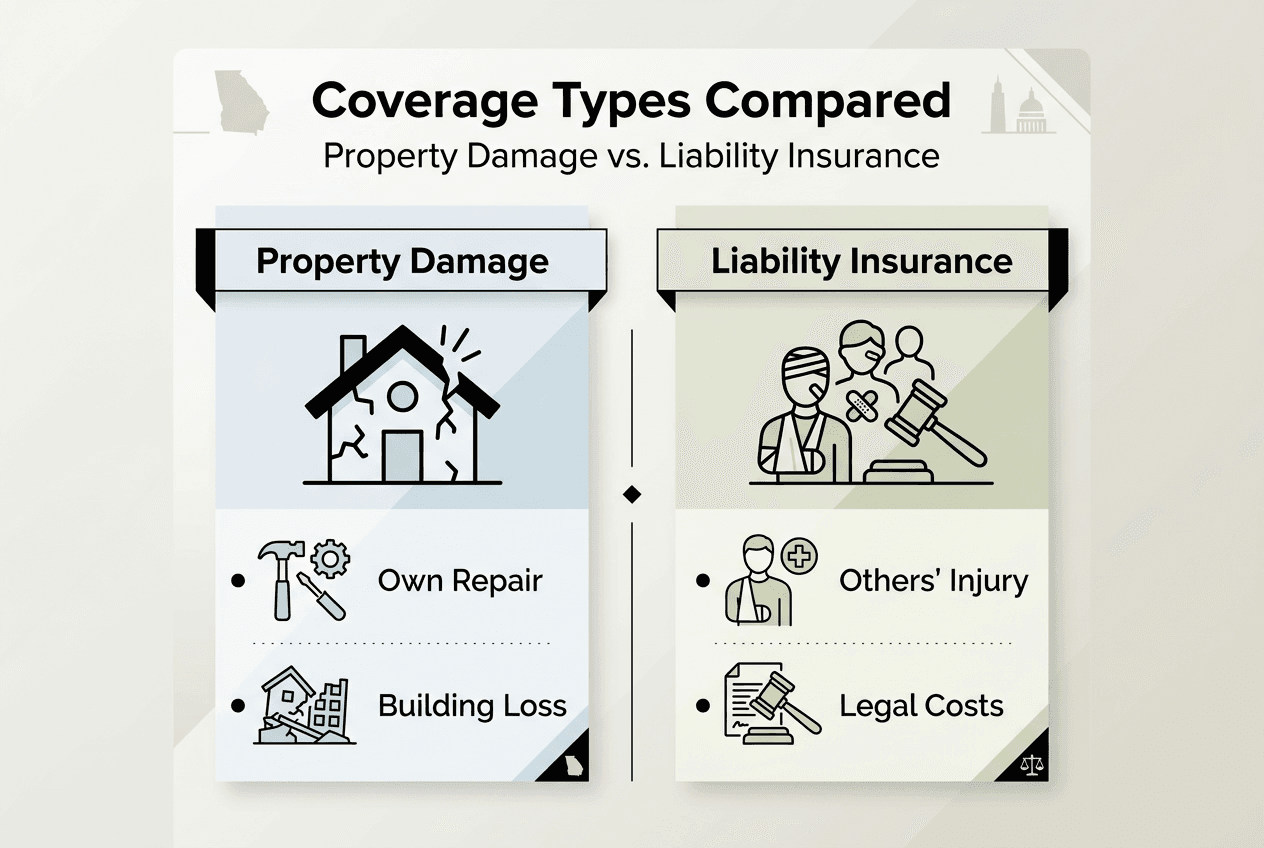
Liability insurance activates when you are legally responsible for injury to another person or damage to someone else’s property. If a tree from your property falls on a neighbor’s house, your liability coverage may pay for their repairs. If a customer slips on your business premises and sues for medical expenses, liability insurance covers legal defense and potential settlements. This is third party insurance because it protects others from your actions or property conditions.
The distinction matters because each coverage type has separate limits, deductibles, and claim processes. Property damage claims require you to prove your loss and its cause. Liability claims require the claimant to prove you were negligent or responsible for their damages. Understanding which coverage applies to a specific situation prevents filing claims under the wrong section of your policy.
| Feature | Property Damage Coverage | Liability Insurance |
|---|---|---|
| Who it protects | Policyholder’s own property | Third parties injured or whose property is damaged |
| What triggers coverage | Direct physical loss to insured property | Legal responsibility for harm to others |
| Typical claim examples | Storm damage to roof, fire destroying contents | Guest injured on premises, damage caused to neighbor’s property |
| Deductible applies | Yes, typically per occurrence | Usually no deductible |
| Coverage limits | Based on property value and policy limits | Separate liability limits, often per occurrence and aggregate |
Some scenarios involve both coverage types. If your water heater bursts, property damage coverage pays to repair your home and replace damaged belongings. If that water leaks into a neighboring unit in a condo building, your liability coverage may pay for their damages. The same incident triggers two separate coverages addressing different aspects of the loss.
Adequate liability limits are crucial in Georgia, where lawsuit judgments can exceed policy limits and expose your personal assets. Many experts recommend liability coverage of at least $300,000 to $500,000, with umbrella policies providing additional protection beyond underlying policy limits. Property damage coverage should reflect your property’s replacement cost, not its market value, to ensure full rebuilding after total loss.
Public adjusters in Georgia primarily handle first party property damage claims, though they can advise on liability issues affecting your property claim. When liability disputes arise, attorneys specializing in insurance law provide appropriate representation. Understanding when each professional is needed saves time and ensures proper handling of complex claims involving multiple coverage types.
Pro Tip: Review both your property damage and liability limits annually, especially after acquiring valuable property or making improvements that increase your potential liability exposure.
Get expert help with your property damage claim in Georgia
Navigating property damage claims in Georgia doesn’t have to be overwhelming or leave you undercompensated. Licensed public adjusters work exclusively for you, not insurance companies, to document damage thoroughly, interpret policy provisions in your favor, and negotiate settlements that reflect the true cost of repairs. Their expertise in insurance claim negotiation means they understand insurer tactics and know how to counter lowball offers with documented evidence and policy language.
While attorneys handle legal disputes and bad faith cases, public adjusters focus on maximizing your claim payout through expert damage assessment and negotiation. Understanding the difference between public adjusters and attorneys helps you choose the right professional for your situation. Most property damage claims benefit from public adjuster representation, especially when damage is extensive, complex, or initially undervalued by insurance company adjusters. Their services typically cost a percentage of your settlement, meaning you pay nothing upfront and they’re motivated to maximize your recovery.
FAQ
What is covered under property damage insurance policies in Georgia?
Property damage coverage typically includes your dwelling structure, personal belongings, and sometimes additional living expenses if your home becomes uninhabitable. Standard policies cover damage from fire, lightning, windstorms, hail, theft, and vandalism. Specific coverage varies by policy, so review your declarations page and exclusions carefully. Flood and earthquake damage usually require separate policies.
How long do I have to file a property damage claim in Georgia?
Most insurance policies require you to report damage promptly, often within 24 to 72 hours for emergency situations. You generally have one to two years from the date of loss to file a formal claim, depending on your policy terms and Georgia statutes. Filing quickly improves documentation quality and claim success. Delays can lead to disputes about when damage occurred or whether it was properly mitigated.
Can a public adjuster help me get a higher settlement?
Public adjusters typically increase settlements significantly by identifying all covered damage, preparing detailed repair estimates, and negotiating effectively with insurance companies. Industry data shows public adjusters can boost payouts by approximately 30% compared to handling claims yourself. They understand policy language, know how to document damage insurers might overlook, and have experience countering insurer tactics to minimize payments. Their benefits extend beyond money to reducing stress and saving time during an already difficult situation.
Does property damage coverage include mold remediation in Georgia?
Mold coverage depends on the cause of the mold growth. If mold results directly from a covered peril like a burst pipe or storm damage, remediation is usually covered up to policy limits. Mold from gradual leaks, high humidity, or maintenance neglect is typically excluded. Many policies cap mold coverage at $10,000 or less. Review your policy’s mold provisions and consider additional coverage if you live in a high humidity area or have experienced water issues previously.